
Parents of IIT Bombay Student Sit on Hunger Strike Seeking Action After Campus Death
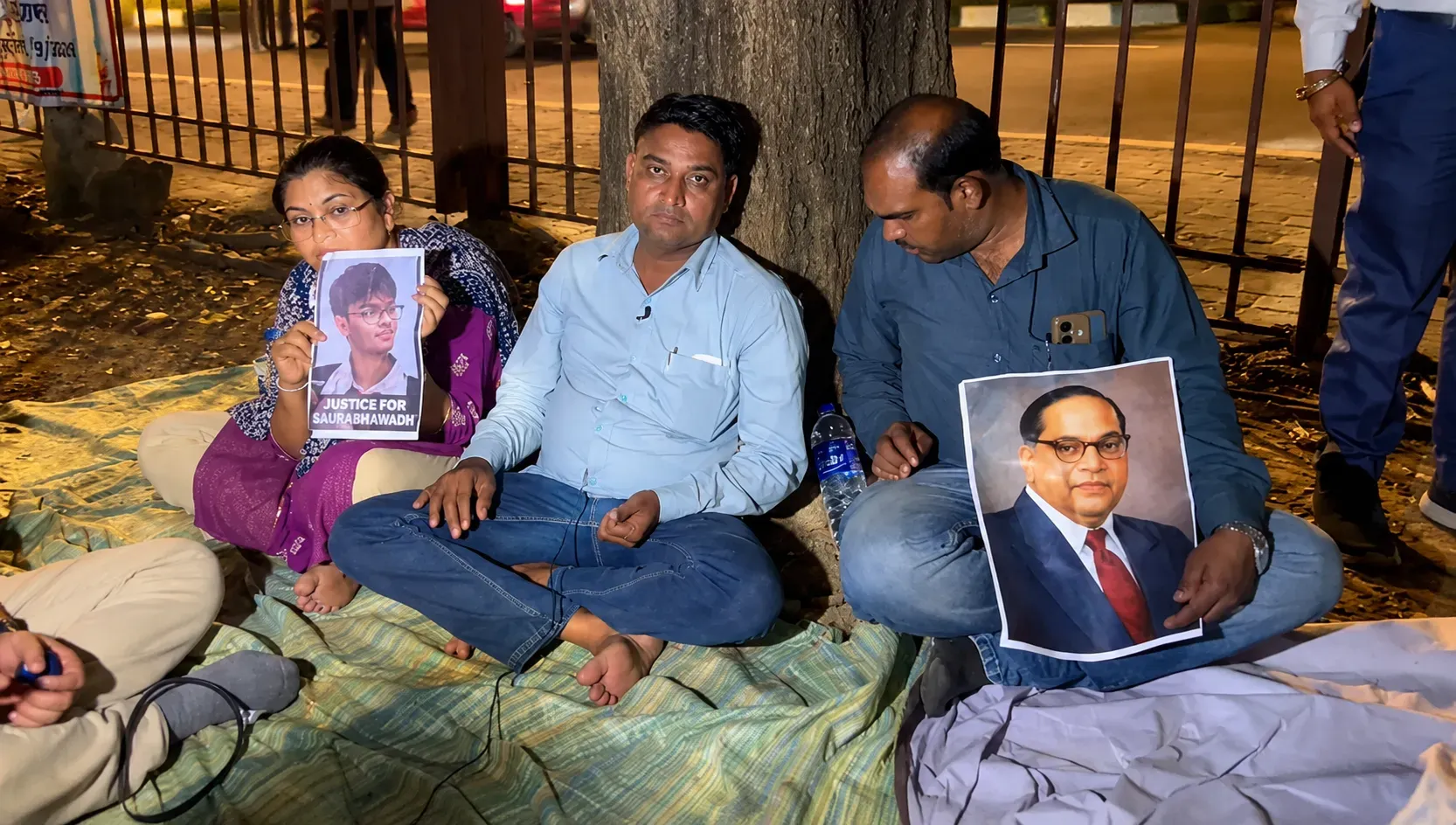
The parents of IIT Bombay student Sahil Wakode sat on a hunger strike at Azad Maidan in Mumbai on Thursday, seeking immediate action in the case of their son’s death. Ravindra and Sonali Wakode demanded the arrest of those named in the FIR and a speedy investigation. They ended the strike later that night but said they would resume it if their demands were not met. Sahil, a second-year BTech student in the Department of Energy Science and Engineering, was found dead in his hostel room on the evening of September 18. Earlier that day, during a mid-semester examination, he was found with a mobile phone. The institute had initially stated that he had used it to access ChatGPT for answers. No suicide note was recovered. His parents have alleged that Sahil faced caste-based harassment and mental pressure for months before his death. They named Professor Suryanarayana Doolla, who was invigilating the exam, and also sought action against the institute director. Based on their complaint, police registered a case of abetment to suicide and invoked provisions of the Scheduled Castes and Scheduled Tribes (Prevention of Atrocities) Act. The investigation is now with the Mumbai Crime Branch. IIT Bombay has formed a 10-member panel to examine the circumstances surrounding the death. Professor Doolla has been sent on leave to allow an impartial probe. The institute also postponed its mid-semester examinations, originally scheduled for September 26 and 27, to October 10 and 11. Officials said the extra time would help a committee with student representation prepare clearer guidelines for handling suspected academic misconduct. The institute has apologised for its earlier public statements that linked the death closely to the examination incident, noting that the full circumstances remain under investigation. Students on campus had protested in the days after Sahil’s death, seeking stronger accountability, better mental health support and clearer disciplinary processes. For many students and parents watching from outside, the episode highlights the intense academic environment at premier institutes. High performance expectations, the fear of falling behind, and limited immediate support during moments of crisis can leave young people feeling isolated. Exam-related incidents, even when handled without formal punishment, can create sudden stress that some students struggle to manage alone. Families from smaller towns and reserved categories often place enormous hope in an IIT seat. When allegations of discrimination surface, they deepen existing worries about whether every student feels equally valued and protected on campus. Teachers and administrators face the parallel challenge of maintaining academic integrity while responding to distress with sensitivity and clear procedures. The National Commission for Scheduled Castes has taken note of the matter and sought reports from the institute. Crime Branch officers continue to examine CCTV footage from the examination hall, campus and hostel to reconstruct the sequence of events. As the probe continues, the case serves as a reminder that elite campuses must keep strengthening both academic standards and the everyday systems that help students navigate pressure, setbacks and personal struggles. Clear communication, accessible counselling, and fair handling of misconduct complaints matter as much as rankings and research output. Parents of current and future IIT aspirants will be watching how the institute and investigating agencies respond in the coming days.

Written by
Palak PatelEducation writer Palak Patel covers the latest education news, board exam updates, results, and career opportunities.