
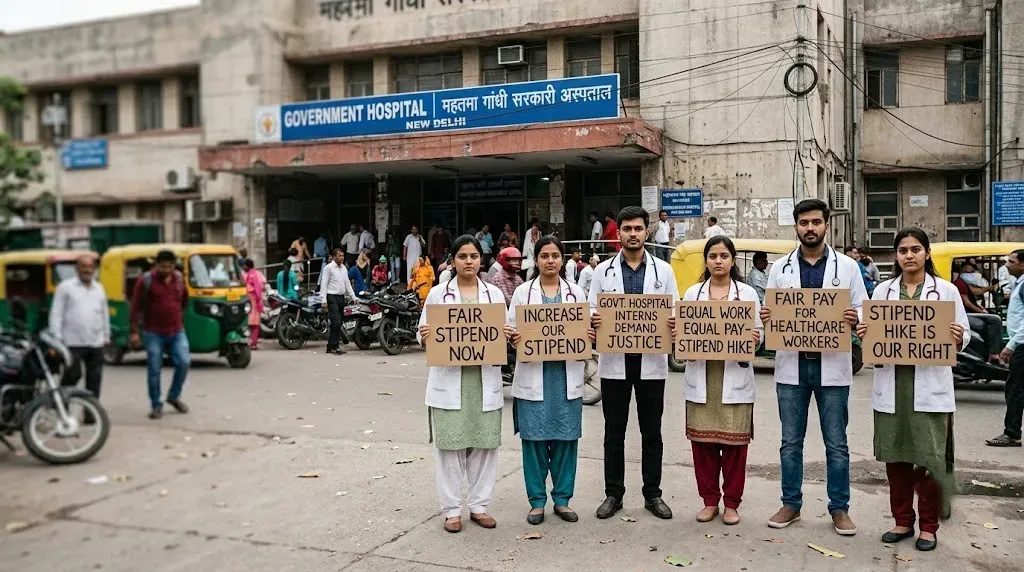
Medical interns in several states have stepped up protests over the last few weeks, shining a light on one of the least discussed pressures of medical training in India. Monthly stipends for the compulsory internship year vary widely, with figures cited by protesting groups ranging from Rs 12,300 in places like Jammu and Kashmir to around Rs 27,000 in states such as Kerala. The gap has become a flashpoint. Interns argue that they perform the same essential work everywhere: running OPDs, managing wards, handling night shifts, emergencies and rural postings. Yet the financial support they receive depends heavily on where they train. Protests bring the disparity into focus In Jammu and Kashmir, interns have staged strikes and dharnas, pointing out that their Rs 12,300 stipend has remained almost unchanged for nearly seven years. Many calculate it at roughly Rs 400 a day while working long and irregular hours. They have sought a rise to Rs 30,000, noting that peers in other states receive substantially more. Similar discontent has surfaced elsewhere. Madhya Pradesh interns recently ended a protest after the state raised their stipend from about Rs 14,300 to Rs 21,500. Uttarakhand interns have also struck, seeking a move from around Rs 17,000 toward Rs 30,000. In parts of Uttar Pradesh, interns have raised concerns over low or inconsistently paid amounts near the Rs 12,000 mark. These actions underline a simple reality. There is no single national figure for internship stipends. Amounts are decided largely by individual states or institutions, leading to the wide range now under discussion. What it means for students and families For MBBS students, the internship is not optional. It is a full year of hands-on clinical responsibility that must be completed before they can register as doctors. Many live away from home, manage long shifts and cover basic living costs on the stipend. When the amount is low, parents often continue providing financial support well into what should be a more independent stage of training. The variation also affects morale. Interns in lower-paying states frequently compare notes with batchmates elsewhere and feel the difference in both practical terms and recognition of their work. Education aspirants preparing for NEET and medical college already face high pressure. Learning that post-graduation support can differ so sharply by location adds another layer of uncertainty. Teachers and senior doctors in government medical colleges often acknowledge the workload interns carry. Many note that hospitals rely heavily on them for day-to-day functioning. Calls for greater consistency Protesting interns and student associations have repeatedly asked for more uniform or regularly revised stipends that better reflect inflation, living costs and the nature of the duty. While some states have responded with hikes after sustained pressure, the overall picture remains uneven. Private medical colleges add another complication in several places, with reports of lower or delayed payments compared with government institutions. For now, the protests serve as a clear signal. Medical education does not end with the final exam. The year that follows shapes both clinical skills and the early professional experience of thousands of young doctors. How states and regulatory bodies address the stipend question will influence not only current interns but also the next generation of students weighing a career in medicine.
Medical interns’ protests highlight stipend gap across states: Rs 12,300 to Rs 27,000
Palak Patel12 Sep 2026

Written by
Palak PatelEducation writer Palak Patel covers the latest education news, board exam updates, results, and career opportunities.