
Delhi University Students Take to Streets Demanding Safer Roads and Campuses
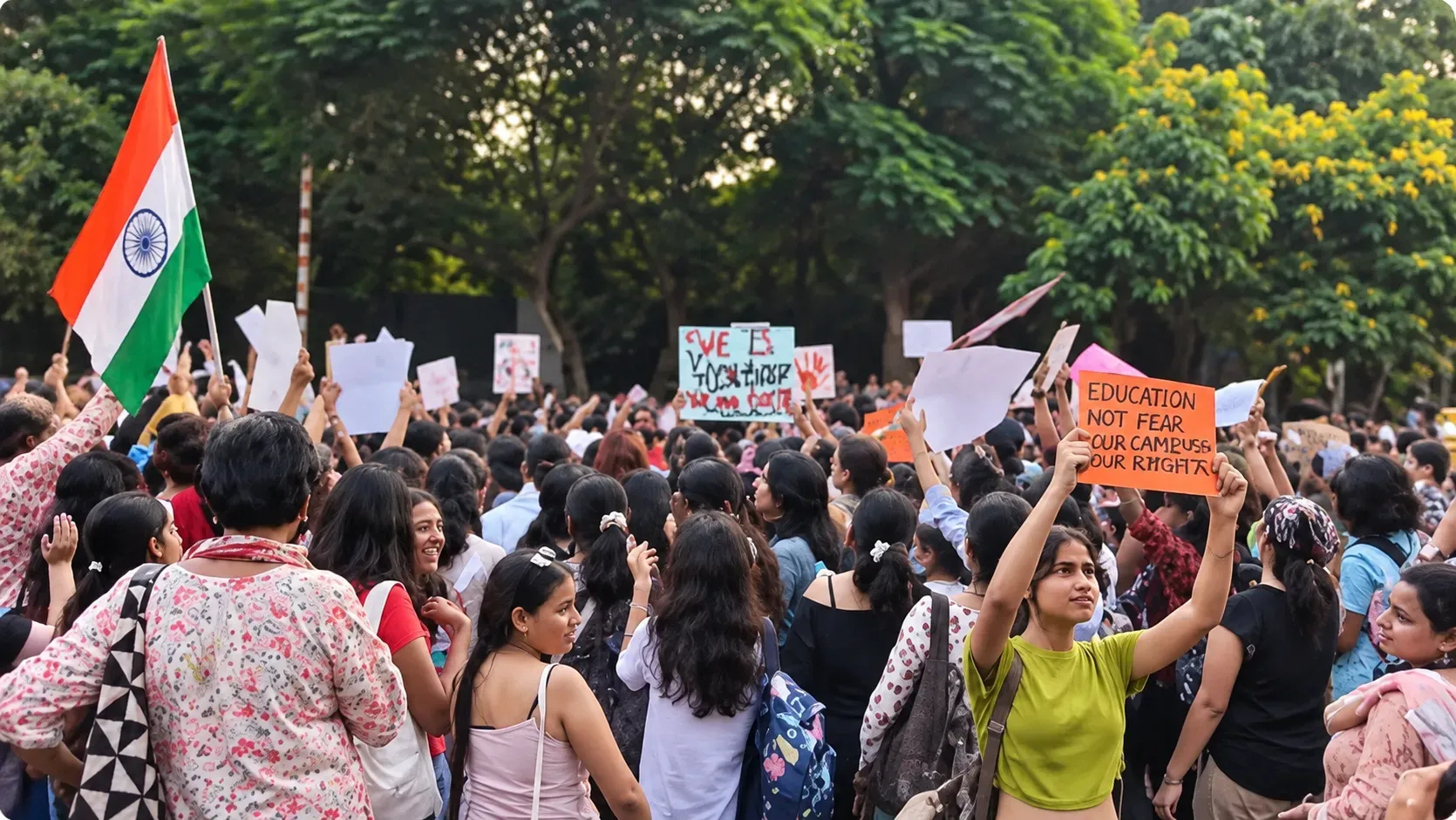
Young women from Delhi University colleges have spent the past week walking the streets of North and South Campus in the rain, holding placards and raising slogans that go beyond one incident. Their central message is simple: safety should not mean staying indoors or facing curfews. The protests gained momentum after the alleged gang-rape of a 17-year-old girl at Aastha Kunj Park near Kalkaji Mandir and Lady Shri Ram College on September 21. According to police accounts shared in reports, three men posing as officers approached the girl and her friend. The case, along with other recent reports of sexual violence in the city, pushed students from Miranda House, Lady Shri Ram College, Gargi College, Kamala Nehru College and other institutions onto the roads. On Monday, students braved rain to march from Miranda House to the Faculty of Arts. Slogans such as “Hum Auratein Azaad Hain” and “Cute nahi, Kranti hai hum” rang out. Placards rejected the idea of locking women at home. One common line heard was that restrictions should not fall on girls while the real problem of unsafe public spaces remains unaddressed. Students have listed clear demands. They want working street lights around campuses, roads and parks. They have called for more DTC buses and shuttle services, functional public toilets, better last-mile connectivity, and stronger policing without shifting the burden onto women. Many also want effective Internal Complaints Committees on campus and quicker action on complaints of harassment. On Wednesday, members of the Students’ Federation of India took the protest further by marching to the Delhi Secretariat. They pointed to multiple reported cases of sexual violence in September and urged both the city government and police to improve infrastructure and response systems. The Lieutenant Governor has since directed enhanced patrolling, better lighting, CCTV coverage and safer transport options around women’s colleges. Principals of several DU colleges raised issues such as dark stretches, unregulated vehicles near gates, and inadequate last-mile connectivity during a review meeting. For students, the issue is practical. Day scholars talk about the anxiety of commuting after evening classes. Hostel residents describe the constant calculation of safe routes and timings. Parents watching these marches often share the same worry about their daughters’ daily travel. Teachers and college administrations face pressure to balance academic schedules with genuine safety concerns that sometimes force temporary shifts to online classes. Many of the young protesters identify as Gen Z and reject the notion that their presence on the streets is performative. One student told reporters they did not come out in the rain only to create content. They came because the fear of harassment and violence has become part of everyday campus life in one of India’s leading universities. The marches have kept the focus on reclaiming public spaces rather than accepting limited mobility as the price of safety. Whether the administrative steps announced so far turn into lasting improvements on the ground will decide if these voices lead to real change for the thousands of students who walk these routes every day.

Written by
Palak PatelEducation writer Palak Patel covers the latest education news, board exam updates, results, and career opportunities.