
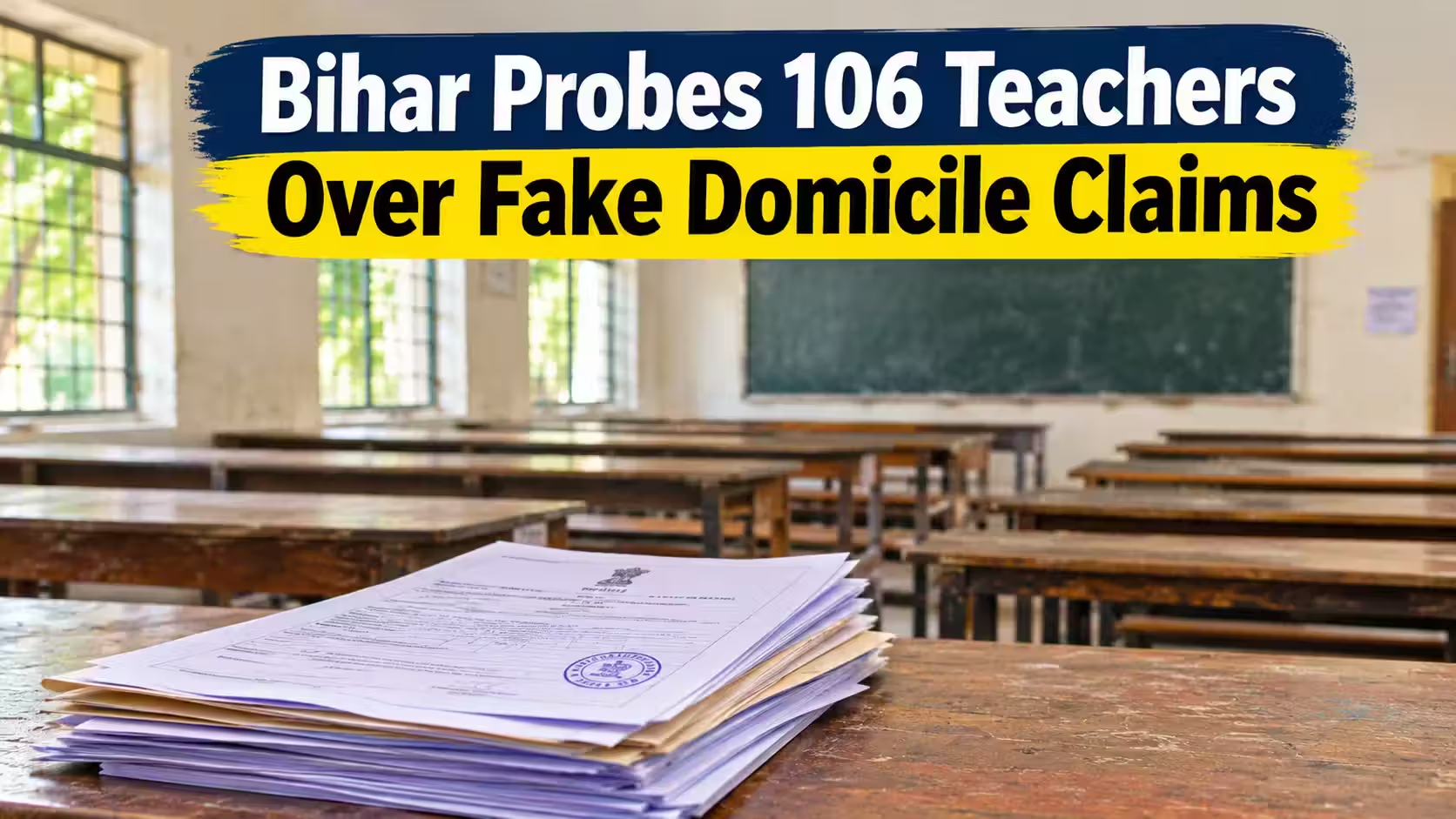
A small detail in the names of over a hundred women teachers has triggered a fresh verification exercise in Bihar’s school system. The Education Department has written to the Bihar Public Service Commission asking it to check the domicile certificates of 106 teachers recruited under TRE-3 in 2024.
These teachers are currently posted in different schools across the state. According to the complaint that set the process in motion, many of them carry the prefix ‘KM’ before their names, a common practice in Uttar Pradesh educational certificates that stands for Kumari. Their school and college papers also appear to have been issued from institutions in UP, yet they claimed Bihar domicile to apply under reserved categories.
Primary Education Deputy Director Prafulla Kumar Mishra sent the letter to the BPSC secretary on 28 October. The note refers to a complaint filed on the Sahyog portal by former teacher Amit Vikram, who submitted a list of the 106 names. The department has requested the commission to verify the certificates and take appropriate action.
Of the teachers named in the complaint, 34 were appointed under the Scheduled Castes category, 24 under Extremely Backward Classes, 16 under Backward Classes-Ladies, 13 each under Economically Weaker Sections and Backward Classes, and six under Scheduled Tribes. TRE-3 itself had led to the appointment of more than 66,000 teachers in Bihar.
In recent years Bihar has carried out large-scale teacher recruitment through successive TRE phases. Genuine candidates who prepared for these exams often express concern when questions arise about document authenticity, especially around domicile and caste certificates that determine access to reserved seats. Parents and students, meanwhile, expect teachers in government schools to have cleared every required check.
BPSC officials have indicated they will examine the matter once the department’s communication is formally processed. For now the 106 teachers remain in service while the verification process begins. The episode serves as a reminder that document scrutiny remains a critical part of large public recruitments, both for the credibility of the process and for the confidence of those who compete fairly for teaching jobs.