
TNPSC Candidates Unable to Reach Centres After Highway Protest Near Ambur
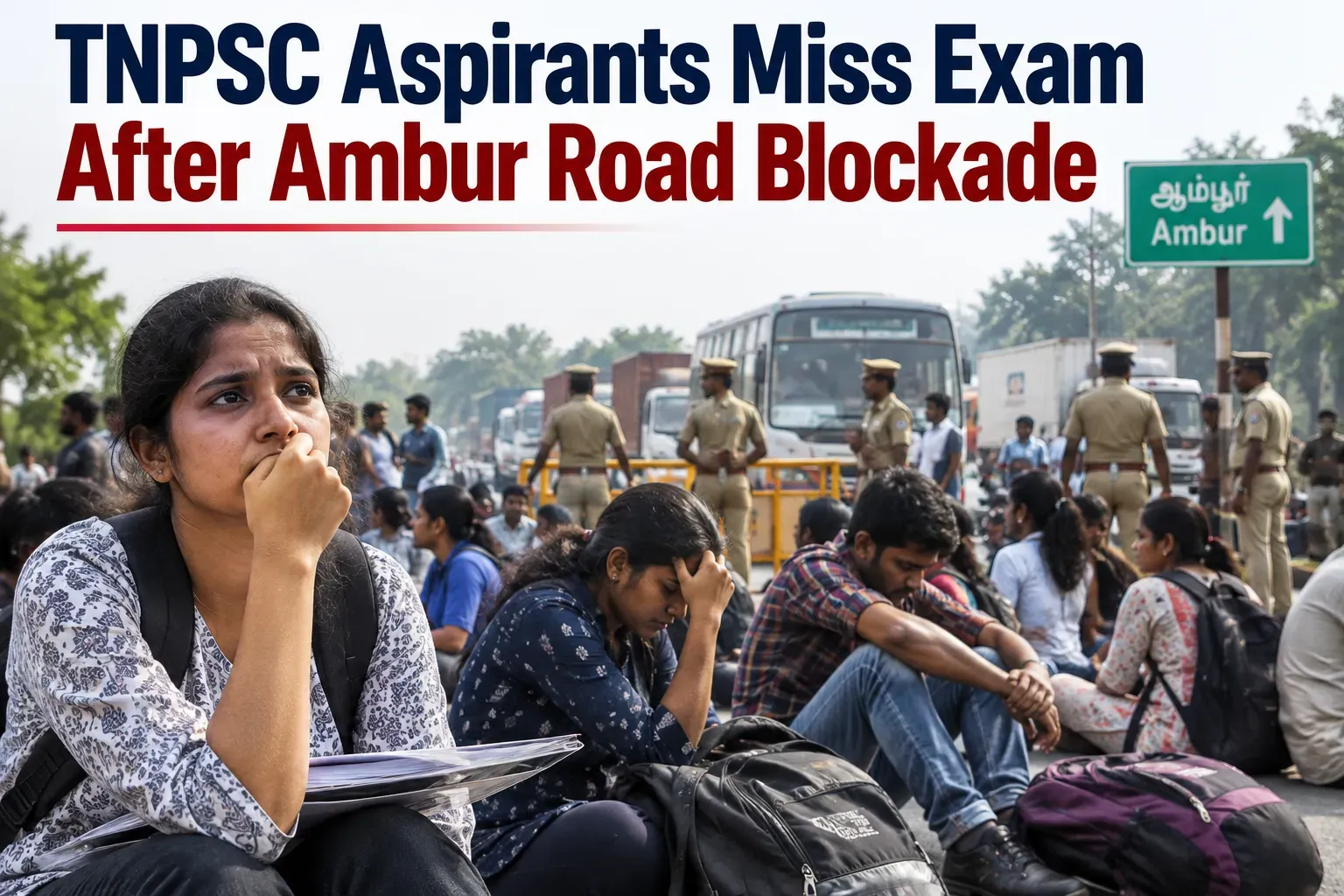
A road blockade on the Chennai-Bengaluru National Highway near Ambur has left several TNPSC aspirants unable to reach their examination centres. The protest followed a collision involving a school bus and a container lorry on September 19, and the resulting traffic disruption affected candidates who had invested months preparing for the Tamil Nadu Public Service Commission test. According to local reports, four students and the bus driver were injured when the school vehicle was hit at Vadaputhupatti junction in Tirupattur district. Residents of the area blocked the highway soon after, demanding improved safety measures such as a flyover or better crossing facilities at the known accident-prone spot. Traffic movement was halted for nearly two hours, and the effects lingered for travellers in the region. Polimer News highlighted the plight of TNPSC candidates who could not make it to their centres because of the blockade. Many of these aspirants spoke of the emotional toll, saying their sustained hard work over several months now felt wasted. Competitive exams like those conducted by TNPSC demand early starts, strict reporting times and careful planning around travel. Even short delays on a major highway can mean missing the gate closing time. The incident comes at a time when the TNPSC calendar includes examinations in September, including technical services tests. Aspirants from surrounding districts often travel long distances to reach allotted centres. When a key route is blocked, alternative paths are limited and time-sensitive. Parents and coaching centres have long pointed out that external disruptions, whether protests, accidents or weather, can unfairly impact candidates who otherwise arrive well-prepared. In this case, the focus of the protest was road safety after a genuine accident involving schoolchildren. Yet the unintended consequence was that another group of young people, those preparing for government jobs, faced an unexpected barrier. NHAI later installed temporary safety measures including blinkers and LED poles at the junction as a quick response. District officials also inspected the site. While these steps address the local residents’ concerns, the episode raises practical questions about contingency planning for examination days. Clear communication from exam authorities, flexibility in rare genuine cases of verified disruption, and better coordination with traffic authorities could help reduce such losses in future. For the affected candidates, the immediate concern remains the lost opportunity. Many will now wait for any official word on possible relief or the next available window. In the competitive world of TNPSC recruitment, one missed attempt can shift timelines significantly for careers that thousands of youth in Tamil Nadu are working towards. The episode serves as a reminder of how tightly linked road infrastructure, public protests and education outcomes can become on a single busy morning.

Written by
Palak PatelEducation writer Palak Patel covers the latest education news, board exam updates, results, and career opportunities.