
Open Book Exam System 2026: Universities Planning New Exam Format
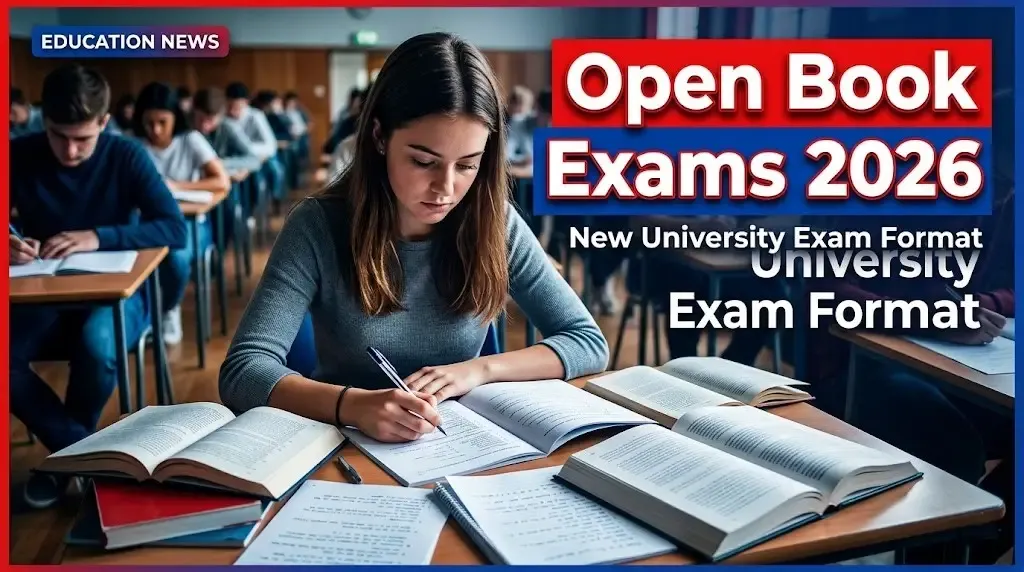
Open Book Exam System 2026: Why Universities Are Considering a New Exam Format
For decades, most exams have followed the same pattern - memorize chapters, walk into the exam hall, and try to recall everything in three hours. But universities are now questioning whether this approach actually measures real understanding.
Because of this, several institutions are exploring the Open Book Examination (OBE) system. In this format, students are allowed to bring textbooks, notes, or reference material into the exam hall.
The idea is not to make exams easier. Instead, the focus shifts from memorizing information to analyzing concepts, solving problems, and applying knowledge - something many educators believe reflects real learning better.
What Is an Open Book Exam System?
In an open book exam, students are allowed to refer to their study materials during the test. This can include textbooks, printed notes, or sometimes even digital resources depending on the university rules.
However, the questions in these exams are designed differently. Instead of simple definitions or direct theory questions, they often require critical thinking, interpretation, and real-world application.
That means even if the answer exists in a book, students still need to understand the topic well enough to explain or apply it correctly.
How Open Book Exams Are Different from Traditional Exams
At first glance, open book exams may sound easier than traditional exams. But in reality, the exam pattern usually becomes more analytical and less predictable.
| Traditional Exam | Open Book Exam |
|---|---|
| Focus on memorization | Focus on understanding concepts |
| Books not allowed | Students can refer to books and notes |
| Direct theory questions | Analytical and application-based questions |
| Memory-based answers | Concept-based explanations |
Why Universities Are Considering This Change
Education experts argue that modern education should focus more on problem-solving and understanding rather than memorizing large amounts of information.
Open book exams encourage students to prepare differently. Instead of trying to memorize entire chapters, students spend more time understanding concepts and organizing their notes effectively.
Several universities around the world experimented with this system during online exams, and many are now considering adapting similar formats for future examinations.
Will Open Book Exams Replace Traditional Exams?
At the moment, most universities are still experimenting with the open book system rather than fully replacing traditional exams. Some courses may adopt it for specific subjects where analytical thinking is more important.
Other subjects may still continue with traditional exam formats, especially where structured testing is required.
For students, the key takeaway is simple: if open book exams become more common in 2026, success will depend less on memorizing pages and more on understanding how concepts actually work.

Written by
Palak PatelEducation writer Palak Patel covers the latest education news, board exam updates, results, and career opportunities.