
CBSE Considering Two-Level Exams for Same Subject: Easy vs Advanced Pattern Explained
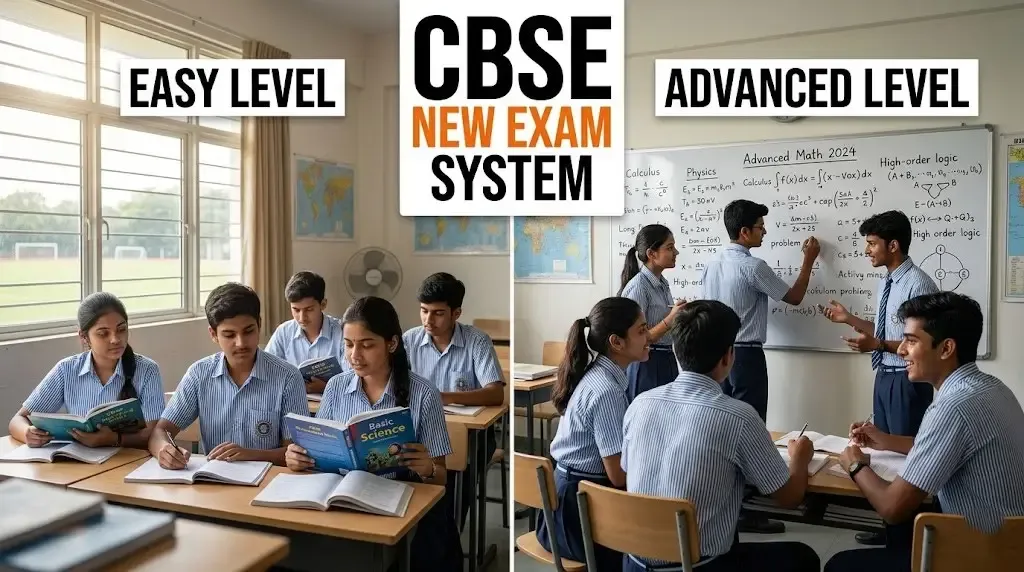
CBSE Two-Level Exam System: Easy vs Advanced Pattern Explained
This is not just a small change-this could completely change how students approach studies.
The Central Board of Secondary Education (CBSE) is planning to introduce a two-level exam system for subjects like Mathematics and Science starting from the 2026–27 academic session.
The idea is simple: not every student learns at the same pace, so why should everyone give the same level of exam?
What Is the Two-Level System?
Under this new system, every student will appear for a standard (basic) exam, and some can choose an additional advanced level exam.
| Level | Who Should Choose | Difficulty |
|---|---|---|
| Standard | All students (mandatory) | Moderate, concept-based |
| Advanced | Students targeting deeper learning | Higher-level, analytical |
How the Exam Pattern Will Work
- Standard exam: 80 marks, 3 hours (compulsory)
- Advanced exam: 25 marks, 1 hour (optional)
- Focus on higher-order thinking in advanced paper
Important Rule About Marks
- Advanced marks will not be added to total percentage
- If you score well, it will be mentioned separately
- If not, it won’t affect your result
Why CBSE Is Doing This
The goal is to reduce pressure and make learning more flexible.
Students who want basic understanding can stick to standard level, while others can challenge themselves with advanced questions.
What Changes for Students?
- Less pressure for average students
- More opportunity for toppers
- Better preparation for competitive exams
Final Thoughts
This system sounds promising-but everything depends on how well it is implemented.
If done right, it can make exams smarter, not harder.

Written by
Palak PatelEducation writer Palak Patel covers the latest education news, board exam updates, results, and career opportunities.