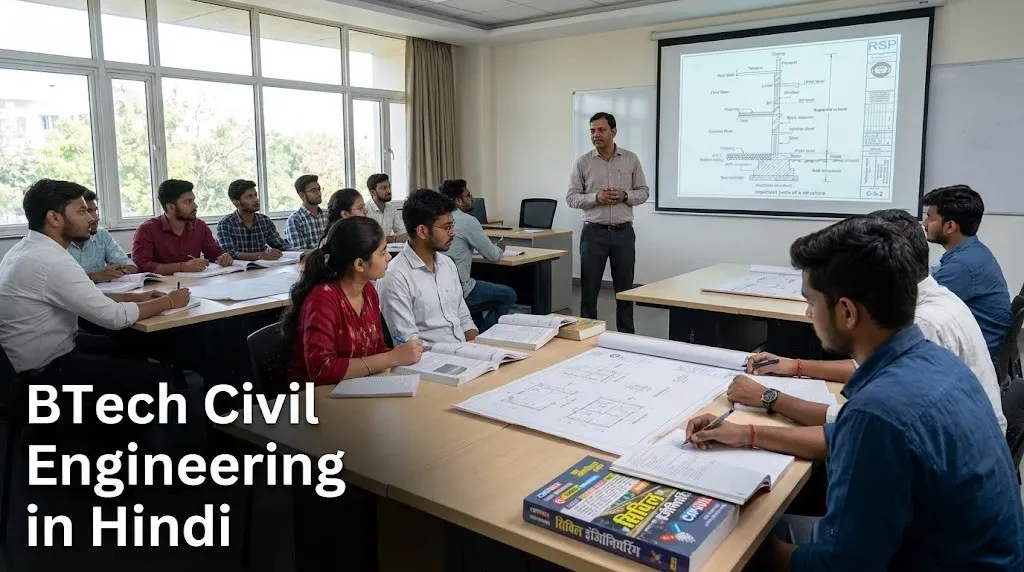
Students who studied in Hindi-medium schools often face a difficult jump when engineering suddenly switches to English. Madhya Pradesh is trying a different approach this year. SGSITS Indore has started a Hindi-medium BTech programme in Civil Engineering from the 2026-27 academic session.
The special programme has been prepared with Hindi study material and faculty trained to teach technical subjects in Hindi. Students will also continue learning essential English, so the shift to Hindi does not leave them struggling with the terminology they will encounter later in jobs, higher studies or professional work. The initiative is being introduced in line with the goals of the National Education Policy.
| What students get | Details |
|---|---|
| Teaching medium | Hindi |
| Financial incentive | ₹2 lakh in the final year, subject to the programme conditions |
| English support | Essential English skills alongside technical education |
| Special batch | 30 seats |
The financial support is another reason this course has attracted attention. Students who continue the Hindi-medium Civil Engineering programme up to the final year will be eligible for a ₹2 lakh government incentive. Around 20 students had already taken admission in the special batch by the latest update, against the 30 seats earmarked for it.
SGSITS has spent years preparing for the move. Faculty members have worked on translating English technical material into Hindi and have undergone training to teach the subjects in the new format. The thinking is fairly practical: students should be able to understand difficult engineering concepts without spending most of their time first translating the language in their head.
There could also be a workplace benefit. Civil engineers regularly communicate with workers and supervisors at construction sites, where Hindi or local languages are often used. Being comfortable with technical concepts in Hindi may make those conversations easier, while the additional English training can help students handle professional documents and industry communication.
For students considering the programme, the bigger question will be how well this model works after graduation. The first batch will show if Hindi-medium engineering can make technical education easier without creating a disadvantage in the job market. For now, SGSITS is trying to bridge that gap by teaching Civil Engineering in Hindi while keeping English skills in the picture.