Micro-Credentials in 2026: Are Short Certifications Replacing Degrees?
Micro-Credentials in 2026: Are Degrees Losing Their Importance?
Five years ago, a degree was everything. Today, things look different.
Students are completing short certifications in 3–6 months and getting job opportunities faster than traditional degree holders. Naturally, the question comes up - are degrees becoming outdated?
The answer is not as simple as yes or no.
What Are Micro-Credentials?
Micro-credentials are short, skill-focused certifications. They are designed to teach one specific skill instead of covering an entire academic program.
Examples include courses in digital marketing, graphic design, data analysis, coding, and more.
Why Micro-Credentials Are Growing Fast
There’s a clear reason behind their popularity.
- They take less time (weeks or months)
- They focus on practical skills
- They are often more affordable
- They match current job market needs
In simple terms, they are built for speed and relevance.
Degree vs Micro-Credentials (Real Comparison)
| Factor | Degree | Micro-Credential |
|---|---|---|
| Duration | 3–4 years | 3–6 months |
| Focus | Theory + broad knowledge | Specific practical skill |
| Cost | High | Low to moderate |
| Job Readiness | Sometimes delayed | Faster entry |
This is why many students are choosing certifications alongside or even instead of degrees.
Are Companies Accepting Micro-Credentials?
Yes-but with conditions.
Companies care more about skills than certificates. If you have proof of work (projects, portfolio), micro-credentials can help you get noticed.
However, for some roles, especially government jobs or highly regulated professions, a degree is still mandatory.
Where Degrees Still Matter
Degrees are still important in:
- Government jobs
- Medical and legal professions
- Academic and research careers
These fields require structured, long-term education.
Where Micro-Credentials Are Winning
Short certifications are gaining ground in:
- Tech (coding, web development)
- Design (UI/UX, graphic design)
- Marketing (SEO, social media)
- Freelancing and online work
These fields value skills more than formal qualifications.
Smart Approach Students Are Taking in 2026
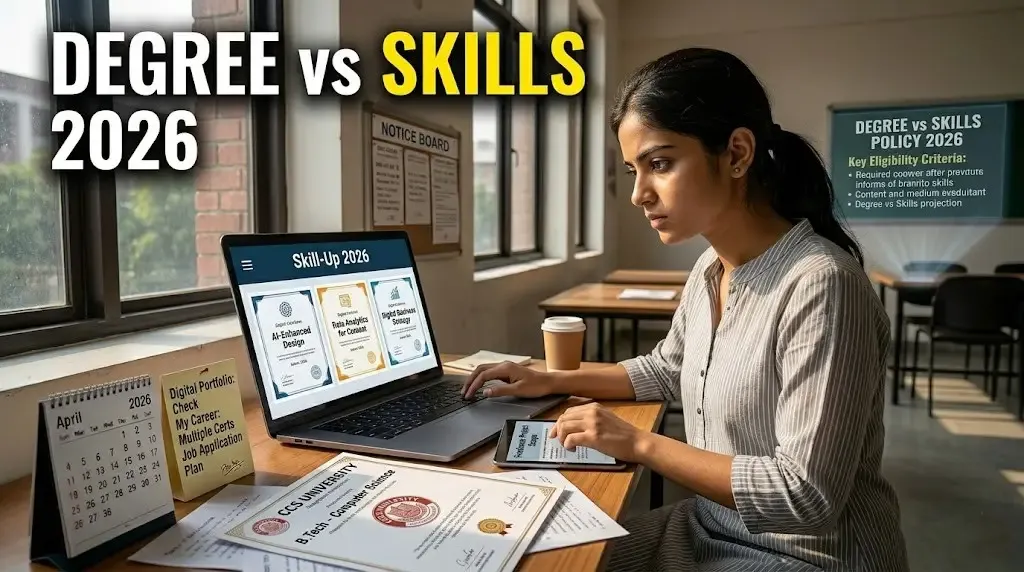
The smartest students are not choosing one over the other-they are combining both.
They pursue a degree for stability and add micro-credentials for practical skills.
This combination creates both credibility and capability.
Common Mistake Students Make
Some students think a certificate alone is enough.
But without real skills or projects, even multiple certifications don’t help.
The focus should always be on what you can actually do, not just what you have completed.
Conclusion
Micro-credentials are not replacing degrees-but they are definitely changing how careers are built.
Degrees give you a foundation. Certifications give you speed and skills.
In 2026, the real advantage comes from combining both smartly.

Written by
Palak PatelEducation writer Palak Patel covers the latest education news, board exam updates, results, and career opportunities.