
Karnataka Changes Admission Schedule After NEET Controversy
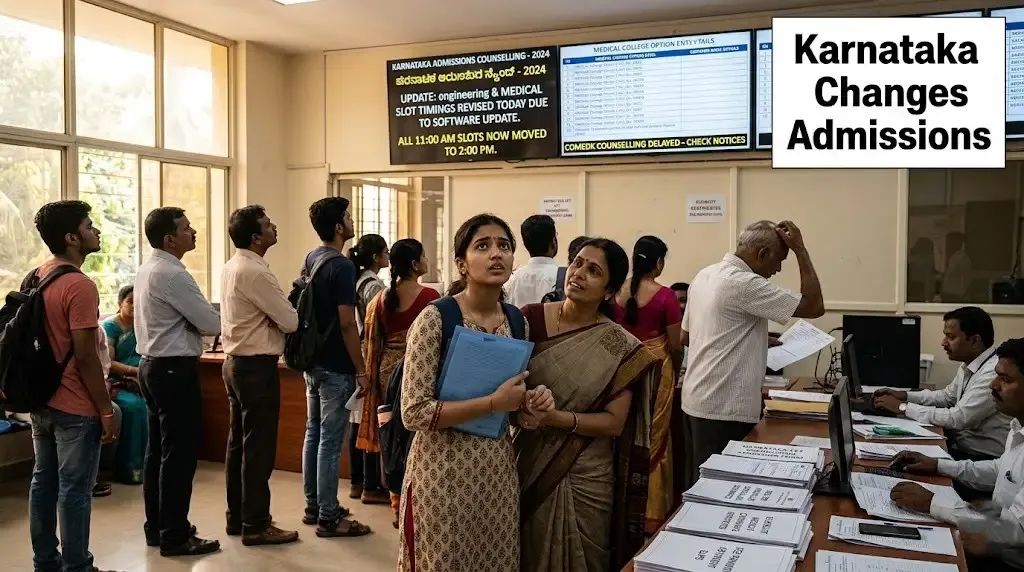
Karnataka Changes Admission Schedule After NEET Controversy
The NEET controversy is now creating visible changes far beyond medical admissions.
Karnataka has started adjusting parts of its professional course admission timeline after ongoing uncertainty around counselling schedules disrupted the normal academic flow.
Engineering counselling activity has reportedly moved earlier in some areas, while students are also being allowed greater flexibility to switch streams without immediately losing large admission fees.
For thousands of students and parents, the decision reflects a larger problem spreading across India’s admission ecosystem:
When one major entrance process becomes unstable, everything connected to it starts shifting too.
Why Karnataka Changed the Admission Timeline
The main concern appears to be uncertainty.
Many students apply simultaneously for:
- Medical seats
- Engineering colleges
- Pharmacy programs
- Private universities
- Allied health courses
When NEET-related schedules become unpredictable, students delay confirming other admissions too.
That creates counselling bottlenecks across multiple streams.
| Admission Issue | Impact on Students |
|---|---|
| Delayed counselling clarity | Students hesitate to lock seats |
| Changing timelines | Planning becomes difficult |
| Fee uncertainty | Families fear financial loss |
| Multiple backup admissions | Higher stress for students |
Karnataka’s adjustments appear aimed at reducing some of that pressure.
1. Engineering Admissions Are Moving Faster
Normally, many students wait for medical counselling clarity before finalizing engineering seats.
But extended uncertainty can delay the entire admission cycle.
By moving engineering counselling activity earlier, authorities may be trying to stabilize admissions before the academic calendar drifts too far.
Colleges also benefit because delayed admissions create problems for:
- Hostel allocation
- Semester scheduling
- Faculty planning
- Classroom organization
- Fee collection timelines
Private institutions especially depend heavily on predictable admission cycles.
2. Students Can Switch Streams More Flexibly
This is one of the most discussed parts of the change.
Students reportedly getting more flexibility to move between streams without losing large fee amounts could reduce panic during counselling season.
Many students currently hold backup admissions because nobody wants to risk losing an academic year.
But that also creates financial pressure.
| Earlier Student Fear | Why It Was Stressful |
|---|---|
| Losing admission fees | Financial burden on families |
| Missing better counselling rounds | Career uncertainty |
| Seat blocking confusion | Multiple admissions held simultaneously |
| Changing schedules | Constant admission pressure |
Greater flexibility could help students make decisions more calmly.
3. Parents Are Exhausted by Continuous Admission Changes
For many families, the emotional pressure is becoming overwhelming.
Parents are dealing with:
- Travel uncertainty
- Counselling confusion
- Hostel planning issues
- Fee deadlines
- Document verification
- Backup admission payments
Some families say they refresh counselling portals multiple times daily searching for updates.
And honestly, the constant uncertainty is creating more frustration than the delays themselves.
4. The Ripple Effect Is Expanding Beyond Medical Courses
The Karnataka situation reflects a wider national trend.
The admission system in India is deeply interconnected.
When major medical counselling schedules shift, students across other streams start delaying decisions too.
That impacts:
- Engineering colleges
- Pharmacy institutes
- Private universities
- Allied health programs
- Hostel systems
- Academic calendars
Students preparing for completely different careers are now indirectly affected by the same uncertainty.
5. Colleges Fear Late Academic Sessions
If counselling stretches too long, colleges risk beginning semesters late.
That creates academic compression later.
| Late Admission Problem | Possible Result |
|---|---|
| Delayed classes | Compressed semester schedules |
| Hostel occupancy uncertainty | Operational confusion |
| Late fee collection | Financial planning issues |
| Faculty scheduling problems | Administrative disruptions |
States are now under pressure to stabilize admissions quickly before delays spread further.
6. Students Want Predictability More Than Anything
One thing appears repeatedly in student discussions online:
People can manage pressure better when timelines feel clear.
The bigger frustration comes from:
- Constant revisions
- Unclear schedules
- Changing counselling dates
- Fee uncertainty
- Lack of communication clarity
Students increasingly want centralized and transparent updates instead of scattered announcements.
7. The Bigger Problem Is Admission System Dependency
The current situation exposed how fragile interconnected admission systems can become.
One disruption quickly spreads across:
- Counselling systems
- Seat allocation
- College planning
- Student decisions
- Academic schedules
Karnataka’s changes may be one of the clearest signs yet that authorities are trying to reduce those ripple effects before they grow larger.
Conclusion
Karnataka’s decision to adjust parts of its admission process shows how deeply NEET-related uncertainty is now affecting the broader education ecosystem.
Engineering and professional course admissions are increasingly getting influenced by shifting counselling timelines and delayed student decisions.
Allowing more flexible stream switching and moving counselling activity earlier may help reduce pressure for students and parents.
But the larger issue remains unresolved:
When major admission systems become unstable, the effects spread far beyond a single exam.
And right now, students across multiple streams are feeling that uncertainty directly.

Written by
MonishMonish is an education writer covering exams, student rights, academic awareness, and other education-related topics, with practical guidance for students.