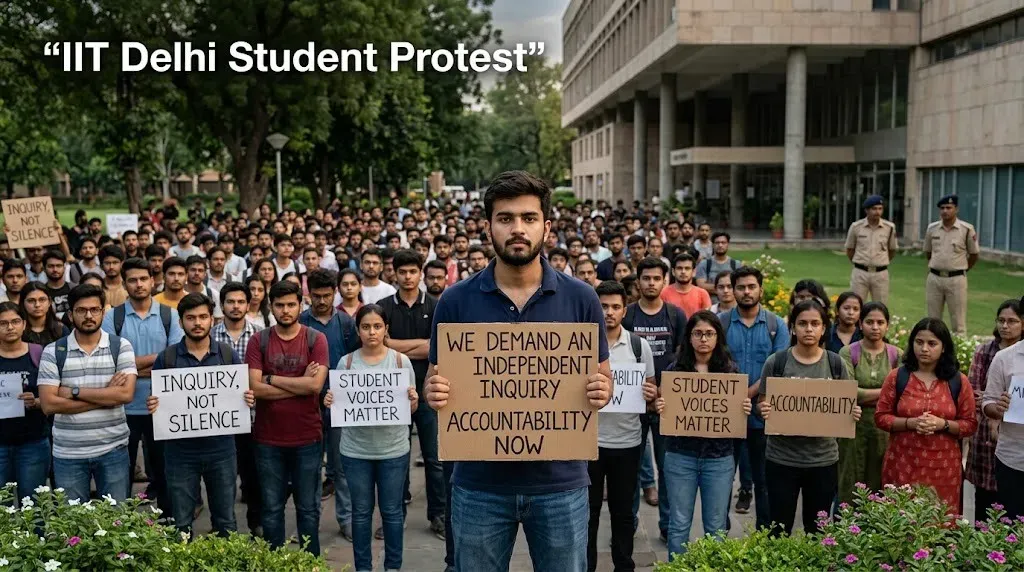
Student protests at IIT Delhi have entered their fifth day after the death of 31-year-old MSc Physics student Rishikesh Kumar. Hundreds of students have continued their agitation, with the main dispute now centred on accountability, the scope of the proposed inquiry and concerns about how student grievances are handled on campus.
The protest began on August 24 and grew rapidly across the campus. Students have continued attending classes and laboratories while joining demonstrations, but say they will keep protesting until their core demands receive a satisfactory response. The latest reports say four demands are at the centre of the standoff.
| Students' demand | What it means |
|---|---|
| Independent inquiry | Students want the investigation to examine the wider circumstances and alleged institutional lapses surrounding Kumar’s death. |
| Accountability | They want responsibility examined where specific allegations against officials or systems are found to have merit. |
| Resignation of the Dean (Students’ Welfare) | Students have maintained this demand despite the institute refusing to accept it. |
| ₹1 crore compensation | Students have asked the institute to provide compensation to Kumar’s family. |
The demand for an independent inquiry has already produced one important change. IIT Delhi has reconstituted its external inquiry panel under retired Delhi High Court judge Justice Mukta Gupta, a move that students had specifically sought. However, students now want the panel’s terms of reference expanded so that it can examine allegations made by Kumar’s mother to the police and determine whether anyone should be held accountable.
Kumar’s mother has alleged in her police complaint that her son faced difficulties related to hostel accommodation and was subjected to humiliating treatment. These are allegations, not established findings. Students want the inquiry panel to examine them rather than leaving them outside the investigation. The Delhi Police has separately registered an FIR against unknown persons for alleged abetment of suicide and is investigating the case.
IIT Delhi has said it recognises the seriousness of the incident and has committed to an external inquiry. The institute has also pointed to its existing mental-health support, including on-campus counsellors, psychiatric services and treatment support. Its official statement on student well-being and the inquiry says the external committee will examine the circumstances surrounding the death and identify further measures that may be needed.
Students, however, say the issue goes beyond the availability of counselling. During the protest, students have shared accounts of what they describe as insensitive responses when they approached campus systems for help. They are also collecting emails, messages and testimonials from current and former students to present concerns about student welfare and administrative behaviour to the inquiry.
The scale of the mobilisation is unusual for IIT Delhi. Students have held gatherings during the academic day and a late-night march also took place as the protest continued. Parts of the campus were barricaded during the unrest, creating a tense situation between protesters and security personnel.