
Delhi High Court Confirms UDID Cards as Key Document for Disability Benefits in NEET-UG 2026
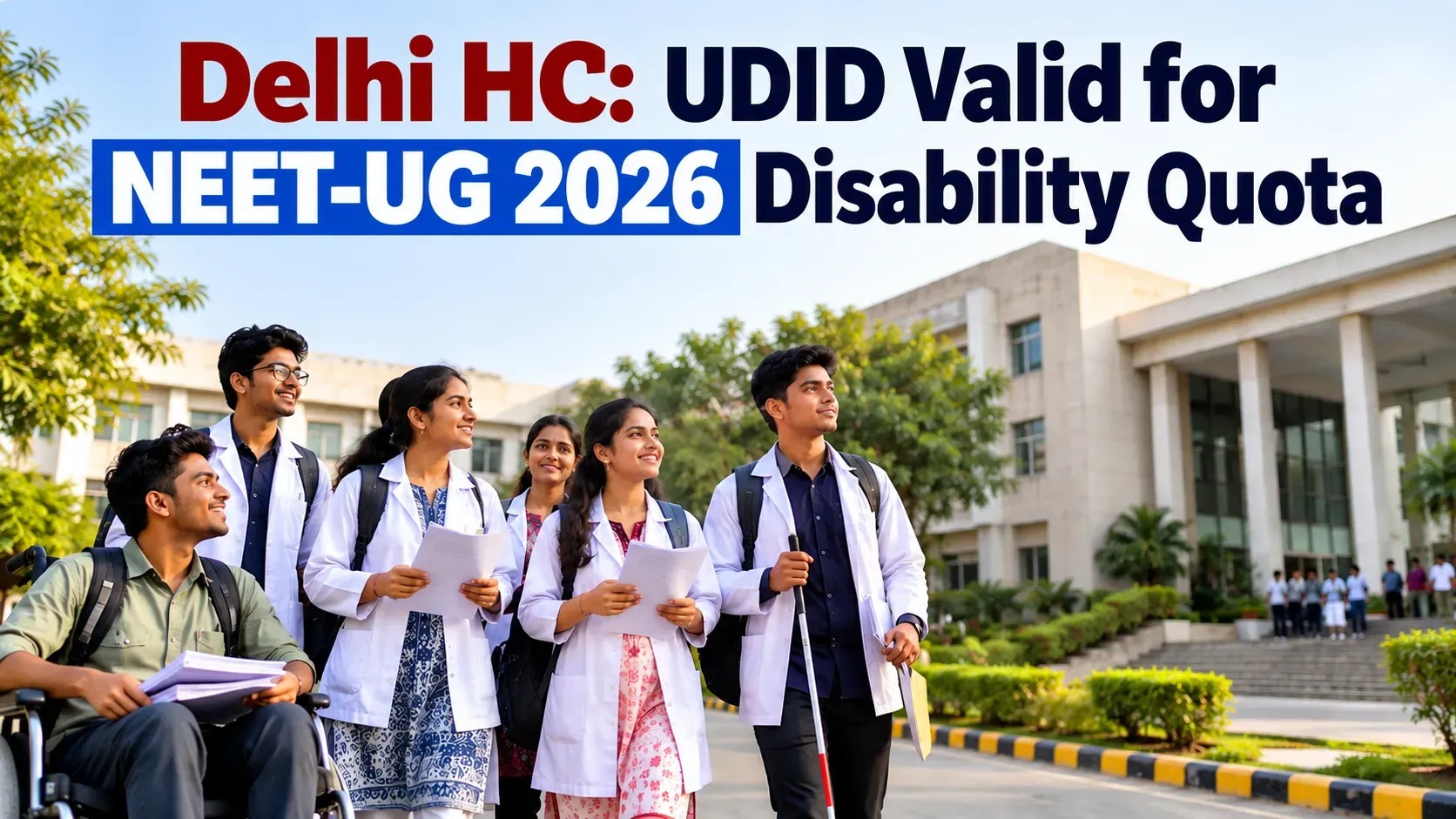
The Delhi High Court has brought welcome clarity for medical aspirants with disabilities who are preparing for NEET-UG 2026. A valid Unique Disability ID card, known as the UDID, will now act as the main document for claiming benefits in the Persons with Benchmark Disabilities category. Medical assessment boards are not allowed to reduce or recheck the disability percentage that already appears on the card. Justice Jasmeet Singh made it plain that boards can still look at whether a candidate has the functional ability needed for an MBBS course. What they cannot do is go back and change the percentage fixed in a valid UDID. The court pointed out that eligibility for reservation under the PwBD category is based on the benchmark disability set out in the Rights of Persons with Disabilities Act, 2016. The UDID issued under that law remains the primary document for this purpose. The decision followed petitions from two candidates. One was an 18-year-old whose UDID showed 60 percent permanent visual impairment. The other had 61 percent permanent locomotor disability recorded on her card. After the re-examination held in June 2026, which took place because of an earlier paper leak, medical boards lowered both percentages. The reduced figures left them short of the required mark and kept them out of PwBD counselling. The High Court cancelled those assessments. It directed the authorities to accept the disability percentages as written on the UDID cards and allowed both candidates to join the third round of counselling as well as any mop-up round that follows under the reserved category. Students and parents who deal with the NEET process every year know how stressful last-minute changes in disability percentages can be. Many genuine candidates have found themselves suddenly dropped from the reserved list during the medical evaluation stage. This order puts the statutory UDID at the centre of the process and restricts boards to checking only functional competence for the course. Counsellors and teachers who guide aspirants can now tell students with greater confidence to keep their UDID details correct and updated well before counselling starts. The court also noted earlier Supreme Court guidance that the focus should stay on functional capacity rather than on the number alone. By placing the UDID firmly in the lead, the High Court has made the system more open and less likely to shut out eligible candidates without warning. Aspirants from the disability category now have a clearer route to medical seats as the 2026 admission process moves ahead.

Written by
Palak PatelEducation writer Palak Patel covers the latest education news, board exam updates, results, and career opportunities.