
CBSE Third Language Policy Change: French and German Replaced by Sanskrit and Regional Languages
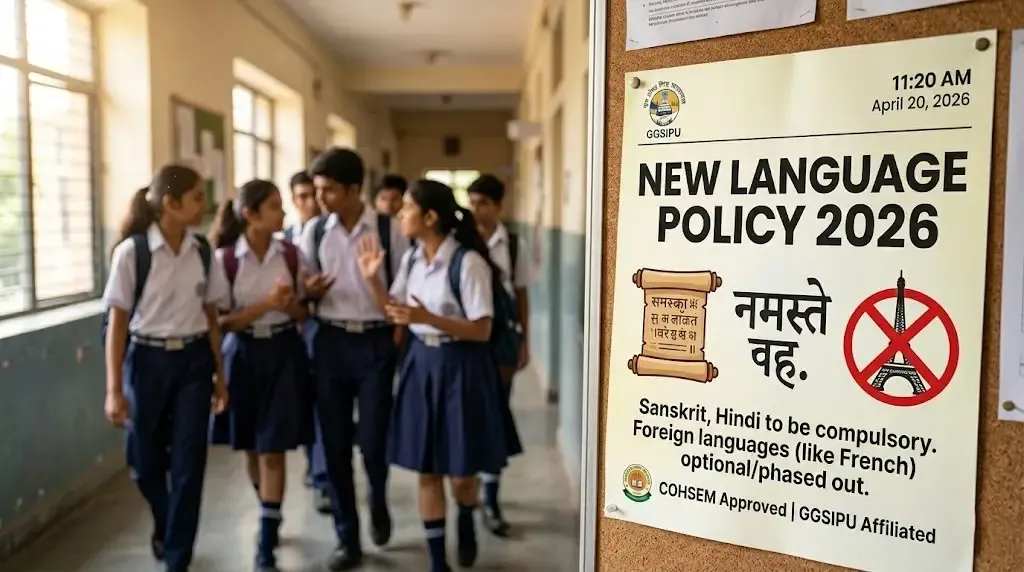
The End of the Foreign Language Trend? CBSE’s New "R3" Rule Explained
If you were hoping your kid would be fluent in French by high school, you might want to adjust those expectations. In a massive curriculum shift rolling out for the 2026-27 session, the Central Board of Secondary Education (CBSE) is making a third language (R3) compulsory from Class 6. But here is the kicker: the new rules require that at least two of the three languages studied must be native to India.
In most private English-medium schools, English is already treated as one of the three languages (and technically classified as "foreign" or non-native in this context). That means the remaining two must be Indian. If your child is already taking Hindi, the only remaining slot is being filled by Sanskrit or a regional language, leaving absolutely no room for French, German, or Spanish in the formal timetable.
The New Language Framework (R1, R2, R3)
| Category | Requirement | Common Choice in Pvt Schools |
|---|---|---|
| R1 (First Language) | Any language offered by CBSE | English |
| R2 (Second Language) | Different from R1 | Hindi or Regional Language |
| R3 (Third Language) | Compulsory from Class 6 | Sanskrit / Regional Language |
The math is simple but frustrating for many parents: if R1 is English and R2 is Hindi, R3 must be an Indian language to satisfy the "two native languages" rule. Schools like The Indian School in South Delhi have already started notifying parents that French is being phased out for Class 6 students starting right now.
Why the sudden change?
This isn't just a random board decision; it's the implementation of the National Education Policy (NEP) 2020 and the National Curriculum Framework (NCF) 2023. The goal is "multilingualism and cultural rootedness." The government wants students to have a stronger grip on Indian heritage, and they see languages like Sanskrit as the gateway to that.
However, the move has sparked a bit of a panic. Parents are worried that losing foreign language options will hurt students' global competitiveness. Meanwhile, schools are stuck wondering what to do with their French and German teachers. Some schools are talking about moving foreign languages to "hobby classes" or "activity periods" just to keep them alive, but they won't count toward the official board requirements anymore.
Key Deadlines to Remember
- April 9, 2026: CBSE issued the circular directing schools to implement the new R3 structure within seven days.
- 2026-27 Session: The policy officially kicks off for Class 6 students.
- 2031 Board Exams: This current batch of Class 6 students will be the first to appear for a mandatory third language paper in their Class 10 Boards.
Conclusion
The "English + Hindi + French" era is effectively over for new secondary students in India. While current Class 7-10 students are safe and can finish their courses, the new batch is heading into a much more "Indian-centric" linguistic landscape. If you want your child to learn a foreign language now, you'll likely be looking at weekend classes or after-school clubs. It’s a bold move toward cultural pride, but it’s definitely going to take some getting used to.

Written by
Palak PatelEducation writer Palak Patel covers the latest education news, board exam updates, results, and career opportunities.