
New School Facilities for Girls – Is Education Becoming More Inclusive?
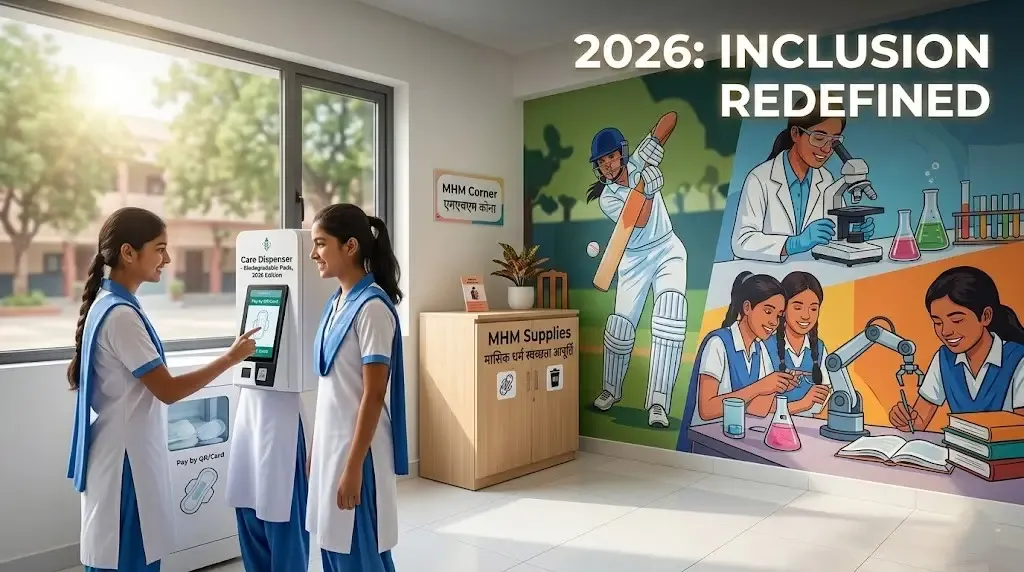
The 2026 Shift: Why Physical Infrastructure is the New Metric for Girls' Inclusion
For decades, "inclusive education" was a term limited to enrollment numbers and curriculum updates. However, in April 2026, the conversation has moved to the very walls of the school building. Infrastructure is no longer just about bricks and mortar; it has become the primary driver for female retention. From the recent Supreme Court mandate declaring menstrual hygiene a fundamental right to the saturation of PM SHRI schools with gender-specific amenities, the 2026 academic landscape proves that a girl's ability to stay in school is directly linked to the facilities she finds there.
According to the latest UDISE+ 2025-26 data, the gap between "schools with toilets" and "schools with functional, safe, and separate girls' toilets" has narrowed significantly. This shift is most visible in states like Delhi, where girls have now overtaken boys in enrollment across all school levels, reaching a Gross Enrollment Ratio (GER) of 107.2 at the primary level.
The 2026 Inclusion Checklist: New Standards for Girls
| Facility | Standard as of April 2026 | Impact on Inclusion |
|---|---|---|
| MHM Corners | Mandatory separate zones with spare uniforms, pads, and private disposal. | Reduces period-related absenteeism by an estimated 35%. |
| Sanitary Vending | Automated vending machines for oxo-biodegradable pads in all schools. | Normalizes menstrual health and ensures 100% accessibility. |
| STEM Skill Labs | Integrated "Girls-First" modules in robotics and AI labs. | Bridges the gender gap in technical higher secondary streams. |
| Safe Transport | GPS-tracked dedicated school buses or neighborhood escorts. | Addresses the "safety-first" concern of parents in rural areas. |
1. The Legal Revolution: Menstrual Health as a Fundamental Right
The biggest catalyst for change this year was the January 30, 2026, Supreme Court ruling. The apex court declared that lack of Menstrual Hygiene Management (MHM) in schools subjects girls to "stigma and humiliation," violating Article 21 of the Constitution. Following this, the CBSE issued a March 2026 circular mandating monthly compliance reports from all 28,000+ affiliated schools. This isn't just about providing pads; it's about creating "MHM Corners"-safe, private spaces where exigencies are handled without shame.
"Dignity cannot be reduced to an abstract ideal. For menstruating girl children, the accessibility of MHM measures is the bridge between dropping out and finishing their education." - Supreme Court of India, Jan 2026.
2. Beyond Toilets: STEM and Sports Inclusion
Inclusion in 2026 has expanded to the "Pre-Skill" level. The PM SHRI (Schools for Rising India) model has introduced integrated science and skill labs specifically designed to encourage female participation. These facilities include Atal Tinkering Labs with ergonomic furniture and inclusive digital tools. Similarly, the 2026 budget saw a 20% increase in "Gender Equity" funds for school playgrounds, ensuring that sports equipment is no longer "boys-only" by default.
3. The Data: enrollment is Leading the Way
The results of these facilities are reflected in the numbers. In early 2026, the Economic Survey of major metros reported a "reversed gender gap." Girls are now transitioning from lower to higher secondary levels at rates 9% higher than boys in high-infrastructure urban districts. This suggests that when schools are safe and sanitary, the "social norms" that once held girls back are rapidly dissolving.
Official Links & Guidelines (April 2026)
| Resource Name | Direct Official Link |
|---|---|
| CBSE MHM 2026 Guidelines | Download Circular |
| PM SHRI Infrastructure Specs | Check Benchmarks |
| UDISE+ 2026 Dashboard | View Statistics |
Conclusion
Is education becoming more inclusive? The 2026 data says a resounding yes. While policy changes like the NEP 2020 provided the roadmap, the actual physical facilities-the MHM corners, the dedicated labs, and the safe toilets-are the vehicles driving this change. For the Class of 2026, school is no longer just a place to study; it is a space that respects their biology and fosters their ambition. As the Inclusive Education Summit 2026 highlighted, the next step is ensuring these "exemplar" standards reach every rural hamlet in the country. The era of the "inclusive campus" has officially arrived.

Written by
Palak PatelEducation writer Palak Patel covers the latest education news, board exam updates, results, and career opportunities.