
Education Loan Trap: What Really Happens If You Can’t Pay EMI?
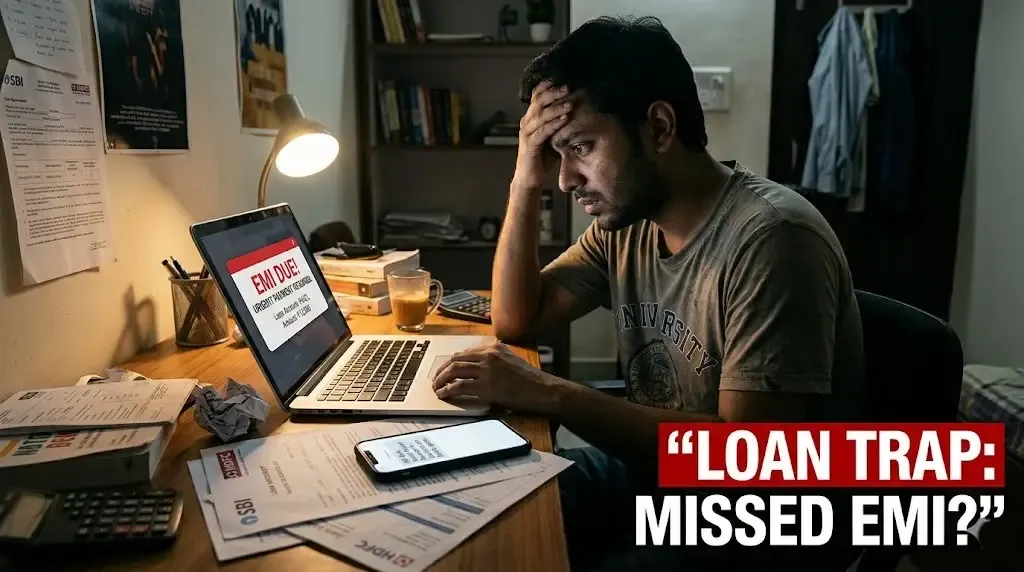
Why Education Loans Feel Easy at First
When students take an education loan, it often feels like a relief.
No need to pay fees upfront. No immediate pressure. The common thought is: “I’ll repay it once I get a job.”
But things change after graduation. Job delays, low starting salaries, or unexpected expenses can make EMIs feel heavy.
This is where the loan starts turning from support into stress.
What Happens If You Miss an EMI?
Missing one EMI doesn’t create a crisis instantly-but ignoring it can quickly escalate the situation.
| Time After Missing EMI | What Happens |
|---|---|
| 1–30 days | Late payment charges and reminder calls |
| 30–90 days | Your CIBIL score starts dropping |
| 90+ days | Loan is marked as NPA (default category) |
| After default | Legal notices or recovery actions may begin |
The key point is simple: the longer you delay, the more serious it becomes.
Impact on Your Credit Score
Your CIBIL score is one of the biggest things affected by missed EMIs.
Even a few missed payments can lower your score significantly, and rebuilding it takes time.
This can create problems in the future:
- Difficulty getting credit cards
- Rejection of car or home loans
- Higher interest rates on future loans
In some cases, even employers check credit history for financial roles.
Can Banks Take Legal Action?
Yes, but not immediately.
Banks usually start with reminders, calls, and notices. Their goal is recovery, not punishment.
If the loan remains unpaid for a long time, they may:
- Send legal notices
- Involve recovery agents
- Take action against the guarantor (if there is one)
In secured loans, the collateral can also be at risk.
Why Students Fall Into This Situation
Most students don’t default intentionally. It usually happens due to real-life challenges:
- Delay in getting a job
- Low initial salary
- Lack of financial planning
- Taking higher loan amounts without backup plans
The issue is rarely the loan itself-it’s the absence of a clear repayment strategy.
What You Should Do If You Can’t Pay EMI
Ignoring the problem makes it worse. Taking action early can prevent long-term damage.
Here are practical steps:
- Contact your bank as soon as possible
- Request a moratorium or EMI restructuring
- Try to make partial payments instead of skipping completely
- Look for temporary income sources (freelancing, part-time work)
Banks are often willing to help-but only if you communicate.
Available Options for Students
| Option | Meaning |
|---|---|
| Moratorium | Temporary pause on EMI payments |
| Restructuring | Lower EMI by increasing loan duration |
| Settlement | Pay a reduced lump sum (used as last option) |
| Refinancing | Transfer loan to another bank with lower interest |
Conclusion
An education loan can open doors-but only if managed wisely.
Missing an EMI is not the end of the road, but ignoring it can lead to long-term financial problems.
The smartest approach is to stay informed, act early, and communicate with your bank.
Because at the end of the day, your degree should build your future-not create a financial burden.

Written by
Palak PatelEducation writer Palak Patel covers the latest education news, board exam updates, results, and career opportunities.