
Digital Arrest Scam 2026: How Students Are Being Targeted Online and How to Stay Safe
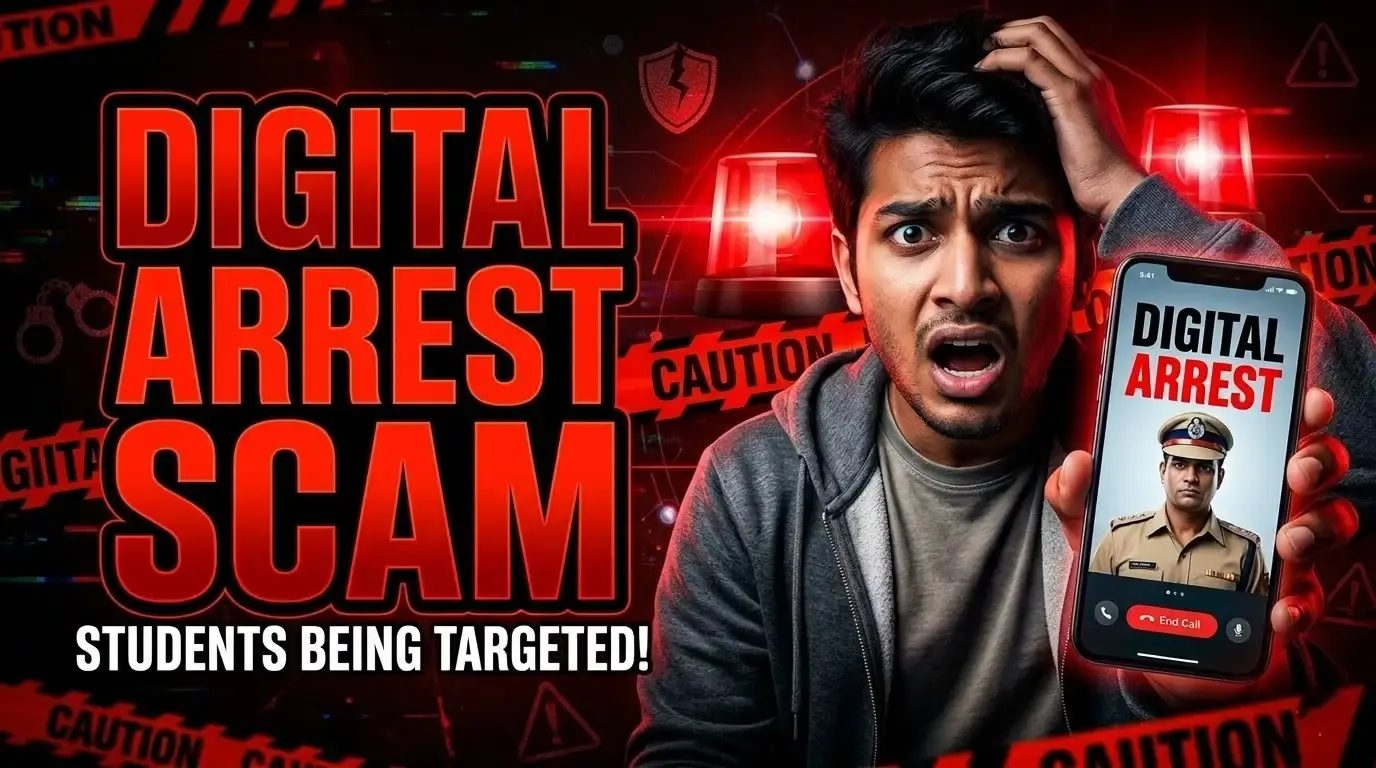
Digital Arrest Scam 2026: The Online Fraud That Is Tricking Students
Over the past year, a strange new type of cyber fraud has started appearing across India. Victims receive calls or messages claiming they are involved in a criminal case, and suddenly they are told they are under something called a “digital arrest.”
The scammers pretend to be officials from agencies like the police, cybercrime department, or even government investigation units. They threaten the victim by saying their Aadhaar number, bank account, or phone number has been linked to illegal activity.
Students are becoming easy targets because many of them panic when they hear words like “legal case,” “arrest warrant,” or “cyber investigation.” The fraudsters use that fear to pressure victims into sending money or sharing sensitive information.
What Is the Digital Arrest Scam?
The term digital arrest itself is completely fake. There is no legal concept where someone can be arrested over a video call or phone call without proper legal procedures.
However, scammers create a convincing situation. They may conduct long video calls, show fake police uniforms, display forged documents, and even ask the victim to stay connected for hours while they “verify the case.”
During this time, victims are pressured to transfer money to so-called “verification accounts” or “security deposits”, which are actually the scammers’ bank accounts.
Common Tricks Used by Scammers
These scams usually follow a similar pattern designed to create fear and urgency.
| Scam Method | What the Fraudster Claims |
|---|---|
| Fake Police Call | They say your phone or Aadhaar is linked to a crime |
| Video Call Investigation | They pretend to conduct a live investigation |
| Threat of Immediate Arrest | Victims are told they will be arrested if they disconnect |
| Money Transfer Request | They demand payment for verification or case closure |
Why Students Are Becoming Easy Targets
Students often use online platforms frequently and may not be fully aware of how official investigations actually work. Fraudsters take advantage of this by creating situations that sound extremely serious and urgent.
Some scammers even search social media profiles to learn basic details about their targets, making their story appear more believable during the call.
Because the fraud usually involves fear and authority, victims sometimes follow instructions without verifying whether the situation is real.
How Students Can Stay Safe Online
The most important thing to remember is simple: no law enforcement agency arrests someone over a phone call or video call.
- Never transfer money to someone claiming to be a police officer on a phone call.
- Do not share Aadhaar, bank details, or OTP with unknown callers.
- If someone threatens arrest on a call, disconnect immediately.
- Verify the situation through official police or cybercrime portals.
- Report suspicious calls to the national cybercrime helpline.
As online fraud techniques continue evolving in 2026, awareness is one of the strongest defenses. Simply knowing how scams like the Digital Arrest Scam work can help students avoid becoming victims.

Written by
Palak PatelEducation writer Palak Patel covers the latest education news, board exam updates, results, and career opportunities.
Comments
No comments yet. Be the first!