
Delhi University Introduces Major Change in MTech Admissions
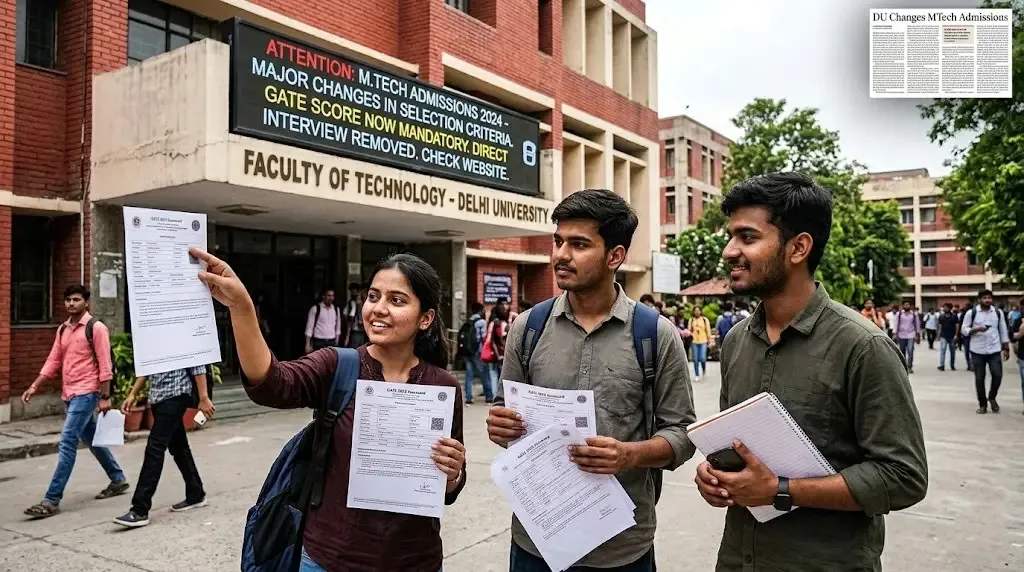
Delhi University Introduces Major Change in MTech Admissions
Delhi University has introduced an important change to its MTech admission process that could affect engineering aspirants across India.
The university will now consider GATE scores directly for selected MTech programs, bringing parts of its postgraduate technical admissions closer to the national engineering entrance framework already followed by many top institutions.
For students preparing for higher studies after engineering, the move is being seen as both practical and strategic.
It may simplify admissions for some candidates while also increasing competition for technical seats under a more standardized system.
What Is Changing in DU’s MTech Admissions?
Earlier, universities often relied on combinations of:
- University-level entrance tests
- Academic merit
- Departmental processes
- Interviews
- Separate admission criteria
Now, selected MTech programs at Delhi University will directly consider GATE performance during admissions.
| Old Admission Pattern | New Admission Direction |
|---|---|
| Separate admission processes | Greater GATE integration |
| University-focused selection | National-level score consideration |
| Different evaluation systems | More standardized technical admissions |
The shift reflects a broader trend in technical education toward centralized merit-based evaluation systems.
1. GATE Scores Are Becoming More Important Across India
For engineering students, GATE already plays a major role in:
- MTech admissions
- PSU recruitment
- Research opportunities
- Scholarship eligibility
- Higher technical education
Delhi University’s move signals how influential the exam has become in postgraduate engineering pathways.
Students with strong GATE scores may now find more opportunities opening across universities beyond IITs and NITs.
2. Students May Prefer Standardized Admissions
Many engineering aspirants actually prefer systems based on national-level exams because they reduce confusion.
Instead of preparing separately for multiple university-level technical entrance processes, students can focus more heavily on one standardized exam.
That potentially reduces:
- Application pressure
- Multiple exam costs
- Travel expenses
- Preparation overlap
- Admission uncertainty
For students already investing months preparing for GATE, broader acceptance of scores can feel beneficial.
| Why Students Support GATE-Based Admissions | Benefit |
|---|---|
| Single major preparation path | Less academic pressure |
| National-level ranking system | Standardized evaluation |
| Wider admission opportunities | More college options |
| Recognized exam structure | Better transparency perception |
3. Competition Could Increase for MTech Seats
At the same time, standardized admissions can also intensify competition.
When admissions rely more heavily on GATE rankings, students nationwide compete within a common performance framework.
That may increase pressure for candidates aiming at top technical programs.
Especially because postgraduate engineering seats already attract students targeting:
- Research careers
- AI specializations
- Core engineering roles
- Government technical jobs
- Academic careers
Students may now need stronger GATE preparation strategies earlier.
4. The Change Reflects a Bigger Shift in Technical Education
Across India, technical education systems are gradually moving toward:
- Centralized evaluations
- National-level entrance integration
- Skill-focused technical programs
- Research-oriented admissions
- Standardized merit systems
Universities increasingly want stronger academic filtering for advanced technical programs.
GATE scores provide one established benchmark for that purpose.
5. Students Are Becoming More Strategic About Postgraduate Education
MTech decisions today look very different from a decade ago.
Students increasingly evaluate postgraduate engineering based on:
- ROI
- Research quality
- AI specialization
- Industry collaboration
- Placement outcomes
- Government opportunities
Because of changing hiring trends, students now approach MTech admissions much more strategically.
Especially in fields connected to AI, cybersecurity, semiconductor systems, cloud computing, and advanced engineering research.
| Growing MTech Area | Why Demand Is Rising |
|---|---|
| Artificial Intelligence | AI hiring expansion |
| Cybersecurity | Digital security demand |
| Data Science | Industry analytics growth |
| Semiconductor Technology | Global chip industry focus |
6. DU Could Attract More Technical Aspirants Now
Delhi University already carries strong national recognition academically.
Direct GATE consideration for MTech programs may attract more engineering graduates who earlier focused mainly on traditional technical institutes.
For some students, location advantages and academic reputation together make DU increasingly attractive for postgraduate education.
Especially as major universities expand their technical and interdisciplinary offerings.
7. Students Still Want More Admission Transparency
One thing engineering aspirants repeatedly ask for is clarity.
Students increasingly want:
- Clear eligibility rules
- Transparent seat allocation
- Predictable counselling schedules
- Department-wise criteria
- Accurate admission updates
Because postgraduate admissions often become highly competitive and stressful.
Early communication around new admission models matters heavily.
Conclusion
Delhi University’s decision to directly consider GATE scores for selected MTech programs marks an important shift in technical admissions.
The move aligns DU more closely with national engineering admission patterns while potentially simplifying applications for many students.
At the same time, competition for technical postgraduate seats could become stronger under a more standardized evaluation model.
For engineering aspirants, one thing is becoming increasingly clear:
GATE is no longer just an entrance exam for IITs or PSUs.
Its influence across India’s postgraduate technical education ecosystem continues to grow rapidly.

Written by
MonishMonish is an education writer covering exams, student rights, academic awareness, and other education-related topics, with practical guidance for students.