
Students Using AI for PYQs: Smart Study or Risky Shortcut?
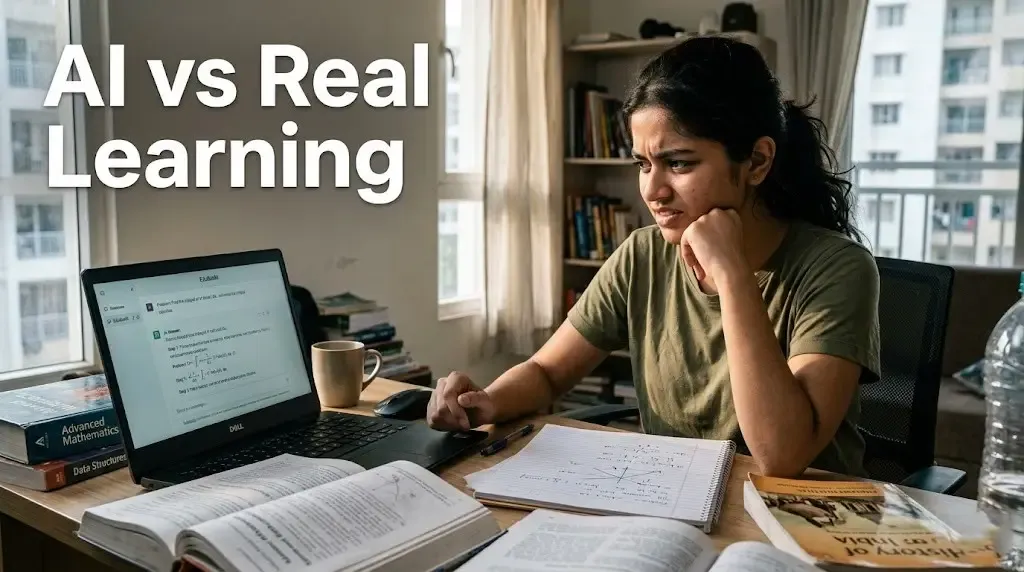
Students Using AI to Solve PYQs: Smart Strategy or Risky Shortcut?
Let’s be real — almost every student today is using AI in some way while studying. Especially for PYQs (Previous Year Questions), tools like chatbots are becoming the go-to solution.
But here’s the question no one is answering honestly — is this actually helping you learn, or just making things easier for the moment?
What’s Happening Right Now
Students are uploading PYQs into AI tools and getting instant answers, explanations, and even step-by-step solutions.
It saves time. It feels smart. But it also changes how you actually think and learn.
Smart Strategy vs Risky Shortcut
| Approach | Reality |
|---|---|
| Smart Use | Using AI to understand concepts and verify answers |
| Shortcut Use | Copying answers without thinking |
| Time Saving | Helps cover more syllabus quickly |
| Dependency Risk | Reduces problem-solving ability over time |
Where Students Go Wrong
The biggest mistake is using AI as a replacement for thinking.
If you directly copy solutions without trying the question first, your brain never learns the process. And in exams, AI won’t be there to help you.
What Actually Works
Use AI like a teacher, not like a shortcut.
- First, try solving the question yourself
- Then use AI to check your answer
- Understand the logic, not just the solution
- Ask AI “why” instead of just “what”
This way, you get both speed and understanding.
Hidden Risk No One Talks About
Overusing AI can slowly kill your confidence.
Because deep down, you know you didn’t solve it yourself. And that doubt shows up during exams.
Final Words
AI is powerful — but how you use it decides everything.
If you use it smartly, it can boost your preparation. If you depend on it blindly, it can weaken your basics.
So the real question is not “AI is good or bad?” — it’s “how are YOU using it?”

Written by
Palak PatelEducation writer Palak Patel covers the latest education news, board exam updates, results, and career opportunities.