
AI Tools to Summarize Books & Save Study Time
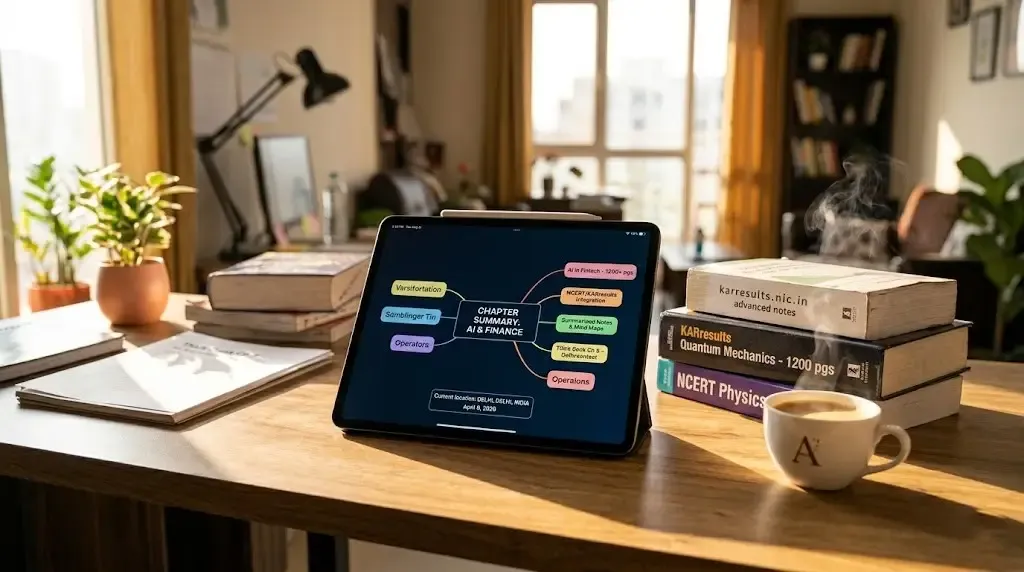
Stop Reading, Start Mastering: The Best AI Tools to Summarize Your Library
Let’s be real: nobody actually wants to spend six hours grinding through a single textbook chapter. Whether you're a finance student tackling complex regulations or just trying to get through a massive reading list, AI has finally made "skimming" a legitimate scientific method.
The trick isn't just getting a shorter version of the text; it's about using tools that turn those summaries into something you can actually use to pass an exam. We’re talking about AI that builds your flashcards, quizzes you on the spot, and even "talks" back to you when you’re confused.
If you're still doing this the old-fashioned way—highlighter in one hand, coffee in the other—you're working too hard. Here’s a breakdown of the heavy hitters in the AI summarization world for 2026.
Quick Comparison of AI Summarizers
| Tool | Best For | Standout Feature | Price Range |
|---|---|---|---|
| Scholarcy | Academic PDFs/Textbooks | Interactive Flashcards | Free / ~$9.99/mo |
| Mindgrasp | All-in-one Study Sessions | Auto-generated Quizzes | Free Trial / ~$9.99/mo |
| QuillBot | Quick Overviews | Adjustable Length Slider | Free / ~$8.33/mo |
| NotebookLM | Deep Research Analysis | Multi-source Audio Overviews | Free (w/ Google Account) |
| Blinkist | Nonfiction Bestsellers | 15-minute "Blinks" | 1 Free/day / ~$14.99/mo |
1. Scholarcy: The Academic Powerhouse
If you're dealing with dense academic PDFs, Scholarcy is your new best friend. It doesn't just shorten text; it breaks it down into structured sections like "Key Findings" and "Methods".
It’s specifically built for researchers. It pulls out references for you and converts entire documents into a set of interactive flashcards. This is a massive time-saver for anyone who needs to quickly verify sources without reading every single footnote.
2. Mindgrasp: The Exam Prep King
Mindgrasp is like having a private tutor who has already read your homework. You can upload PDFs, YouTube links, or even recordings of your lectures, and it instantly spits out structured notes, summaries, and flashcards.
Why students love it: It includes an "AI Tutor" feature where you can ask specific questions about the material 24/7. It’s perfect for those night-before-the-test panics when you realize you don't actually understand Chapter 4.
3. NotebookLM: Google’s Secret Research Weapon
Google’s NotebookLM is a bit different. Instead of just summarizing one thing, you "feed" it all your research papers, notes, and sources for a project. It then acts as an expert on your specific data.
| Feature | How it Helps You |
|---|---|
| Source Grounding | Answers only using your provided materials |
| Audio Overviews | Turns your notes into a podcast-style discussion |
| Study Guides | Auto-generates FAQs and mind maps from your docs |
4. QuillBot: For the Quick "TL;DR"
Sometimes you don't need a full study suite; you just need to know what a page says. QuillBot is incredibly fast for summarizing pasted text. It has a simple slider that lets you choose exactly how short you want the summary to be. It’s ideal for when you're writing an essay and need to quickly summarize a source for your bibliography.
Conclusion
Using AI to study isn't "cheating"—it’s optimizing. The most successful students are using these tools to handle the heavy lifting of summarization so they can spend more time on actual critical thinking and application.
If you're just starting, try the free tier of Scholarcy for your heavy PDFs or Mindgrasp if you have a lot of video content to get through. Let the AI do the reading so you can do the learning.

Written by
Palak PatelEducation writer Palak Patel covers the latest education news, board exam updates, results, and career opportunities.