
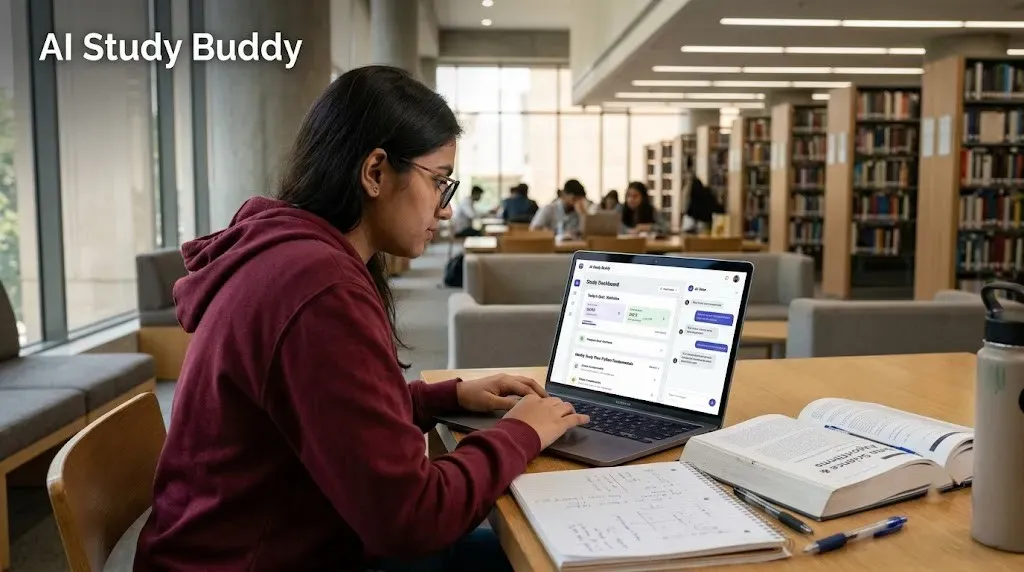
AI is becoming a regular part of college study, but the next step is more interesting than simply asking a chatbot questions. Universities and student teams are building AI study buddies that can work with course notes, create quizzes, explain difficult topics and help students organise their preparation.
Some of these tools are designed around a student's own course material. That matters because an AI tutor working from uploaded lectures or notes can give answers that are more relevant to what the student is actually expected to learn.
| Use | How students can use it |
|---|---|
| Doubt solving | Ask for a difficult concept to be explained step by step in simpler language. |
| Exam preparation | Turn lecture notes into practice questions or a short revision plan. |
| Weak areas | Use quizzes and feedback to identify topics that need another round of study. |
This is already happening in student projects. Indiana University students recently developed AI-powered study assistants that combine course materials, personalised study plans, quizzes and tutoring. Google has also introduced student-focused Gemini features that can turn uploaded course material into study guides and personalised quizzes.
For a college student, the smartest use is to treat the AI buddy like a tutor who keeps asking you to think. Upload your notes, ask it to explain one concept, then request a question without the answer. Try solving it yourself before checking the explanation.
That approach matters because AI is not automatically a better teacher. A recent controlled study involving around 500 undergraduate students found no statistically significant improvement in measured learning outcomes from an AI chatbot, despite expectations that personalised tutoring would help.