
AI-Powered Fake News Detection Tools Everyone Should Know About
AI-Powered Fake News Detection Tools Everyone Should Know About
The rise of artificial intelligence and social media has made fake news more sophisticated and harder to identify online.
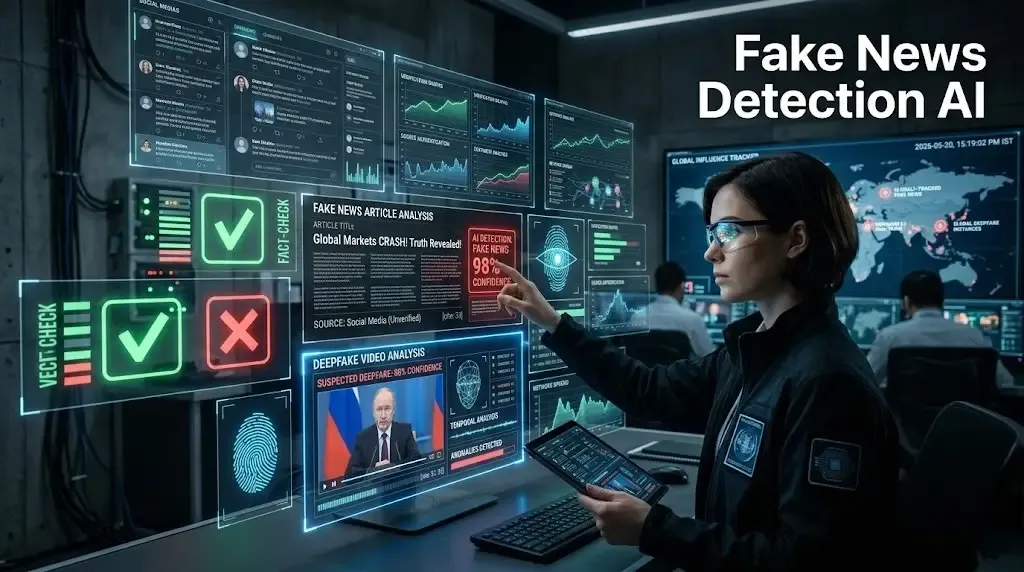
To fight misinformation, several AI-powered fake news detection tools are now helping users verify news articles, images, videos, and viral social media claims.
What’s Happening Right Now
Governments, fact-checking organizations, and technology companies are increasingly investing in AI systems to detect misinformation and manipulated content.
Students, journalists, and social media users are also becoming more aware of deepfakes, edited media, and misleading viral posts.
Popular AI Fake News Detection Tools
| Tool Type | Main Purpose |
|---|---|
| AI Fact-Checking Platforms | Verify news authenticity |
| Reverse Image Search Tools | Detect reused or fake images |
| Deepfake Detection Systems | Identify AI-generated media |
| Browser Verification Extensions | Flag suspicious websites |
| Social Media Monitoring AI | Track viral misinformation |
How These Tools Work
- Analyze writing patterns and headlines
- Compare claims with trusted databases
- Detect manipulated photos and videos
- Identify suspicious website behavior
- Use machine learning for misinformation detection
Why Fake News Is Becoming Dangerous
AI-generated misinformation can influence public opinion, create panic, damage reputations, and spread confusion rapidly online.
Deepfake technology has also made fake videos and voice cloning more realistic than before.
How People Can Protect Themselves
- Verify information through multiple trusted sources.
- Avoid forwarding unverified viral messages.
- Use reverse image and fact-checking tools.
- Be cautious with emotionally provocative content.
- Check publication dates and original sources carefully.
Reality Check
AI detection systems are improving, but no tool can guarantee 100% accuracy against all misinformation.
Human critical thinking and media literacy remain extremely important in identifying fake content.
Why This Matters for Students
Young users consume large amounts of online content daily through social media and video platforms.
Understanding how misinformation spreads can help students become more responsible digital citizens.
Conclusion
AI-powered fake news detection tools are becoming increasingly important in the fight against online misinformation.
However, awareness, verification habits, and critical thinking remain the strongest protection against fake news.
Because technology alone cannot completely solve the growing misinformation problem online.

Written by
Palak PatelEducation writer Palak Patel covers the latest education news, board exam updates, results, and career opportunities.