
10 Habits of Students Who Get Top Placement Packages
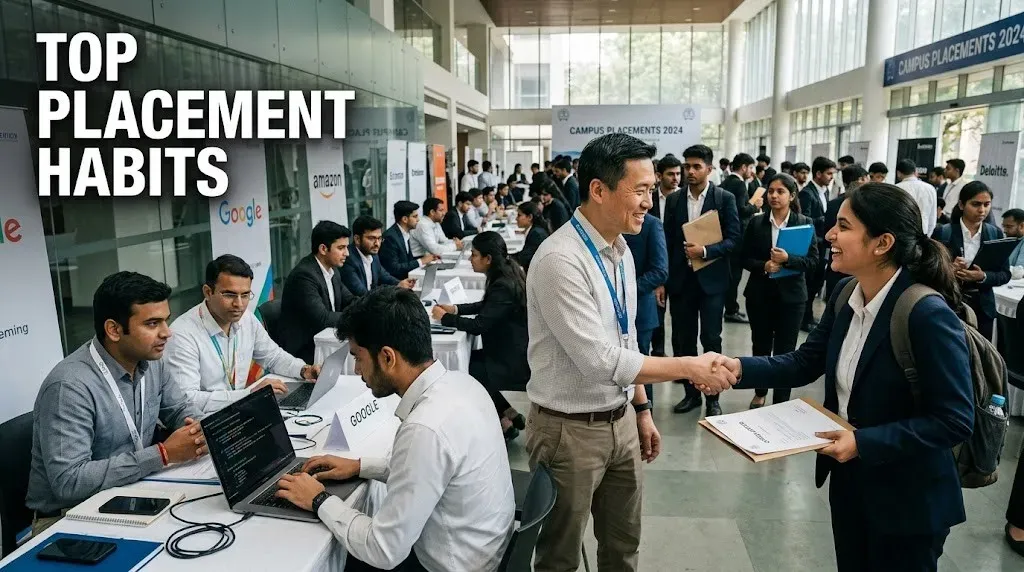
10 Habits of Students Who Get Top Placement Packages
Every placement season, students often ask the same question. How do a few classmates receive offers worth 20, 30, or even 50 lakh per year while others with similar grades struggle to get shortlisted? The answer usually isn't intelligence alone. It is a combination of habits built over several semesters.
Students who consistently receive top placement packages prepare long before companies visit campus. They focus on practical skills, disciplined learning, and continuous improvement instead of last minute preparation.
1. They build real projects instead of collecting certificates
Many resumes list dozens of online certificates but very few practical projects. Recruiters are far more interested in seeing applications, websites, mobile apps, research work, or data analysis projects that demonstrate problem solving skills. A well documented project often creates stronger interview discussions than several certificates.
2. They master one skill before chasing every trend
Students who try to learn every new technology often develop only surface level knowledge. Successful candidates usually become strong in one domain first such as web development, data science, cybersecurity, cloud computing, or product design before expanding into related areas.
3. They practice consistently
| Daily Habit | Approximate Time |
|---|---|
| Programming or Technical Practice | 60 to 90 minutes |
| Aptitude Practice | 20 to 30 minutes |
| Reading Industry News | 15 minutes |
| Communication Practice | 20 minutes |
Small daily improvements over two or three years usually produce better results than studying intensely for a few weeks before placements.
4. They improve communication skills
Technical knowledge gets students into interviews, but communication often determines whether they receive an offer. Recruiters look for candidates who explain their ideas clearly, ask thoughtful questions, and remain confident while discussing projects or solving problems.
5. They prepare for aptitude from the beginning
Many students lose opportunities before reaching technical interviews because they underestimate aptitude tests. Logical reasoning, quantitative aptitude, and verbal ability remain part of recruitment processes in many companies.
6. They understand concepts instead of memorizing answers
Interviewers frequently ask follow up questions that reveal whether a candidate genuinely understands a topic. Memorized interview answers may work briefly, but deep conceptual knowledge allows students to handle unexpected questions with confidence.
What top recruiters usually evaluate
| Evaluation Area | Importance |
|---|---|
| Problem Solving | Very High |
| Technical Fundamentals | Very High |
| Projects | High |
| Communication Skills | High |
| Teamwork | Medium |
| CGPA | Varies by company |
7. They build a professional online presence
A complete LinkedIn profile, GitHub repositories, portfolio website, research publications, or technical blogs allow recruiters to see evidence of continuous learning beyond classroom assignments. Even small personal projects can demonstrate initiative.
8. They seek feedback after every interview
Students who receive multiple offers often fail several interviews first. Instead of becoming discouraged, they identify weak areas, improve them, and perform better in future interviews. Every rejection becomes part of their preparation.
9. They network with seniors and industry professionals
Students who interact with alumni, internship mentors, faculty members, and professionals often learn about interview patterns, internship opportunities, and industry expectations much earlier than their peers. Networking is about learning, not simply asking for referrals.
10. They prepare for interviews months before placement season
Waiting until the final semester creates unnecessary pressure. Students who begin preparing during the second or third year generally have enough time to strengthen technical concepts, improve resumes, complete internships, and gain interview experience.
Habits that reduce placement opportunities
| Common Mistake | Better Approach |
|---|---|
| Learning only before placements | Practice throughout college |
| Copying projects | Build original work |
| Ignoring soft skills | Practice presentations and discussions |
| Applying without research | Study each company's recruitment process |
| Depending only on CGPA | Develop practical and communication skills |
One misconception about high packages
Many students believe only those from prestigious colleges receive excellent offers. While college reputation can influence opportunities, recruiters increasingly value demonstrable skills, internships, competitive programming achievements, open source contributions, research work, and well executed projects. Strong preparation can significantly improve outcomes regardless of institution.
Start earlier than everyone else
The students who receive the highest placement packages rarely do anything extraordinary during the final few weeks before recruitment. Their advantage comes from hundreds of small decisions made over several semesters. Building projects, improving communication, practicing consistently, and learning from every interview create a profile that recruiters notice. The earlier these habits begin, the greater the opportunity to succeed during campus placements.
Written by
Palak PatelEducation writer Palak Patel covers the latest education news, board exam updates, results, and career opportunities.