
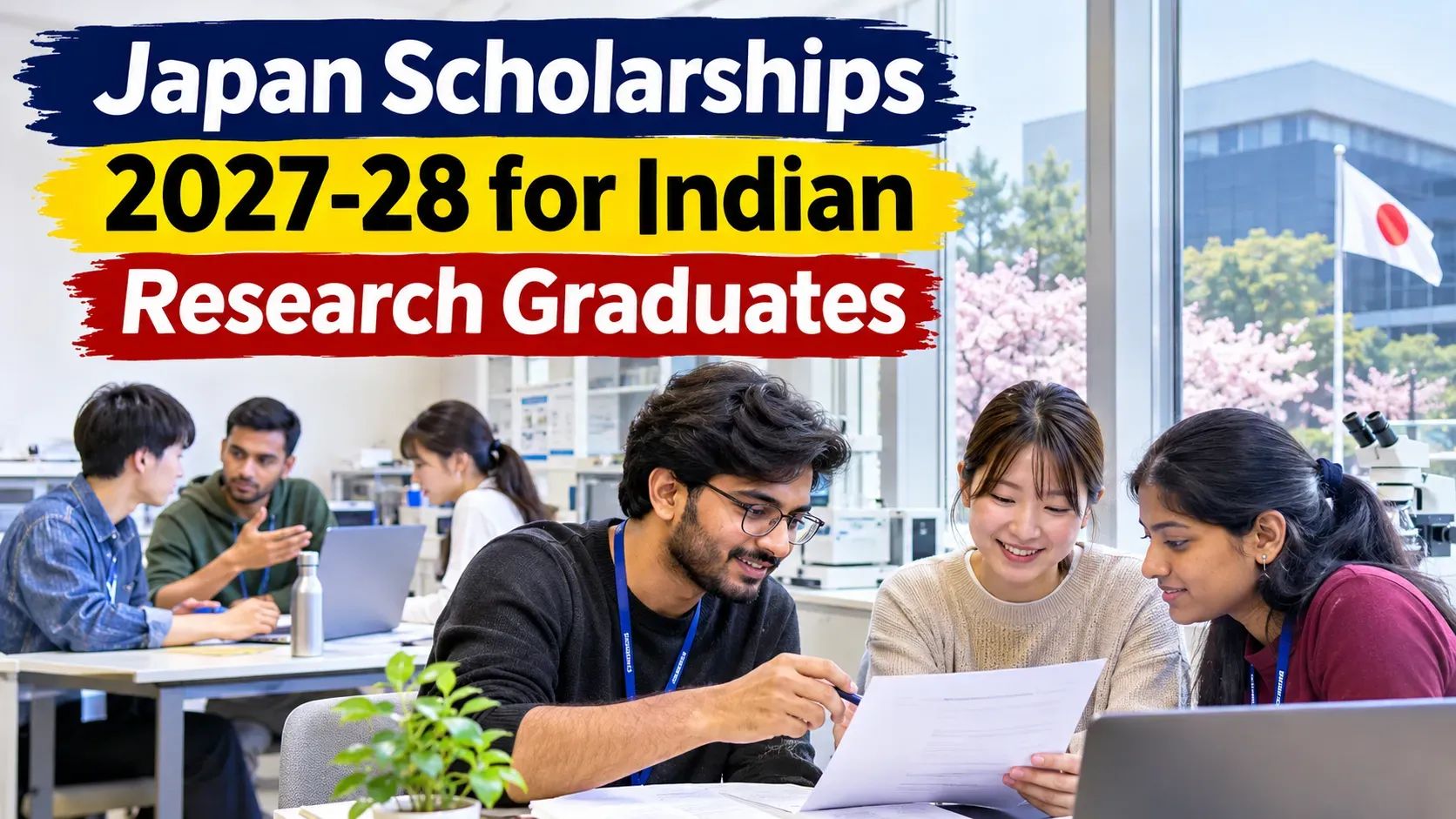
Indian graduates looking at research careers abroad often turn to Japan for its strong laboratories, structured funding and growing English-taught graduate options. The 2027-28 cycle offers real openings, but the picture is more layered than a simple open call.
The Japanese government’s MEXT research student route, the best-known fully funded path for master’s and doctoral work, closed its embassy recommendation window in India in May 2026. Applicants who cleared the first screening are now moving through placement. Final results for that intake are expected in the early months of 2027, with arrival in April or the autumn. The next full embassy cycle for 2028 arrival is expected to open around April or May 2027, following the usual pattern.
Competition has intensified. In the latest round of research, several thousand preliminary applications were received from India and only a few hundred made it to the written test and interview stage. Success depends heavily on a focused research plan, academic record and the ability to secure provisional acceptance from a Japanese university after the first screening.
University recommendation routes and specific institutional programmes remain active for 2027-28. One current example is the National Graduate Institute for Policy Studies (GRIPS) in Tokyo. It has opened applications for selected master’s and doctoral programmes in public policy, governance, public finance and science, technology and innovation policy. Several scholarship options, including MEXT university recommendation and the Asian Development Bank-Japan Scholarship Programme, carry online registration deadlines around 20 November 2026, with supporting documents due shortly after. Other funding streams at GRIPS and elsewhere follow later deadlines into early 2027.
Monthly stipends under MEXT research categories have been in the range of 143,000 to 145,000 yen, roughly covering living costs outside the most expensive parts of Tokyo once tuition is waived and economy airfare is provided. Exact figures and additional allowances can vary by category and location. ADB-JSP and certain other schemes offer comparable full coverage for eligible development-related fields.
For Indian applicants the practical requirements are clear. Research candidates are generally expected to be under 35 and to hold a relevant bachelor’s degree with solid marks, typically 70 percent or the equivalent, with a slightly lower threshold in some humanities and social science areas. A detailed field of study and research plan is essential. Many programmes accept English as the medium, yet basic Japanese helps daily life and lab integration. Contacting potential supervisors early improves chances on the university recommendation track.
Choosing Japan for research is not only about the scholarship. Laboratories can be highly productive and well equipped, yet the working culture often demands long hours and clear hierarchy. Language barriers outside campus, limited part-time work options under the student visa, and the question of post-graduation stay or return to India all need honest assessment. Some scholars stay on for postdoctoral work or industry roles; others find the transition back home or to third countries requires planning.
Graduates still in time for current university deadlines should review programme-specific rules carefully rather than assuming every scholarship is open to every applicant. Those targeting the next MEXT embassy round have several months to refine research proposals, strengthen language skills where needed, and gather recommendation letters. Either way, early preparation and realistic expectations matter more than last-minute applications.
Japan continues to attract serious research talent from India because the funding is substantial and the academic environment is rigorous. The decision works best when it rests on a clear research direction, awareness of the selection odds, and a practical view of life and career prospects after the scholarship ends.
Japan Scholarships 2027–28: What Indian Graduates Should Know Before Choosing a Research Career Abroad
Palak Patel12 Nov 2026
Written by
Palak PatelEducation writer Palak Patel covers the latest education news, board exam updates, results, and career opportunities.