
Pointer-Based Questions in C Programming: Most Important for Exams
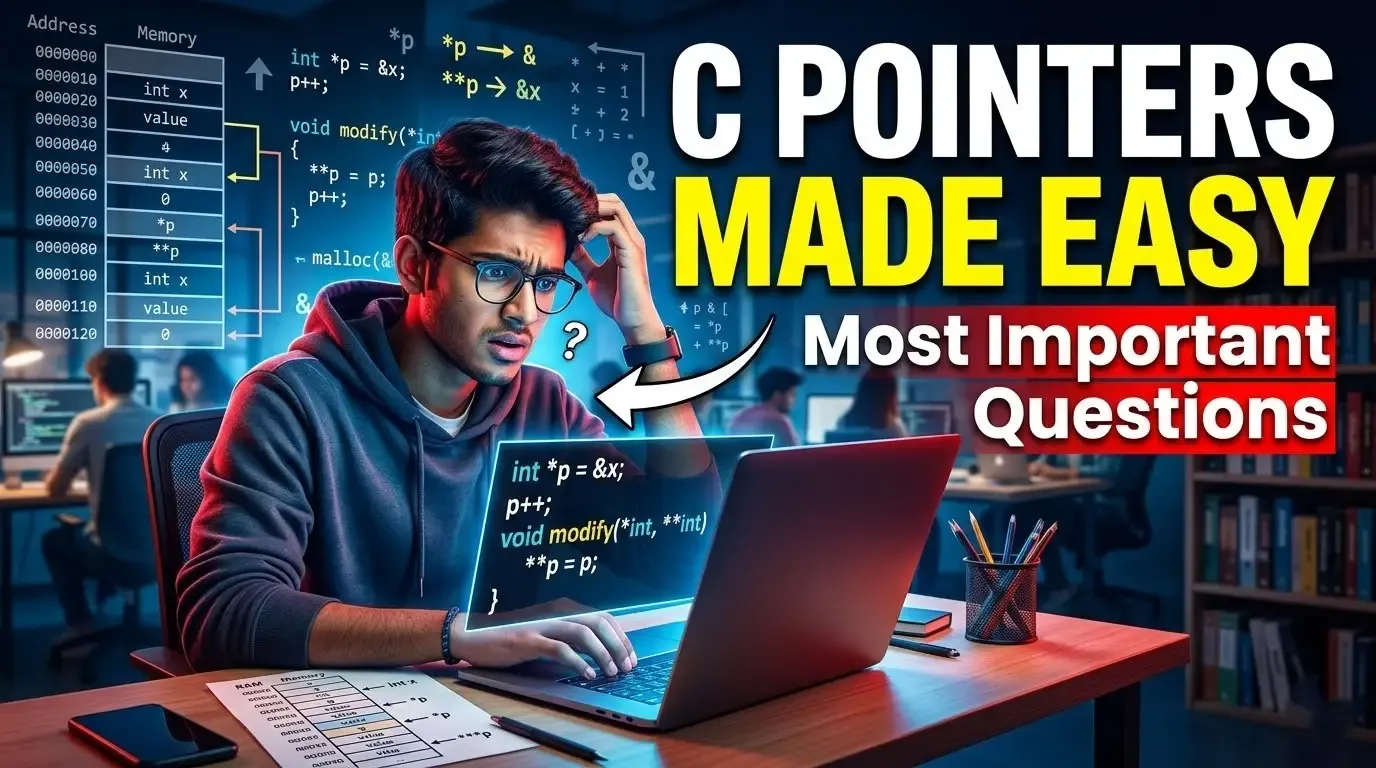
Pointer-Based Questions in C Programming: Most Important for Exams
If there’s one topic in C programming that scares most students, it’s pointers. And the funny part? Exams almost always include at least one question from this topic.
The problem is not that pointers are too difficult - it’s that students try to memorize instead of understanding how memory actually works.
Let’s go through some of the most important pointer-based questions that are frequently asked in BCA and B.Tech exams.
1. What is a Pointer in C?
A pointer is a variable that stores the address of another variable.
int a = 10;
int p = &a;
Here, p stores the memory address of variable a.
2. Program to Swap Two Numbers Using Pointers
#include <stdio.h>

void swap(int a, int b) {
    int temp;
    temp = a;
    a = b;
    b = temp;
}

int main() {
    int x = 5, y = 10;

    swap(&x, &y);

    printf("x = %d, y = %d", x, y);
    return 0;
}
3. Difference Between Call by Value and Call by Reference
- Call by Value: Copy of variable is passed (no change in original value)
- Call by Reference: Address is passed using pointers (original value changes)
4. Output-Based Pointer Question
#include <stdio.h>

int main() {
    int a = 5;
    int p = &a;

    printf("%d", p);
    return 0;
}
Answer: Output will be 5, because p gives the value stored at address of a.
5. Pointer Arithmetic Question
#include <stdio.h>

int main() {
    int a = 10;
    int p = &a;

    p++;
    printf("%p", p);

    return 0;
}
Concept: Pointer increment increases the address based on the data type size (for int, usually +4 bytes).
Most Important Pointer Questions List
- Pointer to pointer (*double pointer)
- Pointers with arrays
- Pointers with functions
- Dynamic memory allocation (malloc, calloc)
- Dangling pointer concept
- NULL pointer vs wild pointer
- Function returning pointer
Final Tip (Very Important)
If you want to master pointers, stop memorizing programs. Instead:
- Trace the program step by step
- Understand memory addresses
- Practice small examples daily
In exams, pointer questions are usually not about complexity - they are about clarity. Once you understand the basics, even tricky questions become easy.

Written by
Palak PatelEducation writer Palak Patel covers the latest education news, board exam updates, results, and career opportunities.