
Compiler Vs Interpreter Difference Explained With Simple Examples
Compiler Vs Interpreter Difference Explained With Simple Examples
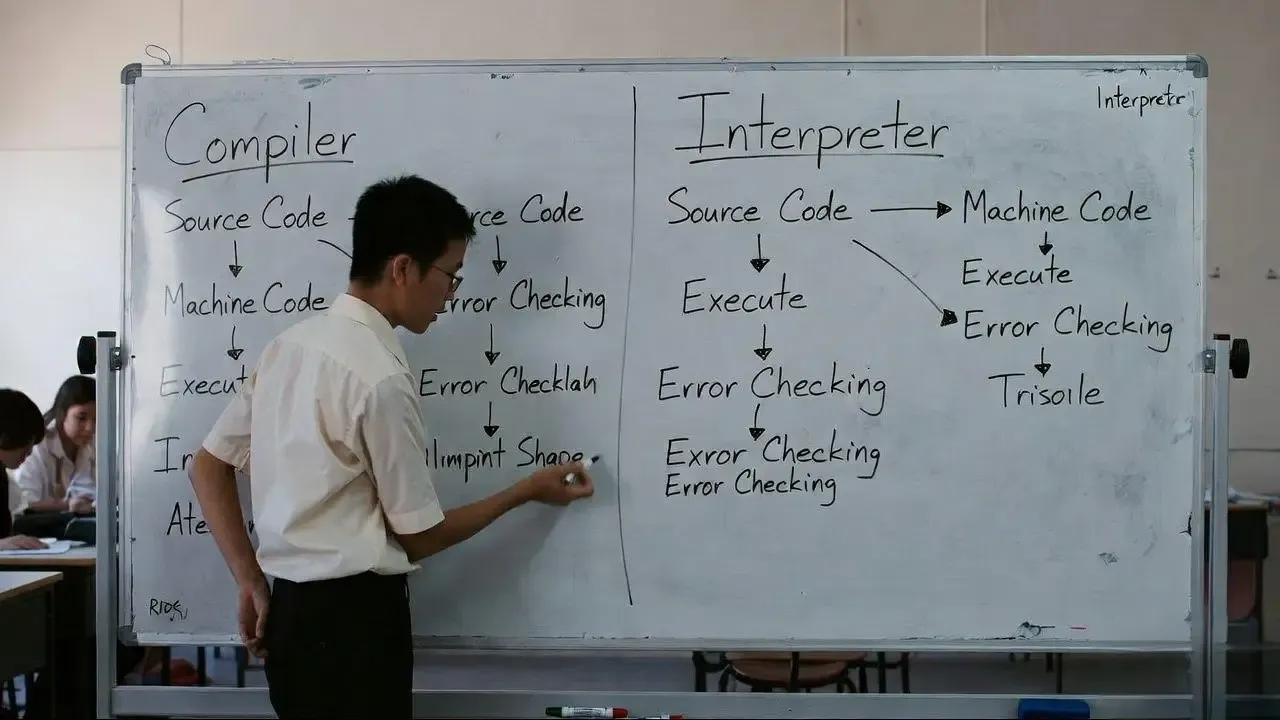
In programming two important terms are compiler and interpreter. Both are used to convert high level language into machine language so that computer can understand the program. But their working process is different.
A compiler translates the entire program at once and then generates machine code file. After compilation the program can run directly without converting again.
An interpreter translates the program line by line and executes it immediately. It does not create separate machine code file.
| Feature | Compiler | Interpreter |
|---|---|---|
| Translation Method | Whole Program At Once | Line By Line |
| Execution Speed | Faster After Compilation | Slower Due To Line Execution |
| Error Reporting | Shows All Errors After Compilation | Stops At First Error |
| Output File | Creates Executable File | No Separate Executable File |
For example C language uses compiler. The entire program is compiled first and then executed. Python uses interpreter where code runs line by line.
Let us understand with simple real life example. Imagine compiler like preparing full meal at once and then serving. Interpreter is like cooking and serving one dish at a time.
Compiler based programs usually run faster because translation happens once. Interpreter based programs are easier to debug because errors are shown immediately.
Students learning programming should understand both concepts because different languages use different methods.
For verified academic guidance and computer science course support students can visit https://validcollege.com before choosing technical programs.
In conclusion compiler and interpreter both convert high level code into machine language but their translation and execution methods are different. Understanding this difference helps in building strong programming foundation.

Written by
Palak PatelEducation writer Palak Patel covers the latest education news, board exam updates, results, and career opportunities.