
Do Companies Really Check College CGPA?
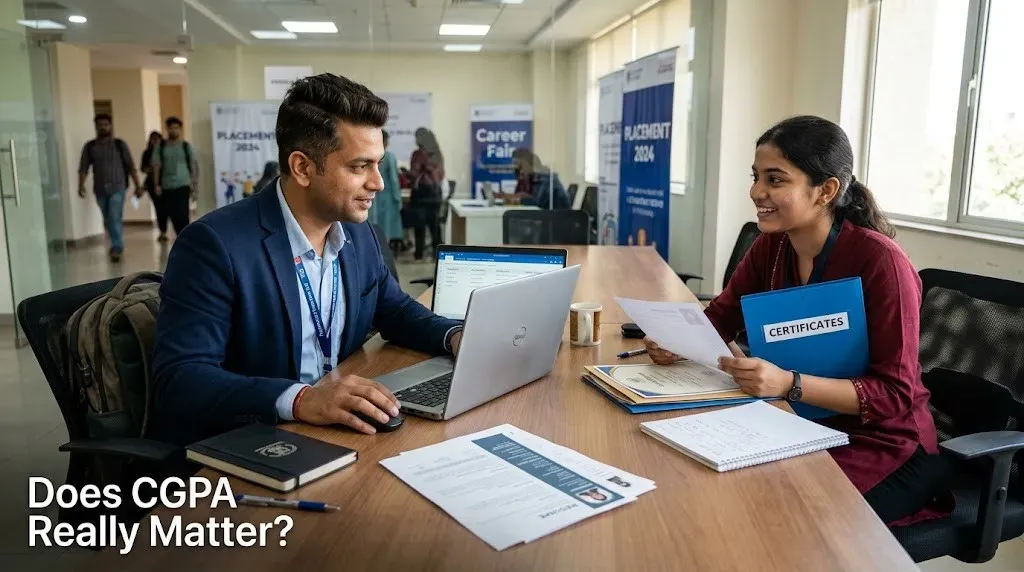
Do Companies Really Check College CGPA?
One of the biggest concerns among college students is whether their CGPA will determine their future career. While maintaining good academic performance is beneficial, the reality is that most employers evaluate candidates using multiple criteria. A strong CGPA can help you qualify for certain opportunities, but it is rarely the only factor that influences hiring decisions.
Understanding when CGPA matters-and when other skills become more important-can help you prepare more effectively for placements and job interviews.
When does CGPA matter?
| Situation | Importance of CGPA | Reason |
|---|---|---|
| Campus Placements | High | Many companies set minimum eligibility criteria. |
| Government Jobs | Low to Medium | Eligibility is usually based on degree requirements and competitive exams. |
| Higher Studies | High | Universities often consider academic performance during admissions. |
| Experienced Professionals | Low | Skills and work experience become more important. |
| Startups and Small Companies | Medium to Low | Practical skills and problem-solving are often prioritized. |
Why companies ask for a minimum CGPA
Large organizations often receive thousands of applications for a limited number of positions. Setting a minimum CGPA helps them shortlist candidates efficiently. However, meeting the eligibility requirement does not guarantee selection. Technical tests, aptitude assessments, interviews and communication skills usually play a much larger role in the final hiring decision.
What recruiters value besides CGPA
| Factor | Why It Matters |
|---|---|
| Internships | Demonstrate practical industry experience. |
| Projects | Show technical knowledge and problem-solving ability. |
| Technical Skills | Help candidates perform job-related tasks effectively. |
| Communication Skills | Essential for teamwork and client interactions. |
| Certifications | Reflect continuous learning and specialization. |
| Leadership & Activities | Highlight teamwork, responsibility and initiative. |
What if your CGPA is low?
A lower CGPA does not mean your career opportunities are over. Many professionals have built successful careers by strengthening their practical skills, earning certifications, completing internships and creating an impressive portfolio. If your academic score is below your expectations, focus on areas that demonstrate your capabilities to employers.
Prepare thoroughly for aptitude tests and technical interviews, participate in hackathons or competitions if relevant to your field, and build projects that showcase your abilities. These efforts can significantly improve your employability.
How to improve your placement profile
| Action | Benefit |
|---|---|
| Complete Internships | Gain real-world work experience. |
| Build Strong Projects | Create a portfolio for interviews. |
| Earn Certifications | Improve technical expertise. |
| Practice Aptitude Tests | Perform better in campus recruitment. |
| Improve Communication Skills | Increase confidence during interviews. |
Frequently Asked Questions
What is a good CGPA for placements?
Many companies set eligibility between 6.5 and 7.5 CGPA, while some top recruiters may require higher scores. The exact requirement varies by employer and job role.
Can I get a job with a low CGPA?
Yes. Many employers focus on practical skills, internships, certifications, interview performance and relevant experience in addition to academic results.
Do experienced professionals need to mention CGPA on their resume?
After gaining professional experience, employers generally place greater emphasis on your work achievements and technical expertise than your college CGPA.
College CGPA is an important part of your academic profile, especially during campus placements and higher education admissions. However, it is only one measure of your potential. Employers increasingly look for candidates who can solve problems, communicate effectively, adapt to new challenges and contribute from day one. By combining reasonable academic performance with strong skills and practical experience, you can build a competitive profile regardless of whether your CGPA is average or exceptional.

Written by
Palak PatelEducation writer Palak Patel covers the latest education news, board exam updates, results, and career opportunities.