
How to Build an Academic CV for Higher Studies
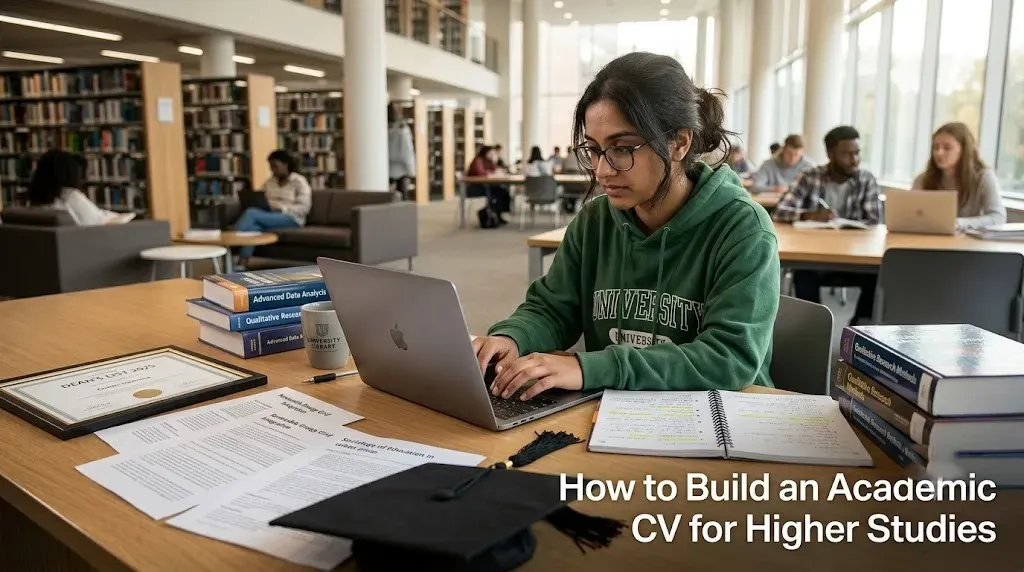
How to Build an Academic CV for Higher Studies
Whether you are applying for a master's degree, PhD program, research internship or scholarship, your academic CV is one of the most important documents in your application. Unlike a job resume, an academic CV focuses on your educational achievements, research experience, publications, projects and academic interests.
A well-organized CV helps admission committees quickly understand your qualifications and your potential to succeed in higher education.
Essential sections of an academic CV
| Section | What to Include |
|---|---|
| Personal Information | Name, email, phone number, LinkedIn profile |
| Career Objective | Brief academic goals and research interests |
| Education | Degrees, university, CGPA or percentage, graduation year |
| Research Projects | Major academic projects and outcomes |
| Internships | Research or industry experience |
| Publications | Research papers, journals or conference presentations |
| Skills | Technical, software and language skills |
| Achievements | Scholarships, awards and certifications |
Highlight research and academic projects
Admission committees often pay close attention to research experience. Mention your final-year project, laboratory work, surveys, field studies or independent research. Explain your role, the tools you used and the results you achieved instead of simply listing the project title.
Keep the format professional
Use a clean layout with consistent headings, readable fonts and clear spacing. Avoid unnecessary graphics, colorful backgrounds or decorative elements. A simple and organized CV is easier to review and leaves a stronger professional impression.
Additional sections that add value
| Section | Why It Matters |
|---|---|
| Workshops | Shows continuous learning |
| Certifications | Demonstrates specialized knowledge |
| Volunteer Experience | Reflects leadership and teamwork |
| Conference Participation | Highlights academic engagement |
| Professional Memberships | Shows commitment to your field |
Common mistakes to avoid
Many students include unnecessary personal details, outdated achievements or unrelated work experience. Others make the CV too long by describing every activity in detail. Focus on experiences that support your academic goals and keep the content concise and relevant.
Proofread your CV carefully. Grammar mistakes, inconsistent formatting and incorrect dates can create a poor impression even if your academic record is strong.
Frequently asked questions
How is an academic CV different from a resume?
An academic CV emphasizes education, research, publications and scholarly achievements, while a resume is usually tailored for employment and focuses on professional experience.
How long should an academic CV be?
For undergraduate and master's applicants, one to two pages are generally sufficient. Applicants with extensive research experience or publications may require additional pages.
Should I include my CGPA?
Yes, if it is strong or required by the university. Follow the application guidelines provided by the institution.
A strong academic CV is more than a list of qualifications. It tells the story of your academic journey, demonstrates your interest in research and highlights the experiences that prepare you for advanced study. Keeping it accurate, organized and tailored to each university application can significantly improve your chances of admission.
Written by
Palak PatelEducation writer Palak Patel covers the latest education news, board exam updates, results, and career opportunities.