
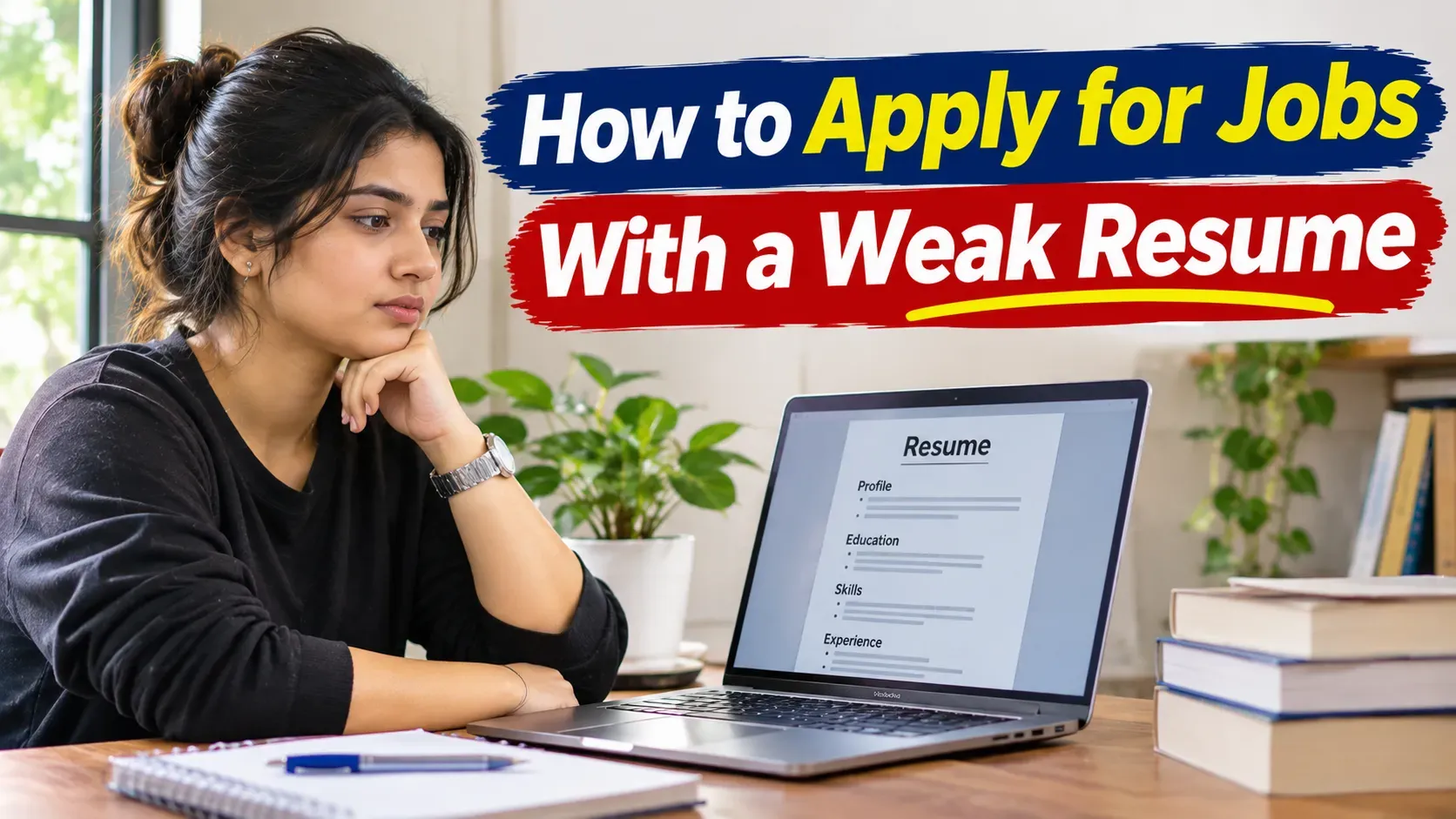
Most students reach a point where they open their resume, stare at the almost empty page, and close the laptop again. No big internship. Average marks. One or two college projects that feel ordinary. The gap between what employers seem to want and what sits on the document feels too wide.
This feeling is extremely common, especially among final-year students and recent graduates who did not land campus placements or early internships. The good news is that a thin resume does not have to mean you stay silent. Many people begin their careers from exactly this place.
Start by changing how you see the document itself. Instead of trying to make it look impressive overnight, treat it as a working paper that improves with every application. List every small thing honestly. College projects, even if they were group efforts. Any freelance work, volunteer teaching, event organising, or online courses you finished. A simple personal project you built over weekends counts more than most students realise.
Tailor the resume for each role rather than sending the same file everywhere. Read the job description carefully and move the most relevant points to the top. If the role needs basic Excel or communication skills, show where you used them, even in college assignments or part-time work. Keep the language clear and free of heavy jargon.
A short, specific cover note or message often matters more than the resume at this stage. Two or three lines explaining why you are interested in that particular company or role, and what you are willing to learn, can open a conversation that a generic CV cannot. Many hiring managers remember the candidate who showed genuine interest over the one with a longer but impersonal document.
Use LinkedIn properly. A complete profile with a clear headline, a few projects, and regular simple posts about what you are learning can compensate for limited formal experience. Connect with seniors, alumni and people working in the field you want. A polite message asking for guidance sometimes leads to referrals that skip the usual resume filters.
Use broadly, but judiciously. Look for internships, trainee roles and smaller companies that are more open to freshers. Campus placement drives are not the only route. Off-campus applications, company career pages, and even walk-ins still work for many. Keep a simple record of where you applied so you can follow up after a week or two.
The hardest part is usually the mind. Rejection feels personal when your resume is already a source of doubt. Send the application anyway. Improve one section after every few rejections. Talk to someone who started with a similar thin profile. Most working professionals have a first resume they now find embarrassing.
A strong resume is built over time, not discovered fully formed. The students who move forward are usually the ones who decide the current version is good enough to start with, then keep updating it as real experience slowly arrives.
How to Apply for Jobs When You Don't Have a Strong Resume
Palak Patel18 Nov 2026
Written by
Palak PatelEducation writer Palak Patel covers the latest education news, board exam updates, results, and career opportunities.