
Paperwork Corruption in India: The Hidden System Slowing Everything Down
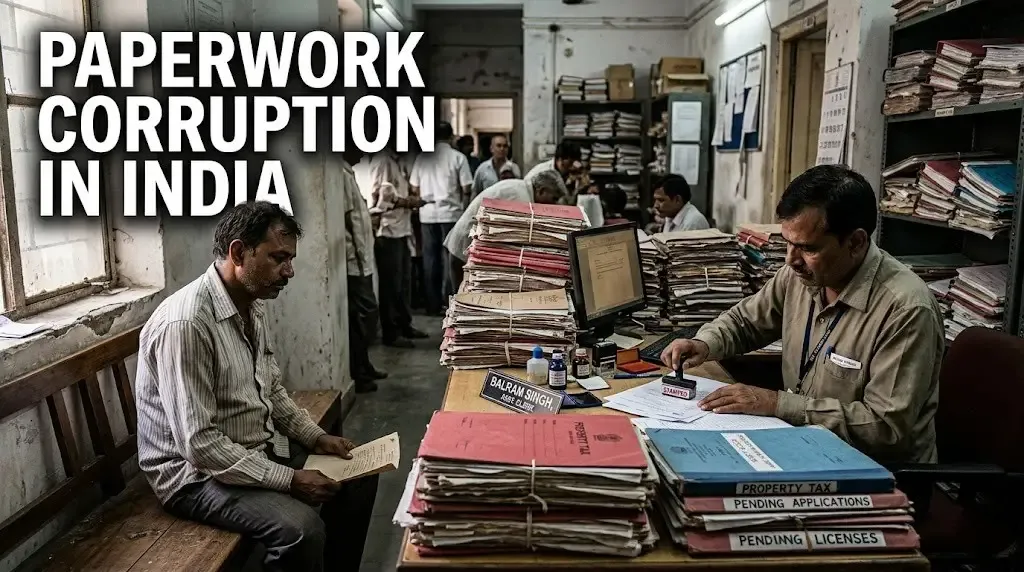
It’s Not Always Big Scams - Sometimes It’s Just One File That Doesn’t Move
When people hear the word corruption, they imagine huge scams and big money. But in reality, most people face a much quieter form of corruption - paperwork delays, missing files, and endless signatures.
This is what many call “paperwork corruption”. It doesn’t always look illegal on the surface, but it creates a system where nothing moves unless you push it - sometimes with money or connections.
How does this actually work?
Let’s say you apply for a certificate, license, or approval. On paper, the process looks simple. But in practice, your file can get “stuck” at multiple levels.
Each step may involve:
• Verification delays
• Missing documents (even when submitted)
• Repeated visits to the office
• Requests for “extra help” to speed things up
Technically, no one is openly demanding anything. But the message is clear - if you want speed, you have to “manage” the process.
Why does this system continue?
| Reason | What It Means |
|---|---|
| Too Many Steps | More approvals mean more chances for delays |
| Lack of Accountability | No clear timeline for file movement |
| Manual Processes | Physical files are easier to delay or “lose” |
| Low Transparency | Applicants can’t track real progress |
Who is affected the most?
Ordinary people. Students needing documents, small business owners applying for licenses, families dealing with property papers - they all face the same slow system.
For a startup or small business, delays can mean lost opportunities. For a student, it can mean missing deadlines. What looks like a small delay on paper can have real consequences in life.
Is digitalization solving this?
Partially. Online systems have reduced some issues. But in many places, digital processes still depend on manual approvals. So the problem doesn’t fully disappear - it just changes form.
What can actually improve the situation?
• Clear timelines for approvals
• Full online tracking of applications
• Fewer steps and simplified rules
• Strong accountability for delays
These changes sound simple, but they require consistent implementation - not just announcements.
Final thought:
Paperwork corruption doesn’t make headlines, but it affects millions every day. It slows progress, creates frustration, and builds a system where efficiency becomes optional.
If India wants faster growth and smoother systems, fixing this silent problem is just as important as tackling big corruption cases.
Because sometimes, the biggest barrier isn’t a scam - it’s a file that never moves.

Written by
MonishMonish is an education writer covering exams, student rights, academic awareness, and other education-related topics, with practical guidance for students.