
How Taxes Are Hurting Startups in India: The Reality Founders Face
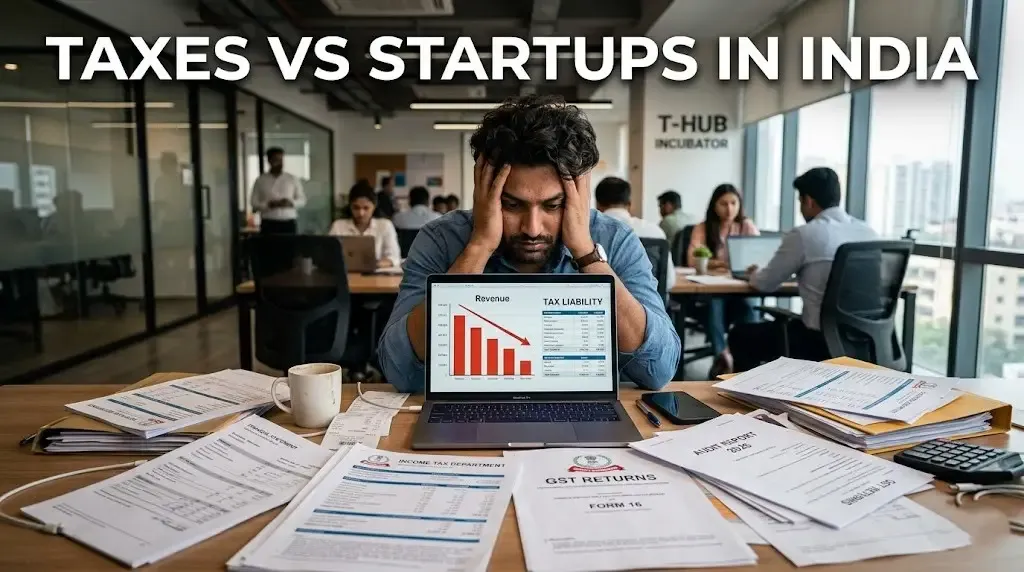
Startups Are Built on Speed - Taxes Often Slow Them Down
Everyone talks about India’s startup boom. Funding rounds, unicorns, new ideas - it all looks exciting from the outside. But talk to founders privately, and you’ll hear a different story: taxes and compliance are becoming a serious headache.
This isn’t about avoiding tax. Founders understand they have to pay. The problem is how early, how complex, and how heavy the burden becomes.
First issue: Tax even before profit.
Many startups don’t make profit in the early years. They are building product, hiring teams, and trying to survive. Yet, in some cases, tax liabilities and compliance costs start hitting them early. That puts pressure on already limited cash flow.
Second issue: The “Angel Tax” problem.
When startups raise funding, valuation becomes tricky. In certain situations, if the government believes the valuation is too high, the extra amount can be taxed. For a startup trying to grow, this creates uncertainty and fear.
Third issue: GST and compliance complexity.
GST was meant to simplify things, but for many small startups, filing returns, managing invoices, and staying compliant takes time and money. Instead of focusing on product and growth, founders spend hours dealing with paperwork.
| Challenge | Impact on Startups |
|---|---|
| Early Tax Burden | Cash flow pressure |
| Angel Tax | Funding uncertainty |
| GST Compliance | Time + operational cost |
| Regulatory Complexity | Slower decision making |
Fourth issue: Too many rules, too little clarity.
Policies change, interpretations vary, and small founders often don’t have legal teams to handle everything. One mistake can lead to penalties, which adds more stress.
But here’s the balanced view:
Taxes are necessary for any economy. They fund infrastructure, services, and development. The issue is not taxation itself - it’s how startup-friendly the system is.
Many countries support early-stage startups with tax reliefs, simpler compliance, and clearer policies. India has taken steps too, but ground-level execution still needs improvement.
What do founders actually want?
• Lower tax pressure in early stages
• Simpler compliance processes
• Clear rules without constant changes
• Better support for fundraising
Final thought:
Startups thrive on speed, experimentation, and risk-taking. When tax systems become too heavy, they don’t just collect revenue - they slow innovation.
India has huge startup potential. But to fully unlock it, the system needs to support builders, not overwhelm them.
Because in the end, when startups grow, the economy grows with them.

Written by
MonishMonish is an education writer covering exams, student rights, academic awareness, and other education-related topics, with practical guidance for students.