
Countries Are Reducing Exam Pressure – Will India Follow?
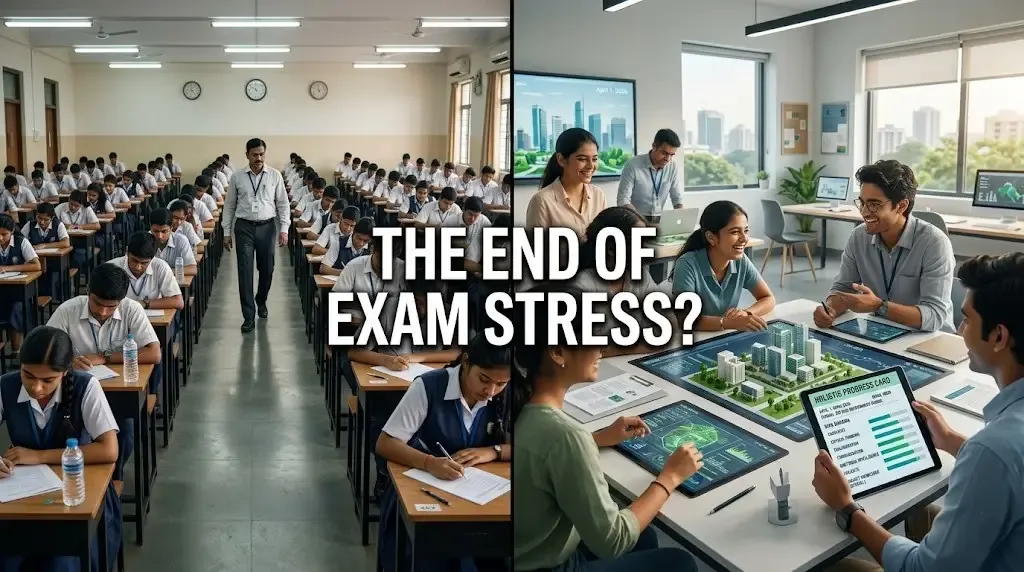
The Global Shift: Why 2026 is the Year of "Student Well-Being" Over "Exam Rankings"
For decades, the "pressure cooker" model of education was seen as the only way to produce elite talent. However, by April 2026, a radical shift has taken hold globally. From Beijing to Helsinki, governments have realized that chronic exam stress is creating a "burnout generation." The trend is clear: move away from single, high-stakes "life-defining" tests and toward continuous, modular assessments that allow for mistakes and growth.
In India, the conversation has moved from "if" to "how." With the implementation of the National Curriculum Framework (NCF) 2023 and the 2026 board exam changes, the country is officially attempting to dismantle the "rank-obsessed" culture. While the transition isn't overnight, the 2026 roadmap shows a clear alignment with international best practices.
Global Comparison: How Countries are Slashing Stress in 2026
| Country | Major 2025-26 Reform | Core Goal |
|---|---|---|
| Singapore | Removal of "Streaming" and content-heavy topics like "Cells" and "Speed" from primary exams. | Personalized learning at individual paces. |
| China | "Double Reduction" policy: Ban on rankings and strict limits on private tutoring. | Reducing financial and mental burden on families. |
| South Korea | Elimination of "Killer Questions" in Suneung that go beyond school textbooks. | Reducing dependence on expensive private academies (Hagwons). |
| Finland | Expansion of competency-based portfolios over standardized tests. | Emphasis on trust and student agency. |
| India | Biannual Board Exams (February & May) and a "No Exams till Class 2" policy. | Removing the "one-shot" high-stakes fear. |
Is India Following? The 2026 Evidence
The answer is a resounding yes, but with a unique Indian "hybrid" twist. India isn't just copying Western models; it is adapting them to its massive scale. Here are the three pillars of India’s 2026 strategy to follow the global trend:
1. Biannual Board Exams: Starting with the 2025-26 session, CBSE Class 10 students now have the option to appear for boards twice (February and May). The board will only record the "best-of-two" scores. This mimics the global shift toward "low-stakes" testing where one bad day doesn't ruin a student's future.
2. The 360° Holistic Progress Card (HPC): Gone are the days of simple marksheets. In 2026, the Holistic Progress Card has been rolled out across foundational and middle stages. It tracks social-emotional development, peer feedback, and self-reflection alongside academic data, moving the focus from "comparison" to "reflection."
3. Aligning JEE/NEET with Schooling: In early 2026, a high-level government panel proposed capping coaching hours to 2-3 hours daily and aligning the Class 11-12 syllabus strictly with competitive exams. The goal is to make "dummy schools" obsolete and bring the focus back to regular classroom learning.
The Resistance: Why the Change is Difficult
Despite these reforms, India faces challenges that countries like Finland do not. With millions of students competing for a few thousand seats in IITs and AIIMS, competition remains an economic reality. While the government can change the exam, it is harder to change the parental mindset. Initiatives like Pariksha Pe Charcha (PPC) 2026, which saw over 6.7 crore participants, are the government's way of addressing the cultural aspect of exam anxiety.
Official Links & Status (April 2026)
| Resource Name | Current Status / Link |
|---|---|
| CBSE Biannual Exam Policy | CBSE / NEP Exam Policy Details |
| NCF 2023 Implementation | NCF 2023 Overview & Changes |
| HPC Guidelines (PARAKH) | PARAKH Official Website |
Conclusion
The global trend of reducing exam pressure is no longer a "Western luxury"; it is a survival strategy for the mental health of the youth. In 2026, India is indeed following this path by decentralizing the power of board exams and introducing 360-degree feedback systems. While the competitive nature of entrance exams like JEE/NEET still poses a challenge, the structural shifts toward flexibility and competency-based learning prove that India is finally prioritizing the "student" over the "score." The journey from being an "Exam Warrior" to a "Joyful Learner" has officially begun.
Written by
Palak PatelEducation writer Palak Patel covers the latest education news, board exam updates, results, and career opportunities.