
Why Students Feel More Pressure Than Ever in 2026: The New Crisis
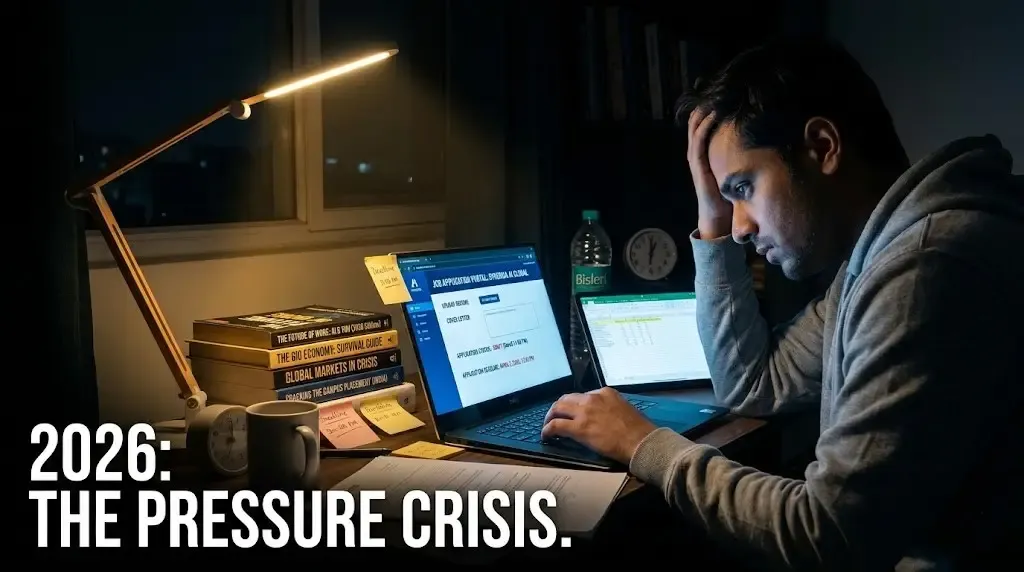
The Class of 2026: Why the Traditional "Work Hard" Mantra is No Longer Enough
As we navigate through the first half of 2026, it has become painfully clear that being a student today is fundamentally different from even five years ago. The old promise—"Get good grades, get into a good college, and you’re set"—has largely evaporated. In its place is a hyper-competitive, 24/7 digital ecosystem where students feel they must perform at an elite level in every facet of their lives, from academics to personal branding.
The pressure is no longer just "seasonal" around exam time; it has become a chronic state of existence. With AI redefining the job market every few months and admission rates at top-tier universities hitting record lows, students are operating under a "survival of the fittest" mentality that is taking a massive toll on mental well-being.
Primary Stressors: 2024 vs. 2026 Comparison
| Factor | The 2024 Reality | The 2026 Reality |
|---|---|---|
| Job Market | Standard entry-level hiring; focus on internships. | Hiring Slowdown: 2025 saw 80% fewer job additions; AI is replacing entry roles. |
| Admissions | Test-optional was common; focus on holistic profiles. | Test Scores Return: Strong SAT/ACT scores are again mandatory for elite differentiation. |
| Evaluation | End-of-term exams and midterms. | Continuous Monitoring: Digital portals allow parents and students to track grades in real-time. |
| AI Impact | AI used mostly for brainstorming or simple tools. | Existential Anxiety: Students worry if their chosen major will be automated by graduation. |
1. The "Hunger Games" of Elite Admissions
While the so-called "enrollment cliff" (a decline in the total number of 18-year-olds) began hitting in late 2025, it hasn't made getting into a good school any easier. In fact, for the Class of 2026, competition has intensified at highly selective colleges. Application numbers through the Common App increased by nearly 9% this cycle. Students are now applying to an average of 5.4 schools—up from 4.2 just a few years ago—creating a "crowded room" effect where even perfect candidates are being waitlisted.
"In 2026, a 4.0 GPA and a high SAT score are no longer the goal—they are simply the entry fee to be considered."
2. The AI-Driven Hiring Slowdown
Perhaps the biggest driver of student anxiety today is the shifting job market. Recent data from the Bureau of Labor Statistics shows that job additions in 2025 were a mere fraction of what they were in 2024. For fresh graduates, the "entry-level" job is disappearing as AI takes over routine administrative and junior-level tasks. Students now feel the pressure to not just learn a subject, but to become "AI-proof" by mastering complex problem-solving and emotional intelligence before they even step off the stage with their diploma.
3. The "Never-Ending Performance" Cycle
In 2026, school never actually "ends" at 3:00 PM. Digital learning portals and notifications keep students connected to their grades and assignments 24/7. This constant feedback loop means students never have the "recovery time" needed to avoid burnout. Furthermore, the Culture of Comparison on social media has reached a peak; seeing a peer’s internship announcement or perfect study vlog makes rest feel like a sign of weakness or "falling behind."
Mental Health and the "Resilience Gap"
While awareness of mental health is at an all-time high, the systems of support haven't kept pace with the intensity of the pressure. Statistics for early 2026 suggest that nearly 45% of students have a prior mental health diagnosis, yet many feel that seeking help will put them at a disadvantage in a cutthroat academic environment. Time has become the most scarce resource; many students report they simply "cannot afford" to take a break because the schedule has no room for recovery.
Conclusion
Students feel more pressure than ever in 2026 because the margin for error has disappeared. The combination of economic uncertainty, technological disruption, and an always-on digital world has created a high-stakes environment where every grade and extracurricular feels like a life-or-death decision. Moving forward, the focus must shift from simply "pushing through" to redesigning our educational and hiring systems to value human growth over statistical performance. For now, the Class of 2026 continues to run a race where the finish line keeps moving further away.

Written by
Palak PatelEducation writer Palak Patel covers the latest education news, board exam updates, results, and career opportunities.
Comments
No comments yet. Be the first!