
Rapid Growth in India’s Education System Brings New Pressures on Quality and Careers
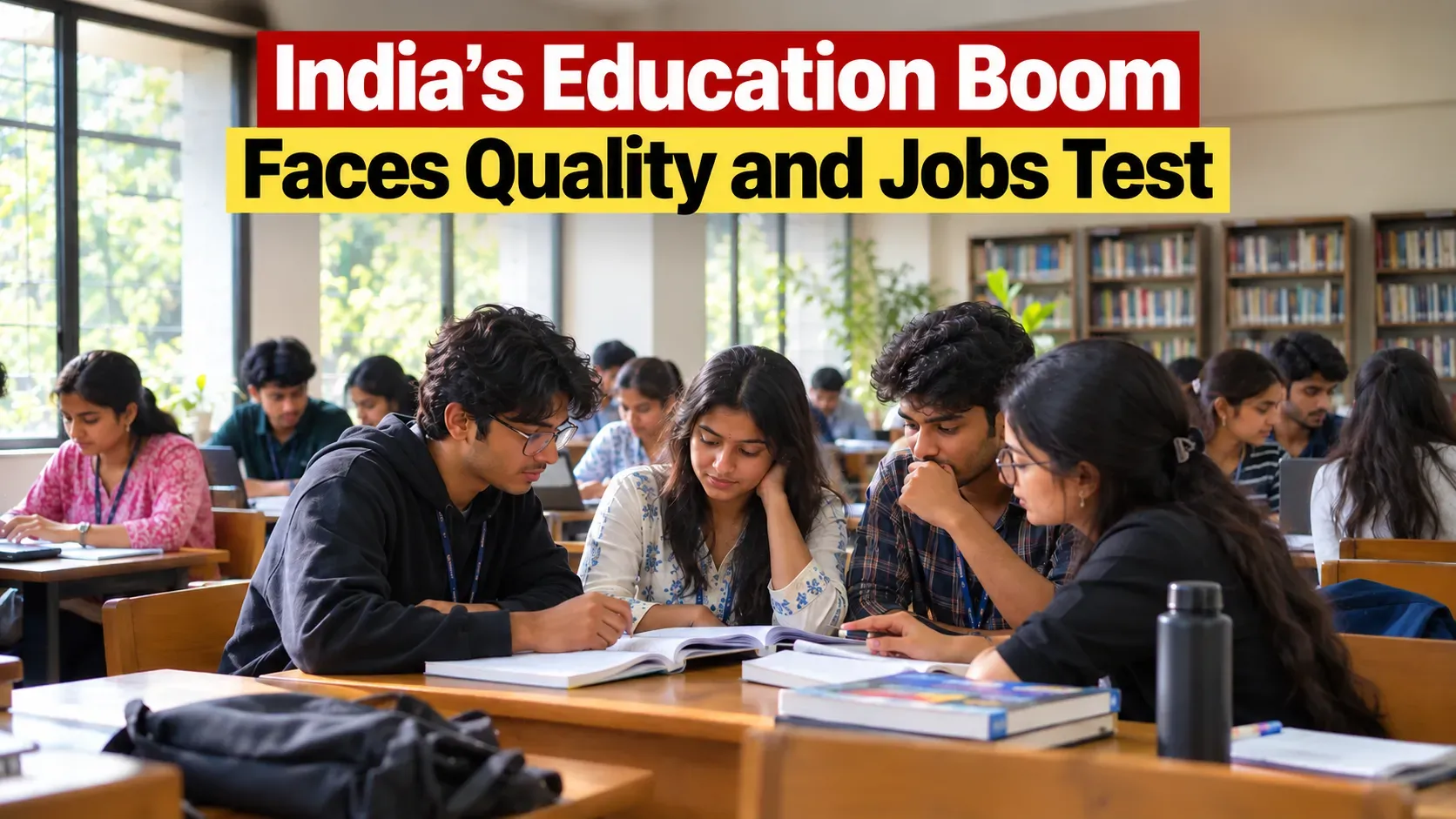
India’s classrooms and campuses hold more students than ever before. Over the past decade the country has built one of the world’s largest education systems, with higher education enrolment climbing sharply and school access reaching near-universal levels at the primary stage. Yet a growing body of data and recent public frustration suggest that speed has come with fresh complications. Many young Indians now leave school or college with degrees that do not open the doors they expected. Reports from research groups and government assessments point to uneven learning results, especially in foundational reading and mathematics, alongside stubbornly high unemployment among recent graduates. Growing Numbers Meet Uneven Results Government figures and independent surveys show clear gains in access. Secondary enrolment has risen and infrastructure has improved in many places, with more schools gaining electricity and digital facilities. At the same time, NITI Aayog’s recent analysis of the school system notes that the structure remains fragmented. Large numbers of primary schools contrast with far fewer higher secondary institutions, making smooth transitions difficult. Learning data remains mixed. Assessments such as ASER continue to show that a substantial share of students in higher grades struggle with material meant for much earlier classes. Rote methods still dominate in many classrooms, leaving students short on application skills that employers look for. In higher education the picture is similar. Enrolment has grown strongly, driven in large part by private colleges. Yet surveys of employers and skills reports repeatedly flag that a significant portion of graduates lack the practical abilities needed for available jobs. The Jobs Disconnect Research from institutions including Azim Premji University has highlighted a persistent gap. Large numbers of graduates enter the workforce each year, but the creation of suitable salaried positions has not kept pace. Unemployment rates among younger degree holders remain several times higher than the overall national average, according to labour force data and specialised studies. Parents and students often invest heavily in coaching and private institutions in the hope of securing limited seats in premier colleges or stable careers. When results fall short, the financial and emotional cost lands heavily on families. Teachers, meanwhile, face pressure to cover vast syllabi while dealing with large classes and uneven support. Recent Unrest Brings the Issues into Focus Earlier this year repeated problems with major entrance examinations, including paper leaks that forced re-tests for medical aspirants, triggered widespread student protests. The agitation, organised under the banner of the Cockroach Janta Party, eventually led to the resignation of the then education minister and commitments to review the examination system. The protests went beyond individual exams. Participants spoke of deeper frustration with teaching quality, outdated curricula and the shortage of meaningful opportunities after years of study. While the immediate demands focused on accountability and exam integrity, the underlying message reflected years of accumulated disappointment with how the expanded system is delivering for ordinary students. Looking Ahead for Stakeholders For current school and college students the message is practical: strong foundational skills and additional practical exposure matter more than ever. Parents may need to look beyond brand names and focus on institutions that emphasise application and industry links. Teachers and institutions face the harder task of shifting from expansion metrics to measurable learning and employability gains. Policy discussions continue around better teacher deployment, curriculum updates under the National Education Policy framework, and closer alignment between education and the job market. Recent task forces on examination reforms signal recognition that trust in the system needs rebuilding. India still has a large youth population and a narrowing window to convert that demographic advantage into economic strength. The next phase of education reform will be judged less by the number of seats created and more by whether those seats equip young people for the lives they hope to lead.

Written by
Palak PatelEducation writer Palak Patel covers the latest education news, board exam updates, results, and career opportunities.