Indian Colleges Still Teaching 2012 Syllabus in 2026
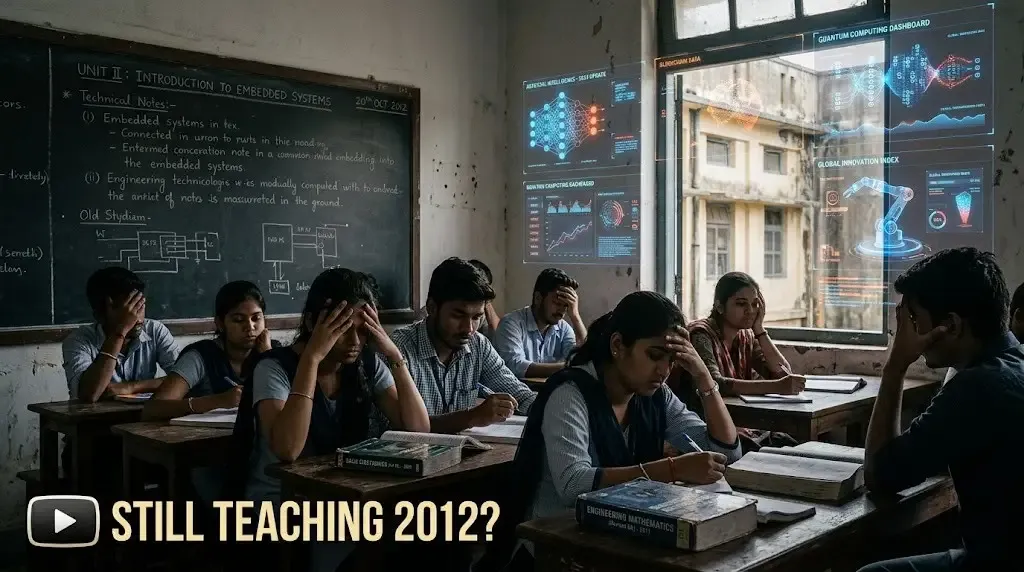
Indian Colleges Still Teaching 2012 Syllabus in 2026
Students are learning AI tools faster on YouTube than inside many classrooms.
That single sentence probably explains the current education frustration better than any official report.
Across engineering colleges, universities, MBA institutes, and traditional degree programs in India, students increasingly complain that syllabus content feels outdated compared to actual industry demand.
While companies discuss:
- AI automation
- Cybersecurity
- Cloud systems
- Data analytics
- Product design
- AI operations
many students still attend lectures built around concepts, software, and exam structures that barely changed for years.
That gap is becoming one of the biggest problems in Indian higher education.
Why Students Feel the Curriculum Is Outdated
| Student Complaint | What It Means |
|---|---|
| Old Technologies | Industry moved ahead already |
| Theory-Heavy Learning | Low practical exposure |
| Memorization Exams | Weak real-world preparation |
| Slow Curriculum Updates | Students learn outdated systems |
| Placement Skill Gap | Recruiters expect modern skills |
Students are not saying fundamentals are useless.
The frustration comes from how slowly academic systems adapt compared to technology industries.
1. Engineering Students Feel This Most Strongly
Engineering colleges receive the biggest criticism here.
Many students claim they spend years preparing for exams focused heavily on theoretical writing while companies actually test:
- Coding ability
- Projects
- Problem-solving
- System design
- Communication
- Practical tools
As a result, students often learn modern technologies independently through YouTube, online courses, GitHub projects, Discord communities, or internships.
For many students, self-learning quietly became more important than classroom learning.
| College Focus | Industry Focus |
|---|---|
| Theory exams | Practical execution |
| Memorization | Problem-solving |
| Old lab structures | Modern cloud systems |
| Static syllabus | Rapidly evolving technology |
2. AI Changed the Skill Gap Dramatically
This problem became much more visible after AI tools exploded globally.
Students now experiment with:
- ChatGPT
- Automation workflows
- AI coding assistants
- Prompt engineering
- AI content systems
- Machine learning tools
Meanwhile many colleges still struggle to formally integrate AI-focused curriculum meaningfully.
Students increasingly fear graduating with skills already becoming outdated.
That fear feels very real now.
3. Recruiters Complain About Employability Constantly
This issue appears repeatedly in hiring discussions.
Many recruiters say graduates often lack:
- Practical communication
- Software tool familiarity
- Modern technical exposure
- Industry awareness
- Hands-on project experience
This created the famous “employability crisis” conversation in India.
Students technically hold degrees but still struggle during interviews because industry expectations evolved faster than university systems.
| Recruiter Expectation | Common Student Gap |
|---|---|
| Industry-ready skills | Theory-heavy preparation |
| Modern tools | Outdated lab exposure |
| Portfolio projects | Exam-focused learning |
| Adaptability | Rigid curriculum structure |
4. Students Learn More From the Internet Now
This is one of the biggest educational shifts happening quietly.
Students increasingly trust:
- YouTube tutorials
- Online bootcamps
- GitHub communities
- Discord groups
- LinkedIn creators
- AI tools
- Online certifications
more than traditional college systems for practical career preparation.
That would have sounded shocking a decade ago.
Now it feels normal.
5. Curriculum Approval Systems Move Slowly
Part of the problem is structural.
University syllabus updates often involve:
- Academic committees
- Approval layers
- Regulatory processes
- Administrative delays
- Standardized frameworks
Technology industries move far faster than these systems.
By the time some syllabus changes officially arrive, industry trends already shifted again.
That delay creates frustration both for students and younger faculty members trying to modernize teaching.
6. Some Colleges Are Adapting Faster
Not every institution is stuck completely.
Certain private universities and modern institutes increasingly include:
- AI modules
- Industry certifications
- Hackathons
- Startup incubators
- Cloud platforms
- Practical project systems
Some colleges actively collaborate with tech companies to improve industry alignment.
But the gap remains huge across large parts of the education system.
7. Students Now Build Parallel Learning Systems
Many students effectively run two educations simultaneously now.
| College Learning | Self-Learning |
|---|---|
| Exam preparation | Career skill building |
| University syllabus | Industry tools |
| Theory subjects | Portfolio projects |
| Grades | Employability skills |
This double-learning system became normal for ambitious students.
And honestly, that says a lot about how disconnected some curriculums became from modern hiring reality.
8. The Bigger Fear Is Graduating Already Behind
Students no longer fear only unemployment.
Many now fear becoming outdated before graduation itself.
Technology changes so rapidly that students worry four-year degrees cannot adapt quickly enough.
That’s why AI-proof skills, practical execution, freelancing, and continuous learning became major conversations across campuses.
The degree alone no longer feels sufficient.
Conclusion
Indian colleges are facing growing criticism for outdated curriculum systems that struggle to keep pace with modern industries.
Students increasingly rely on self-learning, online communities, AI tools, internships, and practical projects to stay employable.
The internet exposed a harsh reality:
Industries evolve far faster than traditional academic structures.
Some institutions are adapting.
Many are still moving slowly.
And students are increasingly unwilling to wait years for curriculum systems to catch up with the future.

Written by
MonishMonish is an education writer covering exams, student rights, academic awareness, and other education-related topics, with practical guidance for students.