
Inclusive College Campuses: Practical Changes That Can Help Students With Visual Disabilities
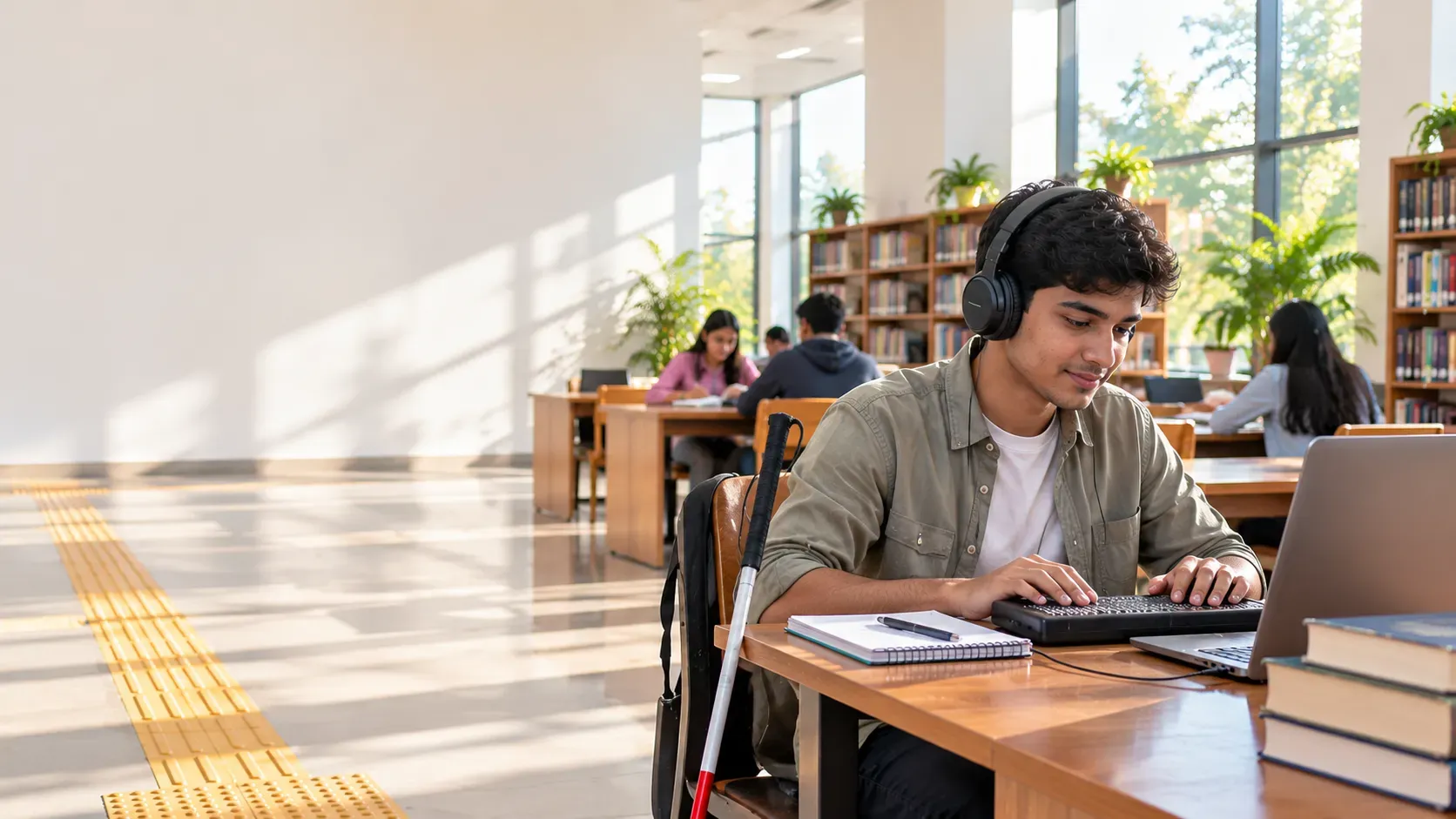
College life should not feel harder just because a student cannot see well. Across India, a growing number of campuses are proving that small, practical changes can make a real difference.
Many institutions now run dedicated resource centres stocked with screen-reading software, refreshable Braille displays, portable magnifiers and AI-based reading devices. These tools let students scan printed notes, listen to textbooks and work on assignments without waiting for someone else to help. At places like Lady Shri Ram College in Delhi, recent upgrades have brought in exactly this kind of equipment so that visually impaired students can study more independently.
Physical movement around campus matters just as much. Walkways with tactile pathways, Braille signage on doors and lifts, and clear audio announcements mean students can find their way around without having to constantly ask for directions. Some colleges have even introduced indoor navigation apps that give voice guidance inside buildings. Ramps, accessible washrooms and reserved seating in classrooms complete the basic picture.
Study material is another big area. When notes, readings and question papers arrive in accessible formats early – audio files, Braille, large print or properly tagged digital text – students stay on track with the rest of the class. Faculty who describe diagrams out loud, share slides in advance and use varied teaching methods also help a lot.
Exams used to be a major stress point. Many colleges now offer extra time, quiet rooms, or the option to write on a laptop with screen-reader software instead of depending only on a scribe. Training students to use these tools beforehand builds confidence and reduces last-minute anxiety.
Awareness sessions for teachers, staff and fellow students play a quiet but important role. When the campus community understands what visual disability actually means in daily life, the small daily interactions become smoother. Dedicated help desks that profile each student’s needs and connect them to the right support have started appearing in a few Delhi University colleges and elsewhere.
None of these steps require reinventing the entire college. Most build on existing guidelines under the Rights of Persons with Disabilities Act and recent UGC advice on accessible teaching and assessment. The colleges that treat these changes as routine rather than special favours see students participate more fully in classes, labs, libraries and campus events.
For students with visual disabilities, the difference is clear. They spend less time overcoming barriers and more time learning, making friends and planning their future. For the rest of the campus, it simply becomes a more usable and fair place for everyone.
Written by
Palak PatelEducation writer Palak Patel covers the latest education news, board exam updates, results, and career opportunities.