
Hybrid Learning System 2026: Future of Education Is Already Here
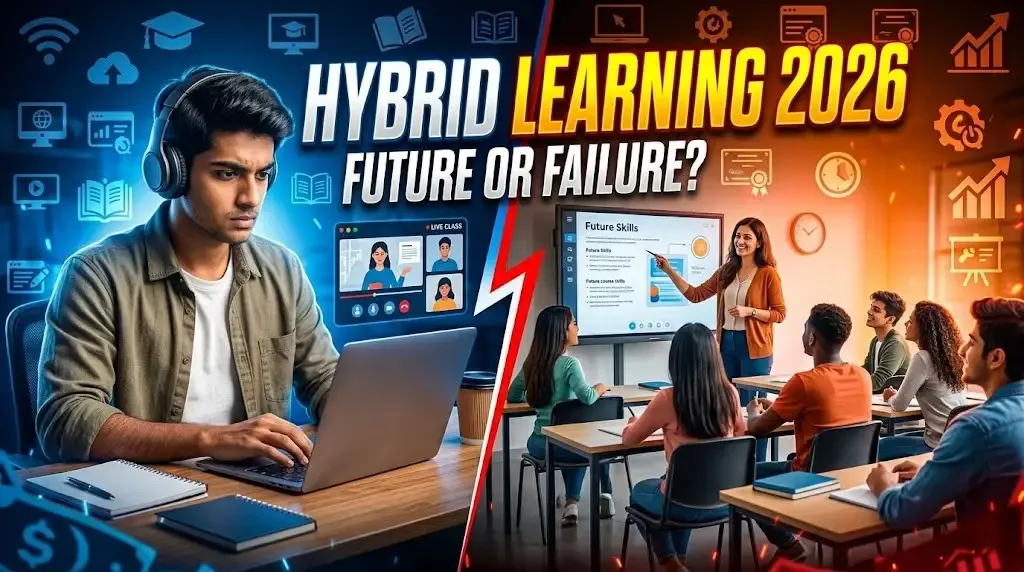
Hybrid Learning System 2026: Why Everyone Is Talking About It
Remember when online classes suddenly became normal during COVID? At that time, it felt like a temporary solution. But fast forward to 2026 - and now it’s turning into a permanent system.
Schools and colleges are now shifting toward hybrid learning, where students attend some classes online and some offline. Not fully digital, not fully traditional - something in between.
And honestly, this shift is not random. It’s happening because both systems failed in their own ways.
What Exactly Is Hybrid Learning?
Hybrid learning simply means a blend of online and offline education.
- Some lectures happen in classrooms
- Some are conducted through apps like Zoom or Google Meet
- Assignments and notes are shared digitally
- Exams can be either online or offline
For example, a college might conduct theory classes online but practical labs offline. This saves time and still keeps hands-on learning alive.
Why Schools and Colleges Are Adopting It in 2026
There are some very real reasons behind this shift - and they’re not just about convenience.
| Reason | What It Solves |
|---|---|
| Flexibility | Students can learn from anywhere |
| Cost Saving | Less travel and hostel expenses |
| Access to Resources | Recorded lectures, PDFs, digital tools |
| Better Time Management | Students can balance skills + studies |
Especially in India, where many students travel hours daily just to attend classes, hybrid learning can actually reduce that burden.
But Is Hybrid Learning Really Better?
Here’s where things get interesting.
On paper, hybrid learning sounds perfect. But in reality, it depends a lot on how it’s implemented.
- Some students feel disconnected during online sessions
- Not everyone has a stable internet connection
- Self-discipline becomes a big challenge
- Teachers also struggle to manage both formats
So yes - it’s powerful, but not flawless.
Real Example: How Colleges Are Using It
Many engineering and management colleges in India are already experimenting with hybrid models.
For instance:
- 3 days offline classes
- 2 days online lectures
- Assignments submitted on portals
- Recorded sessions available anytime
This setup gives students both flexibility and structure - which traditional systems lacked.
What This Means for Students in 2026
If you’re a student right now, this shift is actually important for you.
Because education is no longer just about attending classes. It’s becoming more about how you use your time.
Hybrid learning gives you space to:
- Learn extra skills online
- Do internships alongside college
- Focus on real-world experience
But it also demands responsibility. No one will force you to study - that part is now on you.
Final Thoughts: Future or Just Another Trend?
Hybrid learning is not just a trend. It’s slowly becoming the new normal.
But whether it works or fails depends on one thing - execution.
If done right, it can make education more flexible, practical, and student-friendly. If done poorly, it can become confusing and ineffective.

Written by
Palak PatelEducation writer Palak Patel covers the latest education news, board exam updates, results, and career opportunities.