
How One Woman’s Focus on Basic School Needs Is Changing Classrooms Across India
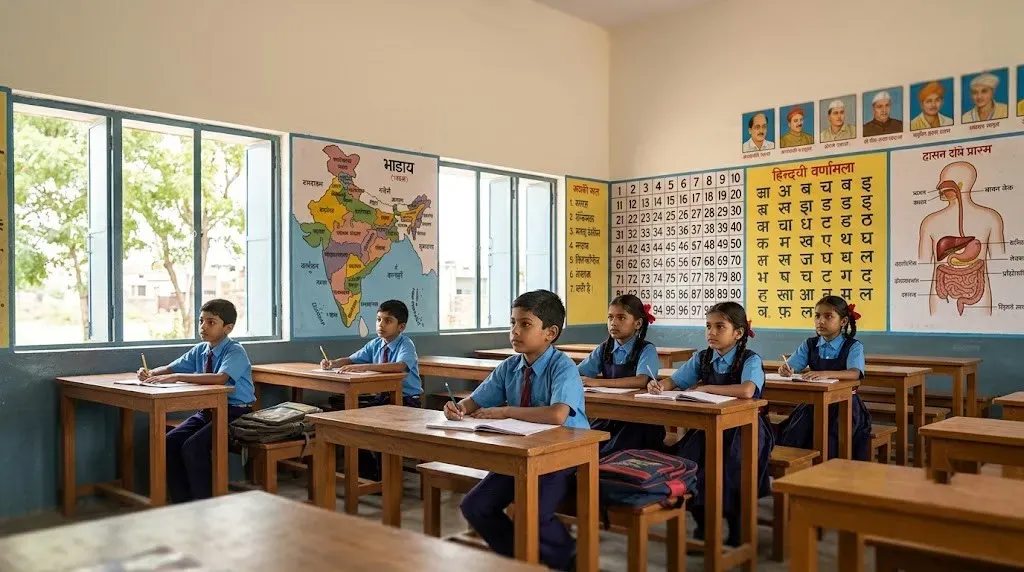
A roof that does not leak. A toilet that works. A proper desk to write on. For far too many children in government schools, these basics still decide if the place feels like somewhere to learn or just somewhere to endure.
That hit Maitreyi Jichkar hard years ago. She watched a girl in one such school rest her notebook on her schoolbag because there was nothing else to write on. The image stuck. What started as an attempt to fix a single school slowly became the Happy School Project under Zero Gravity and the Dr Shrikant Jichkar Foundation. Recent updates from the initiative put the number of government schools touched at more than 150.
The method is straightforward but thorough. First the teams tackle the urgent stuff: leaking roofs, faulty wiring, poor lighting, broken toilets and missing furniture. Then they bring in the Building as Learning Aid idea, better known as BaLA. Walls, floors and even corridors get treated as teaching tools. Simple curriculum-linked paintings and interactive surfaces turn the whole building into something that quietly helps the teacher.
In the beginning Jichkar had to persuade school heads that government classrooms could actually look and feel inviting. Plenty of them were sceptical. The results gradually changed minds. Schools that had been struggling with very low numbers began reporting clear jumps in enrolment once the work was done. One case that has been shared shows a school rising from roughly 50 students to well over 150 in a short span. Attendance and classroom engagement have also improved according to the project’s own accounts, though these are not yet backed by large independent studies.
For the children the difference is immediate. Sitting properly at a desk instead of the floor or a bag takes the physical discomfort out of learning. Working toilets and a roof that keeps the rain out remove some of the biggest reasons students, especially girls, stay home. Teachers find the rooms easier to manage and more pleasant to teach in. Parents, who often form their opinion of a school by how it looks and functions, start to trust the institution more. Young people training to become teachers or education workers can see that real improvement sometimes begins with the most ordinary things rather than waiting for sweeping policy changes.
The project took root in Nagpur and has since spread to several states. Local bodies and CSR partners have helped it grow. Earlier reports put the cost of a full school makeover at a relatively modest figure, usually met through a mix of fundraisers, community contributions and institutional support. Volunteers and groups of young people have been a steady presence on the ground during the actual work.
Jichkar talks about wanting dignified learning spaces, not just pretty ones. You can see the effect when children walk into a room that has good light, usable facilities and walls that teach. Imagination has a little more room to move.
As the count of transformed schools keeps rising, the Happy School Project makes a simple point clear. Infrastructure is not an optional extra in education. It is what lets teaching and learning happen without constant small battles. For thousands of children in government schools, that foundation is a bit stronger than it used to be.

Written by
Palak PatelEducation writer Palak Patel covers the latest education news, board exam updates, results, and career opportunities.