
Gandhi Jayanti 2026: Why Truth, Discipline and Self-Reliance Still Matter for Students
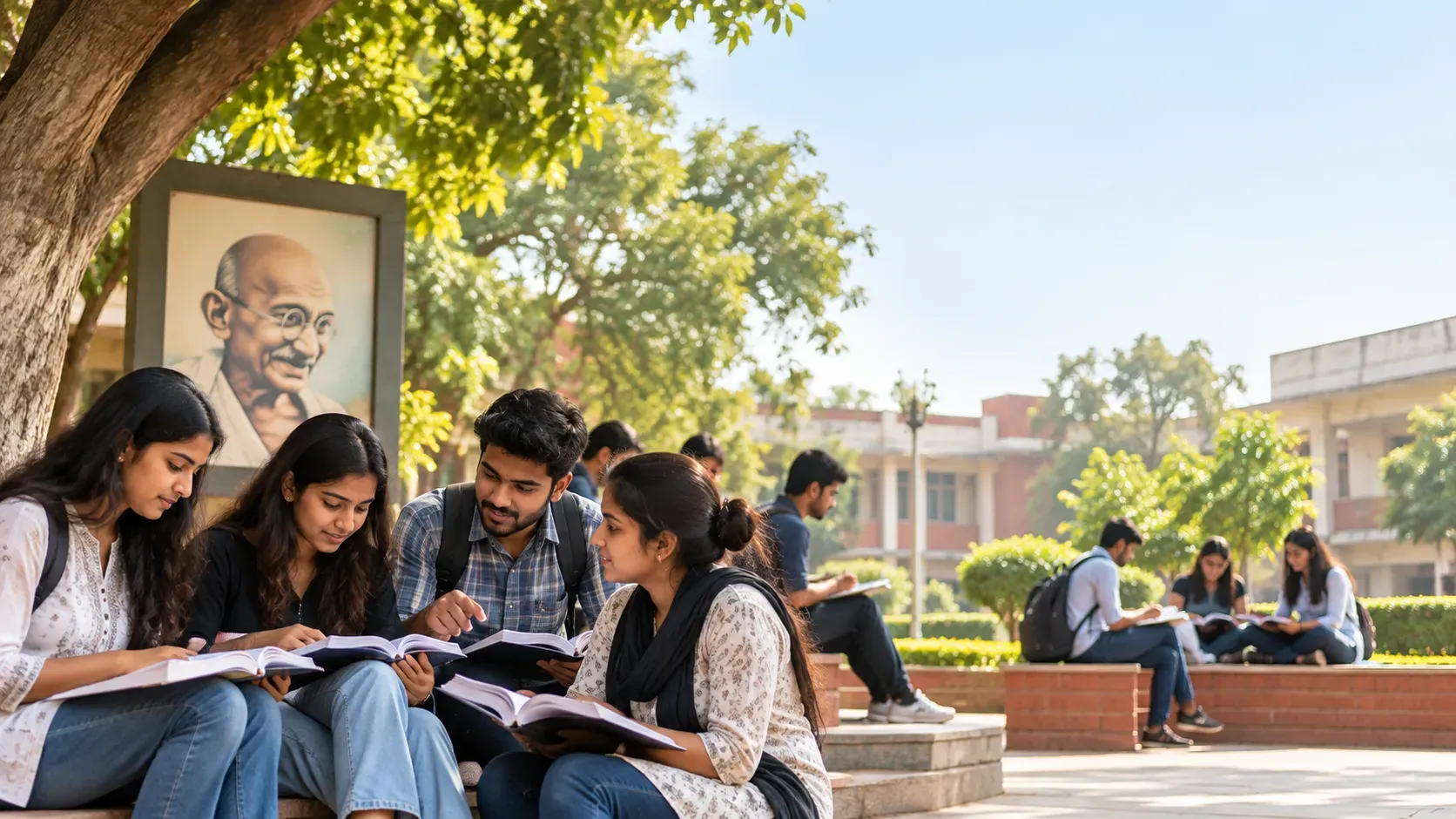
Today is Gandhi Jayanti. Across the country, morning assemblies, special talks and simple programmes are remembering Mahatma Gandhi. For students sitting in classrooms or coaching centres right now, the usual speeches can start to feel distant. But three of his core ideas – truth, discipline and self-reliance – still speak directly to the everyday struggles of student life in 2026.
Truth is the first one. Gandhi treated it as a daily practice, not a slogan. For a student it often means something very ordinary: admitting you did not understand the last chapter instead of nodding along, or resisting the urge to copy in a class test when everyone else seems to be doing it. In an age of carefully filtered Instagram stories and group chats full of exaggerated claims about study hours, being honest with yourself is harder than it looks. Students who face their weak subjects early usually waste less time later.
Discipline is the second. Gandhi kept a strict personal routine even when his days were chaotic. Most students today face a different kind of chaos—constant notifications, endless reels, and the pressure to stay visible online. Setting a fixed two-hour block for focused study and actually putting the phone in another room during that time is a small act of discipline. It is not glamorous, but teachers notice that the students who manage this kind of basic control over their attention handle board exams and competitive tests with less panic.
Self-reliance is the third idea that still matters. Gandhi linked it to simple living and local strength. For today’s students it can mean learning to manage their own notes, plan their week without waiting for someone to remind them, or solve a practical problem instead of immediately asking for help. In hostels and shared PGs this shows up in small ways—keeping track of money, fixing a basic technical issue, or deciding how to use free hours. These habits build a quiet confidence that marks alone cannot give.
Many teachers still bring these points into morning talks or classroom discussions on this day. The better ones do not present Gandhi as a perfect statue. They simply ask students to test the ideas against their own lives. Does honesty make study more effective? Does a bit of daily discipline reduce last-minute stress? Does relying less on constant external push help in the long run?
Parents often worry about results first. Encouraging a child to take charge of their own timetable and to own up to gaps in preparation usually pays off more steadily than constant supervision. Students who start building these habits in school or early college years tend to carry them into higher studies and work.
The pressures have changed since Gandhi’s time. The phones are louder, the competition is wider, and the future feels less certain. What has not changed is the need for an inner base that does not shift with every new trend or ranking list. Truth keeps a student honest with themselves. Discipline turns scattered effort into steady progress. Self-reliance helps them stand a little more firmly when the support systems around them are busy or absent.
On this Gandhi Jayanti, that remains a useful place to start.

Written by
Palak PatelEducation writer Palak Patel covers the latest education news, board exam updates, results, and career opportunities.