
Digital Universities in India: How Online Degrees Are Becoming the New Normal for Students
What Are Digital Universities?
For decades, higher education followed a fixed pattern: attend classes on campus, sit in lecture halls, and complete a degree over three or four years. But the idea of a Digital University is changing that traditional model.
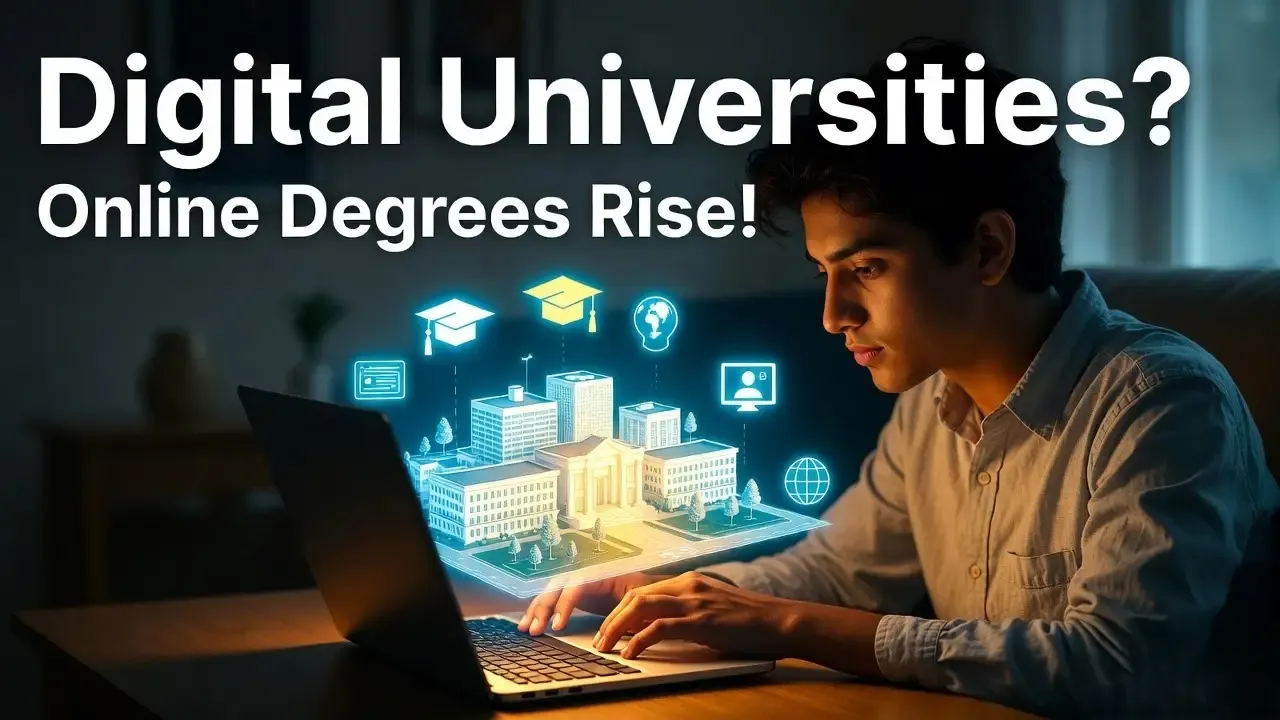
Digital universities allow students to pursue complete degree programs online through digital platforms. Lectures, assignments, exams, and even interactions with professors happen through virtual classrooms.
The Government of India has also shown interest in expanding digital higher education, especially to reach students in smaller towns where access to major universities may be limited.
Why Online Degrees Are Becoming Popular
There are several reasons why online degrees are gaining acceptance among students and even employers.
| Reason | Explanation |
|---|---|
| Flexibility | Students can study from home without relocating. |
| Lower Cost | Online programs are often cheaper than campus courses. |
| Working Professionals | People can continue their jobs while earning a degree. |
| Access to Top Universities | Students from remote areas can join reputed institutions. |
Are Online Degrees Recognized in India?
One of the biggest concerns students have is whether online degrees are recognized. According to the University Grants Commission (UGC), online degrees offered by approved universities are considered valid if the institution follows the official guidelines.
Several major universities in India now offer online programs in fields such as business administration, computer science, data analytics, and commerce.
For employers, the focus is gradually shifting from the mode of education to the skills and knowledge a candidate brings to the job.
Challenges Digital Universities Still Face
Despite the growing popularity of online degrees, digital universities still face some challenges.
- Limited awareness among students about recognized online programs.
- Internet access issues in rural areas.
- Employer perception that still sometimes favors traditional degrees.
- Need for strong digital infrastructure to support large-scale online learning.
The Future of Digital Higher Education in India
Education experts believe that the future will likely include a mix of both traditional and digital learning models. Hybrid education - where students combine online courses with practical or campus sessions - is already gaining traction.
For students, digital universities open a new possibility: earning a recognized degree without being restricted by geography. As technology continues to improve, online education may soon become a normal part of higher education in India.

Written by
Palak PatelEducation writer Palak Patel covers the latest education news, board exam updates, results, and career opportunities.