
BTech General Engineering vs. Engineering Science: Which Interdisciplinary Path is Yours?
Tearing Down the Silos: Understanding the New Wave of Engineering
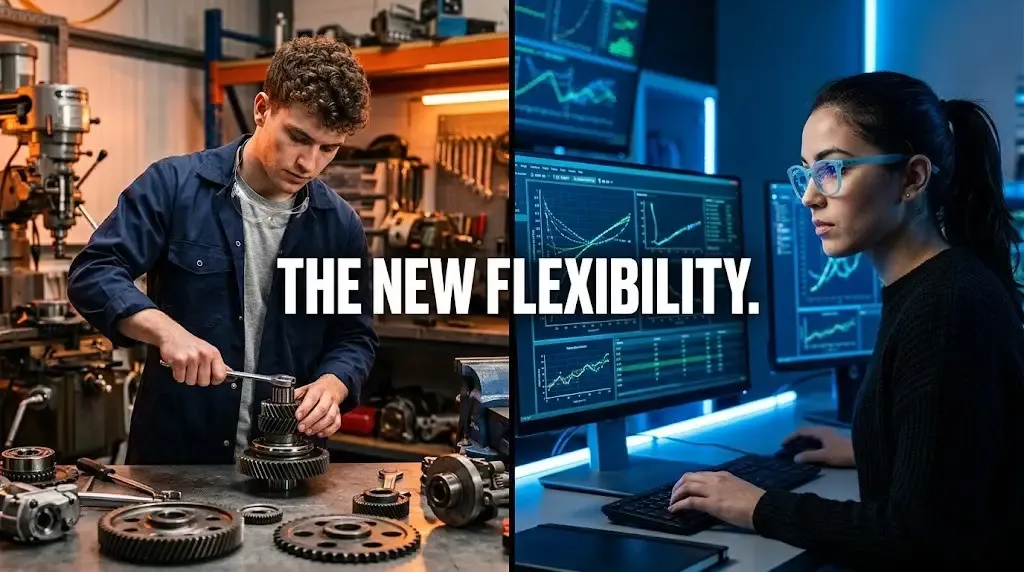
For decades, picking an engineering branch meant picking a box: Mechanical, Civil, or Electrical. But the modern world doesn't work in boxes anymore. Tesla needs engineers who understand both batteries and software; medical tech needs people who speak both biology and electronics. This is where General Engineering and Engineering Science come in.
While both sound "broad," they are built for different types of students. One is about the "How" (application and management), while the other is about the "Why" (first principles and research). Choosing the wrong one can lead to a very frustrating four years.
Quick Comparison of Focus
| Feature | BTech General Engineering | BTech Engineering Science |
|---|---|---|
| Core Philosophy | Breadth across multiple established branches. | Depth in fundamental science and math applied to engineering. |
| Primary Goal | Creating versatile "System Engineers" or Technical Managers. | Creating "Research Engineers" or Innovation Specialists. |
| Typical Subjects | Project Management, Supply Chain, Basics of Mech/Elec/CS. | Quantum Mechanics, Advanced Material Science, Nano-tech. |
| Ideal Candidate | Future Entrepreneurs or Corporate Leaders. | Future Researchers, Scientists, or R&D Specialists. |
1. BTech General Engineering: The Jack of All Trades
General Engineering is designed for students who don’t want to be tied down to a single niche. It’s highly popular in the UK and is gaining traction in premier Indian institutes. You’ll spend your time learning how different systems talk to each other.
If you enjoy the idea of overseeing a large project-where you need to understand why the circuit is failing and why the structural beam is under stress-this is your path. It prepares you for roles that require a "big picture" view, such as Operations Management or Systems Engineering.
The "Coffee Shop" Explanation: It's like being the conductor of an orchestra. You don't need to be the world's best violinist, but you need to know exactly how the violin, flute, and drums should sound together to make music.
2. BTech Engineering Science: The Deep Diver
Don't let the name fool you; Engineering Science is often more rigorous than traditional branches. It focuses heavily on the "Science" part-Physics, Chemistry, and Mathematics-as the foundation for solving complex, often futuristic problems.
This degree is common at IITs (like IIT Hyderabad) and focuses on emerging fields. You might study how light interacts with matter (Photonics) or how to build machines at the molecular level. It is the perfect springboard for a PhD or a high-end R&D role in Silicon Valley or aerospace labs.
Which One Should You Choose?
| If you like... | Choose... |
|---|---|
| Business, management, and seeing projects come to life. | General Engineering |
| Proving theorems, lab experiments, and "First Principles." | Engineering Science |
| Starting your own tech company. | General Engineering |
| Developing the next generation of AI or Clean Energy. | Engineering Science |
The Career Reality Check
General Engineering: You will likely find jobs in consultancy (like McKinsey or BCG), manufacturing management, or technical sales. Recruiters value your ability to communicate across departments.
Engineering Science: Your path is more academic or research-heavy. You’ll be a prime candidate for companies like Google DeepMind, NASA, or specialized biotech firms. However, be prepared-many students in this branch find that a Master’s or PhD is almost mandatory to unlock the best roles.
Conclusion
Stop worrying about which branch has the "highest package" this year. These interdisciplinary paths are about how your brain works. If you like the intersection of people, machines, and money, go General. If you like the intersection of math, physics, and the unknown, go Engineering Science. Either way, you're stepping out of the box-and that's exactly where the future is being built.

Written by
Palak PatelEducation writer Palak Patel covers the latest education news, board exam updates, results, and career opportunities.