
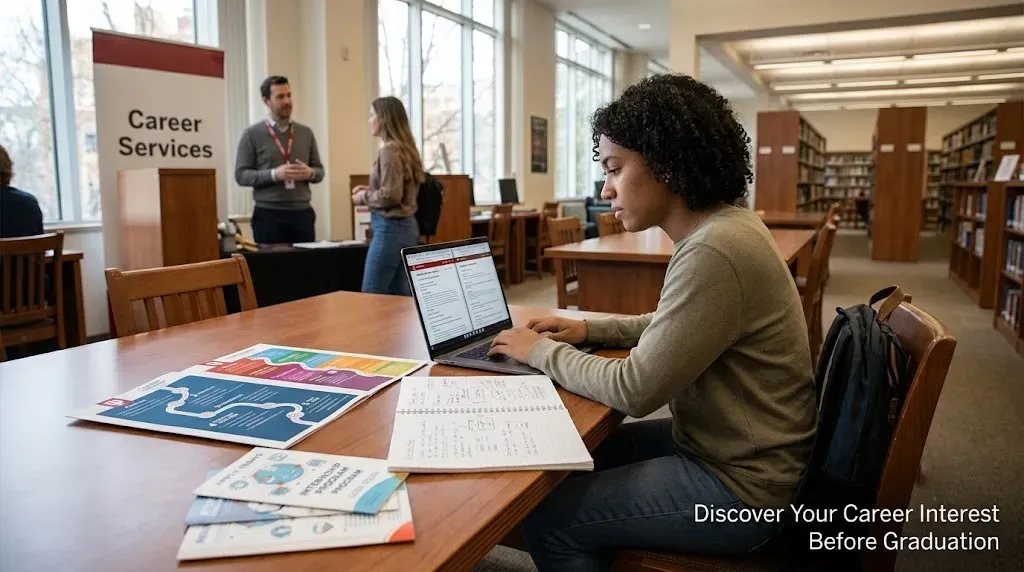
How to Discover Your Career Interest Before Graduation
Say you're halfway through college and someone asks what you plan to do after graduation. Many students answer with a job title they have heard from friends rather than one they have genuinely explored. That usually happens because they choose careers based on trends instead of experience. Finding your career interest early gives you enough time to build relevant skills, complete internships and graduate with a clearer direction.
| Activity | What You Learn |
|---|---|
| Complete a short internship. | You experience the actual work environment instead of relying on assumptions. |
| Join a college club or project. | Leadership, teamwork and communication become easier to evaluate. |
| Talk to professionals. | Real conversations reveal daily responsibilities, salary expectations and career growth. |
One mistake students often make is trying to become experts before they have even explored different fields. Spending two weeks learning basic web development, digital marketing, finance, graphic design or data analytics can tell you far more than watching dozens of career advice videos. Short experiments help you understand what keeps your attention and what feels like a struggle every day.
Your strengths also become clearer when you look at the work you naturally enjoy. Some students like solving technical problems, while others feel energized by presenting ideas, teaching, writing or managing people. Instead of asking which career pays the highest salary, pay attention to the kind of work that keeps you interested even when nobody is grading you.
| Question to Ask Yourself | Why It Helps |
|---|---|
| Which task makes me lose track of time? | Interest usually lasts longer than temporary motivation. |
| What skill do people frequently appreciate? | Outside feedback often highlights strengths you overlook. |
| Would I still enjoy learning this after six months? | Long-term curiosity matters more than short-term excitement. |
Most colleges also have placement cells, faculty mentors or career guidance centres that can connect students with internships, workshops and industry professionals. Taking advantage of these opportunities before graduation often provides a clearer picture of different career paths than waiting until placement season.
Career interests rarely appear overnight. They usually develop after trying real projects, making mistakes and discovering the kind of problems you genuinely enjoy solving. Students who start exploring early give themselves more options when graduation arrives.