
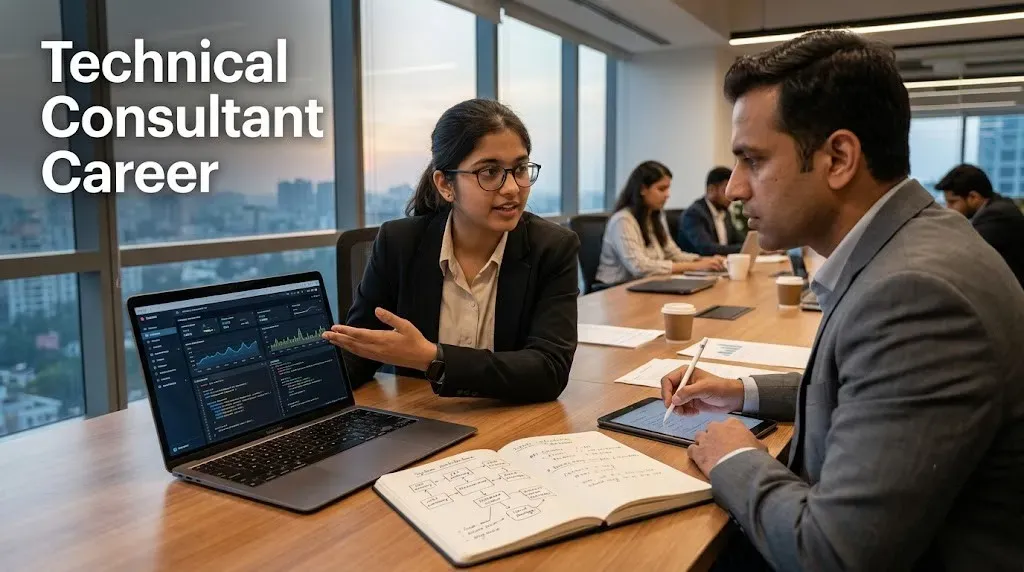
A technical consultant is usually the person helping a business figure out how technology can solve a particular problem. You might be asked to understand a client's requirement, suggest a suitable system and then work with developers or other teams to make the solution happen. That mix makes the role quite different from a job where you spend the whole day writing code.
For a fresh graduate, the first step is choosing a technical area you actually understand. It could be software development, cloud, databases, cybersecurity or enterprise applications. You do not need to know everything, but when someone asks why you would choose one technology over another, you should have a sensible answer.
| Skill to build | Why it matters |
|---|---|
| Technical fundamentals | You need enough practical knowledge to understand systems and recommend realistic solutions. |
| Communication | Clients may explain a business problem without knowing the technical language, so you have to ask the right questions. |
| Problem-solving | A consultant is often dealing with constraints such as budget, existing software or a tight deadline. |
Your college projects can help more than you might expect. Pick one project and learn to explain the problem, the technology choices and the final result clearly. If you built an e-commerce application, for example, be ready to discuss how you handled users, products and data instead of simply listing the technologies on your resume.
Internships are useful because consulting involves people and deadlines that are difficult to reproduce in a classroom. If you cannot get a consulting internship, an entry-level developer, business analyst or implementation role can still build relevant experience. Working on client requirements or supporting a software implementation gives you a much better idea of what consultants actually do.
When applying for your first role, search for titles such as Associate Technical Consultant, Technology Consultant, Implementation Consultant or IT Consultant. Read the job description carefully because the word “consultant” covers very different jobs. One company might want someone with strong coding skills, while another could be looking for a person who mainly handles requirements, software configuration and client communication.
Certifications can help once you have chosen your area, especially for cloud or enterprise technologies, but they should support practical knowledge rather than replace it. A graduate who can demonstrate a small working project and explain the decisions behind it will have much more to discuss in an interview than someone who has collected certificates without using the technology.