
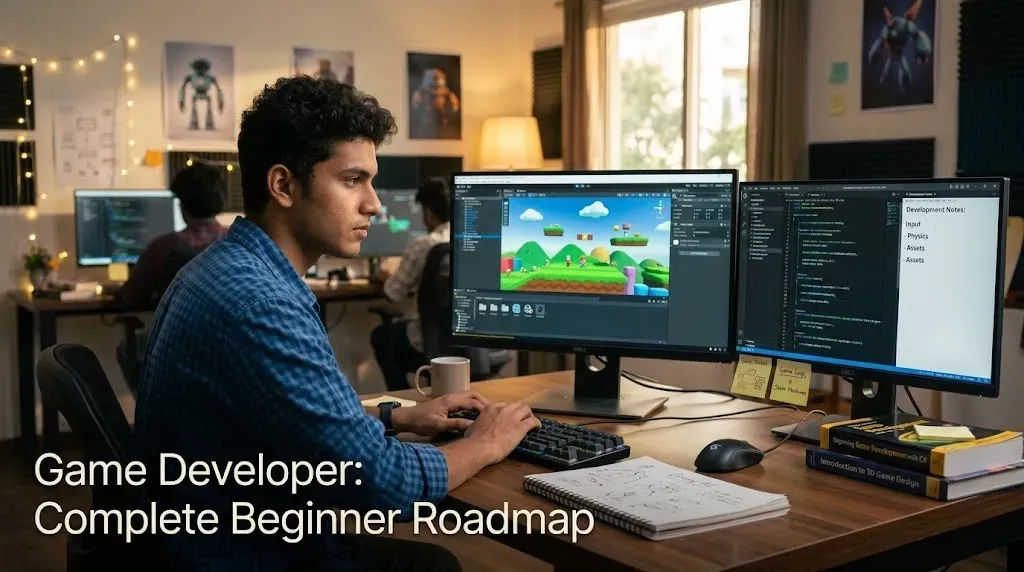
How to Become a Game Developer: Complete Beginner Roadmap
Game development is a combination of programming, design, storytelling, graphics, sound and problem-solving. From mobile games and indie titles to large PC and console games, developers work across different areas to turn an idea into an interactive experience. For beginners, the field may initially seem complicated, but learning the right skills in a structured order can make the journey much easier.
1. Understand the Different Areas of Game Development
Game development is not limited to writing code. A game requires multiple components, including gameplay mechanics, graphics, sound, user interfaces and game logic. Before starting, beginners should understand the different roles involved and decide which area interests them the most.
| Area | Main Work |
|---|---|
| Game Programming | Gameplay logic, mechanics, controls and game systems. |
| Game Design | Rules, levels, gameplay experience and player interactions. |
| 3D/2D Art | Characters, environments, objects and visual assets. |
| Animation | Movement and visual animation of characters and objects. |
| Audio | Music, sound effects and other audio elements. |
2. Learn Programming Fundamentals
If you want to become a game programmer, start with programming fundamentals before jumping into complex game projects. Concepts such as variables, conditions, loops, functions, arrays, object-oriented programming and debugging are useful when building game mechanics.
C# is commonly associated with Unity, while C++ is widely used with Unreal Engine and other professional game-development environments. Beginners do not need to learn multiple languages at the same time. Pick one language based on the engine you plan to learn and build a strong foundation first.
3. Choose a Game Engine
A game engine provides tools that help developers create games without building every system from scratch. Beginners should choose one engine and spend enough time understanding its interface, scenes, assets, physics, scripting and debugging tools.
| Game Engine | Beginner Focus |
|---|---|
| Unity | Learn scenes, GameObjects, components, C# scripting and basic game mechanics. |
| Unreal Engine | Learn levels, actors, Blueprints, materials and gameplay systems. |
| Godot | Learn scenes, nodes, scripting and 2D/3D game development. |
4. Start With Small Games
One of the biggest mistakes beginners make is starting with a huge game idea. Instead, build small projects that teach one or two concepts at a time. A simple 2D platformer, endless runner, shooting game, puzzle game or basic arcade game can teach valuable development skills.
| Beginner Project | Skills You Can Practise |
|---|---|
| 2D Platformer | Movement, collisions, levels and controls. |
| Endless Runner | Player movement, spawning objects and scoring. |
| Puzzle Game | Game logic, UI and problem-solving mechanics. |
| Simple Shooting Game | Input handling, physics, enemies and gameplay systems. |
5. Learn Game Design Basics
Programming alone does not make a game enjoyable. Learn basic game-design concepts such as player objectives, difficulty progression, rewards, feedback, level design and game balance. Even if your primary goal is programming, understanding design can help you build better gameplay systems.
6. Learn About 2D and 3D Assets
You do not need to become a professional artist to start game development. However, understanding how game assets work is useful. Learn about sprites, textures, models, animations, materials and basic lighting. Beginners can use available assets while focusing on programming and game mechanics, then gradually learn asset creation if they are interested in the art side of development.
7. Build a Game Development Portfolio
A portfolio is one of the best ways for beginners to demonstrate their abilities. Instead of simply listing a game engine or programming language on your resume, show the games you actually built. Include screenshots, short gameplay videos, project descriptions and links to playable builds or source code where appropriate.
| Portfolio Element | What It Shows |
|---|---|
| Game Demo | Your ability to build a functional game. |
| Gameplay Video | Game mechanics and overall presentation. |
| Project Description | Your problem-solving and development process. |
| Source Code | Programming structure and coding practices. |
8. Learn Version Control and Team Collaboration
Professional games are usually created by teams, so collaboration skills are important. Learn the basics of Git and platforms used for managing source code. Practise working with branches, commits and project versions. Participating in small team projects or game jams can also teach you how to work with programmers, designers and artists.
9. Participate in Game Jams
Game jams are short development events where participants create games within a limited period, often around a specific theme. They can help beginners practise rapid development, teamwork, creative problem-solving and project completion. A completed small game can also become a useful portfolio project.
10. Apply for Internships and Entry-Level Roles
Once you have several completed projects, start exploring internships and entry-level opportunities such as junior game programmer, gameplay programmer, game designer, technical artist or QA/game testing roles. The exact position depends on the skills you develop and the area of game development you choose.
| Stage | Main Goal |
|---|---|
| Beginner | Learn programming and game-development fundamentals. |
| Intermediate | Build complete small games and understand game systems. |
| Portfolio Stage | Create polished projects and participate in team projects or game jams. |
| Job Preparation | Prepare your resume, portfolio, technical skills and interview answers. |
Becoming a game developer is a gradual process. You do not need to learn every tool or technology before building your first game. Start with one programming language, one game engine and small projects. As your skills improve, move towards more complex mechanics, better design and larger team projects.
For students and beginners, the most important habit is to keep building. A portfolio containing several completed games can demonstrate practical ability much more effectively than simply completing tutorials. Learn, build, test, improve and repeat-that is the foundation of a strong game-development journey.