College is actually one of the best times to learn a skill, but many students assume they need to buy a course first. You really don't. If you have a phone or laptop and a few hours each week, you can start building skills that are useful for internships and jobs without paying for another certificate.
1. Learn from free online material
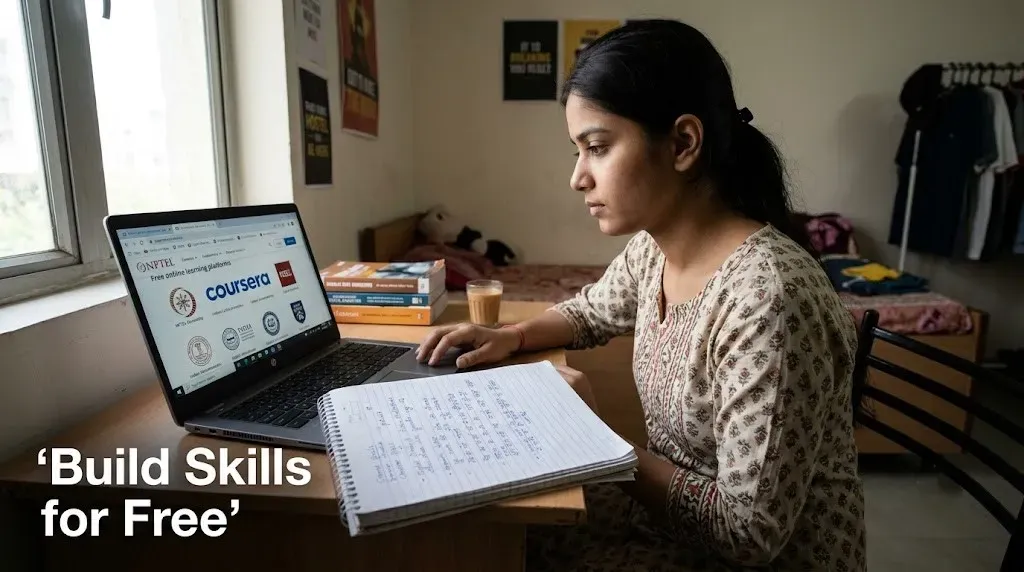
Pick one skill instead of jumping between ten different topics. You can find free tutorials, documentation, lectures and practice material for coding, Excel, design, communication and many other skills. The trick is to actually practise after watching something rather than collecting videos in a playlist.
2. Build small projects
A project gives you something concrete to show when someone asks, “What can you actually do?” A student learning web development could make a portfolio website or a small e-commerce page. Someone learning Excel could create a simple sales tracker. Start small and finish it instead of waiting for the perfect project idea.
3. Use college assignments differently
Don't treat every assignment as something to submit and forget. Turn useful ones into portfolio pieces. Improve the design, add better research or solve the problem in a more practical way. That way, the work you already have to do for college can also become evidence of your skills.
4. Practise with real problems
Try helping a friend, college club or small local business with something you are learning. Designing a poster, managing a spreadsheet or creating a basic website feels very different when someone actually needs the result. You also learn how to take feedback, meet a deadline and fix mistakes.
5. Create proof of your progress
You don't need a certificate for every skill. Keep your projects, notes, presentations, designs or code in an organised portfolio. A simple GitHub profile, portfolio page or folder of your best work can make your learning much easier to explain during an interview.
The biggest mistake is waiting until the final year to start. Even 30–45 minutes of focused practice a few days a week can add up over a semester. Pick one skill, make something with it and keep improving it. By the time placements arrive, you'll have more than a line on your resume. You'll have work to show.