
Top Colleges Students Regret Joining in India
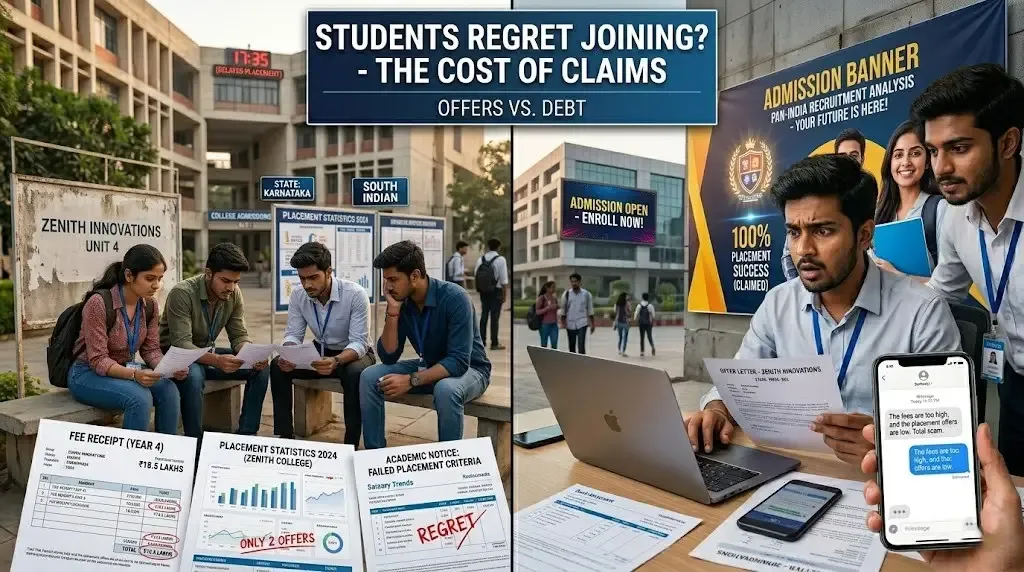
Top Colleges Students Regret Joining in India
College regret is becoming surprisingly common in India.
Students spend months preparing for admissions, comparing campuses, watching YouTube reviews, and listening to counselors promise “great placements” and “industry-ready education.”
Then classes actually begin.
And many students slowly realize the reality feels very different from what was marketed during admission season.
Some regret the fees. Others regret weak placements, overcrowded classrooms, strict attendance systems, outdated curriculum, or poor hostel conditions.
And interestingly, the regret usually does not come from only one issue.
It often comes from the gap between expectations and reality.
Why Students Regret Certain Colleges
| Main Reason | Student Complaint |
|---|---|
| Placement Hype | Reality weaker than advertisements |
| High Fees | ROI feels poor |
| Strict Rules | School-like environment |
| Overcrowding | Too much competition internally |
| Weak Teaching Quality | Too theoretical and outdated |
Importantly, this does not mean every student hates these colleges.
Some students still perform extremely well. But regret discussions online have become much more visible now because students openly share experiences on Reddit, Quora, LinkedIn, Telegram groups, and review forums.
1. Colleges With Heavy Marketing Often Face Stronger Backlash
This pattern appears repeatedly.
The more aggressively a college markets itself, the higher student expectations become.
Huge placement banners, celebrity concerts, influencer promotions, sponsored YouTube videos, and giant “highest package” advertisements create an image of guaranteed success.
Then students arrive and discover the average experience looks much more ordinary.
| Marketing Promise | Common Student Reaction |
|---|---|
| 100% Placements | Many students still struggle |
| Luxury Campus Image | Infrastructure better than academics sometimes |
| Top Recruiter Logos | Limited actual hiring numbers |
| Global Opportunities | Accessible only to few students |
This expectation mismatch becomes one of the biggest sources of regret.
2. Students Increasingly Question Return on Investment
Fees in many private colleges have increased heavily.
Meanwhile, placement outcomes often remain inconsistent.
Students now compare the total money spent - tuition, hostel, transport, laptops, certifications, coaching, and living expenses - against actual salary outcomes after graduation.
That comparison can become uncomfortable.
Especially when students realize some peers from cheaper colleges secured similar jobs through self-learning and internships.
This is why ROI discussions dominate modern college conversations.
3. Strict Rules Frustrate Students More Than Before
Many students expect college life to feel independent and flexible.
Then they enter campuses with:
- Strict attendance rules
- Uniform policies
- Gate restrictions
- Fine systems
- Limited freedom
- Heavy discipline monitoring
Some students actually prefer structured environments.
Others feel trapped and disappointed because the atmosphere resembles school more than university life.
This becomes especially controversial in private engineering colleges.
4. Overcrowding Creates Hidden Problems
Several large private universities expanded aggressively.
That growth increased revenue and visibility, but students often complain it also increased internal competition massively.
| Overcrowding Problem | Student Impact |
|---|---|
| Placement Competition | Harder to stand out |
| Hostel Pressure | Room availability issues |
| Faculty Attention | Less individual support |
| Internship Access | Too many students chasing same opportunities |
Students often enter expecting premium attention but instead feel like part of a massive system.
5. Many Students Learn More Outside College Than Inside
This is one of the most repeated opinions online.
Students increasingly say their real learning came from:
- YouTube tutorials
- Online coding platforms
- Freelancing
- Internships
- GitHub projects
- LinkedIn networking
- External certifications
Not necessarily from classroom lectures.
That creates frustration because students start questioning why they paid huge fees for outdated theory-heavy education.
Especially in technology-related fields, self-learning culture has become extremely strong now.
6. Placement Reality Hits Hard in Final Year
Many students stay optimistic until placement season begins.
That’s when reality becomes clearer.
Some colleges rely heavily on mass recruiters offering moderate salaries. Others struggle to attract enough companies consistently.
Students often realize that the famous “highest package” shown during admissions represented only one exceptional case.
| Placement Expectation | Common Final-Year Reality |
|---|---|
| High-paying product jobs | Mostly service-based hiring |
| Core engineering jobs | Limited openings |
| Guaranteed placement | Strong competition remains |
| Easy career growth | Heavy off-campus preparation needed |
This moment creates regret for many students who joined mainly because of placement marketing.
Some Students Still Build Excellent Careers
This part matters too.
Even heavily criticized colleges still produce successful graduates.
Why?
Because motivated students often use college only as a base while building skills independently.
Some focus heavily on coding. Others build freelance careers, startups, strong LinkedIn profiles, internships, or content creation skills.
The internet reduced dependence on classroom learning far more than colleges expected.
How Students Can Avoid Regret Before Admission
| Smart Research Method | Why It Helps |
|---|---|
| Talk to Current Students | Gets honest campus reality |
| Check Median Salary | More realistic than highest package |
| Research Alumni Careers | Shows long-term outcomes |
| Understand Total Costs | Avoids ROI shock later |
| Review Internship Opportunities | Critical for placements now |
Students who research deeply before admission usually feel less disappointed later.
Conclusion
The rise of “college regret” discussions reflects a major shift happening in Indian education.
Students are no longer satisfied with flashy advertisements and giant campuses alone.
They increasingly care about real outcomes - placements, internships, skill development, affordability, and long-term ROI.
Some colleges still genuinely help students grow.
Others simply market themselves better than they educate.
And because students now openly share experiences online, the difference between branding and reality is becoming harder to hide every year.

Written by
MonishMonish is an education writer covering exams, student rights, academic awareness, and other education-related topics, with practical guidance for students.