
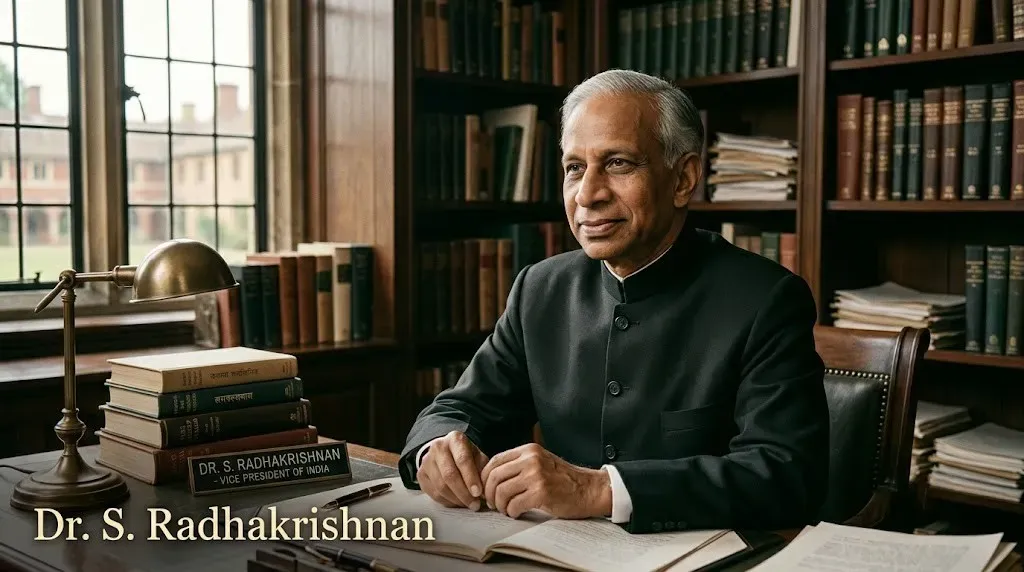
Every September 5, students across India celebrate their teachers, but the date takes us back to the life of Dr. Sarvepalli Radhakrishnan. Born on September 5, 1888, he became one of India’s most respected philosophers, teachers and educationists before eventually serving as the country’s second President.
Radhakrishnan’s connection with education began long before his political career. He studied philosophy at Christian College, Madras, and later taught at major institutions including the University of Mysore and the University of Calcutta. His academic work also took him to Oxford, where he held the Spalding Professorship of Eastern Religions and Ethics.
What made him stand out was the way he connected education with the development of a person. For Radhakrishnan, learning was not simply about collecting information or passing examinations. He believed education should encourage independent thinking, reason and responsible citizenship. This idea continues to appear in discussions about the broader purpose of education today.
| Period | Important role |
|---|---|
| 1931–1936 | Vice-Chancellor, Andhra University |
| 1939–1948 | Vice-Chancellor, Banaras Hindu University |
| 1952–1962 | First Vice-President of India |
| 1962–1967 | Second President of India |
His contribution was not limited to teaching in classrooms. He wrote extensively on Indian philosophy and comparative religion, helping introduce Indian philosophical thought to audiences outside the country. He also held important academic leadership positions, including Vice-Chancellor of Andhra University and Banaras Hindu University.
The reason September 5 became Teachers’ Day is closely linked to his own attitude towards teaching. When admirers wanted to celebrate his birthday, Radhakrishnan suggested that the day could instead be observed as Teachers’ Day. The tradition eventually became a national observance.
Radhakrishnan died on April 17, 1975, but his connection with education remains part of how India remembers him. In 2026, Teachers’ Day again gives students a reason to thank their teachers, while September 5 also serves as a reminder of the scholar and teacher whose birthday gave the day its identity.