
Students Tricked by Fake “Work From Home CAPTCHA Jobs” Online
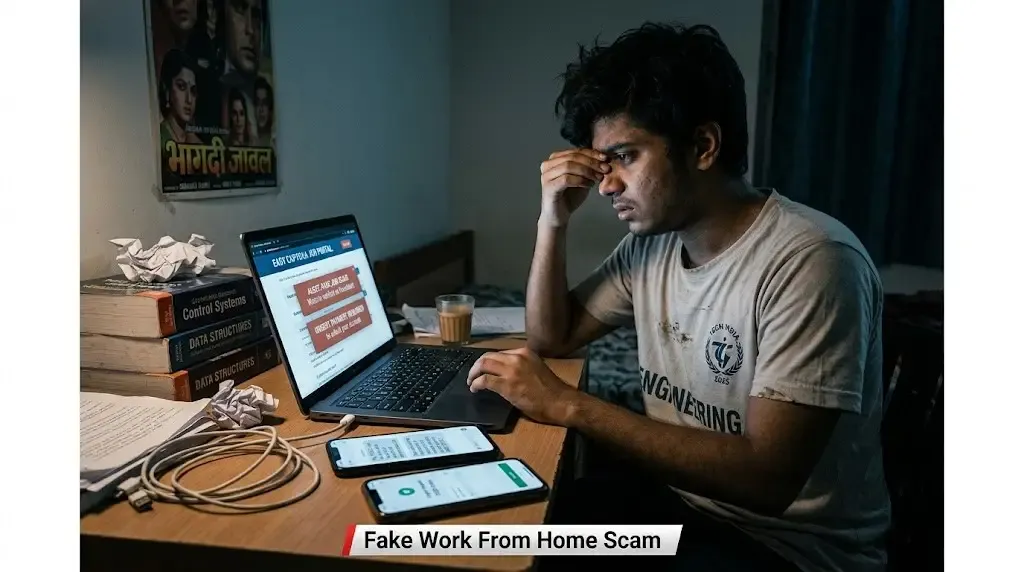
Students Falling Victim to Fake “Work From Home CAPTCHA Jobs” Online
Fake work-from-home CAPTCHA jobs are once again spreading rapidly across social media, Telegram groups, WhatsApp messages, and online job portals. This time, students and freshers are becoming the biggest targets.
The scam usually begins with an attractive message promising “easy online income” for simple CAPTCHA typing work. Many advertisements claim students can earn ₹15,000 to ₹40,000 per month without experience, investment, or interviews.
And honestly, that is exactly why the scam works.
Students looking for part-time income, especially after exams or during college vacations, often click these offers hoping to earn quickly from home.
How the Fake CAPTCHA Job Scam Works
Most scams follow a surprisingly similar pattern.
| Scam Stage | What Happens |
|---|---|
| Step 1 | Students receive job offer through WhatsApp, Telegram, or Instagram |
| Step 2 | Scammers promise easy CAPTCHA typing income |
| Step 3 | Victims are asked to sign digital agreements quickly |
| Step 4 | Unrealistic daily targets are assigned |
| Step 5 | Victims are accused of “breaching contract” |
| Step 6 | Scammers demand penalty money or threaten legal action |
Many victims later realise the websites are fake, the agreements are legally questionable, and the promised salary never actually arrives.
Students Often Get Threat Calls and Fake Legal Notices
One disturbing part of these scams is the psychological pressure.
After victims fail to complete impossible targets, scammers often start sending fake legal notices, threatening emails, or phone calls pretending to be lawyers or cybercrime officials.
Some students are told they must pay “registration cancellation charges” or “agreement violation penalties” ranging from ₹5,000 to ₹50,000.
In reality, cybercrime experts repeatedly warn that many of these so-called legal contracts are designed only to scare victims into paying money.
Why Students Become Easy Targets
Students and freshers are especially vulnerable because many are searching for flexible online work opportunities for the first time.
| Common Trap | Why It Works |
|---|---|
| High Salary Promise | Students want quick income |
| No Experience Needed | Feels easy and low-risk |
| Instant Joining | No interview creates urgency |
| Fake Legal Agreement | Victims panic after threats |
| Work From Home Appeal | Attractive for college students |
Many scams also use fake company logos, fake GST certificates, edited government documents, and fake LinkedIn profiles to appear legitimate.
Warning Signs Students Should Never Ignore
Cyber experts say there are several red flags students should immediately notice before accepting online jobs.
| Red Flag | Risk Level |
|---|---|
| No proper company website | High |
| Pressure to sign quickly | High |
| Huge salary for simple work | High |
| No real HR interview | Suspicious |
| Penalty clauses in agreement | Dangerous |
| Communication only on WhatsApp | Suspicious |
Honestly, legitimate companies usually do not threaten freshers with legal action within a few days of joining simple typing work.
What Students Should Do If They Get Trapped
Cybercrime officials generally advise victims not to panic if they start receiving fake legal threats.
Students should immediately stop sharing personal documents, avoid paying penalties, take screenshots of chats and agreements, and report the incident through the official cybercrime portal at cybercrime.gov.in.
If financial fraud has already happened, victims should also contact their bank immediately and report suspicious transactions.
Online Job Scams Are Increasing Rapidly
India has seen a sharp rise in online job fraud cases over the last few years, especially after remote work became more common.
Fake data entry jobs, CAPTCHA work scams, task-based Telegram jobs, and fraudulent freelancing offers are now regularly targeting students through social media ads and messaging apps.
And the scary part is that scammers are getting smarter. Many fake websites now look almost identical to real startup portals.
The Bigger Problem Behind These Scams
At the center of these scams is one simple reality - students genuinely need flexible income opportunities.
Scammers exploit that desperation. They know many young people are trying to support studies, coaching fees, hostel rent, or family expenses.
That is why awareness matters more than ever right now. Because sometimes the “easy online job” is actually designed only to trap people financially and emotionally.

Written by
Palak PatelEducation writer Palak Patel covers the latest education news, board exam updates, results, and career opportunities.