
Fake GATE and JEE Counselling Websites Tricking Engineering Aspirants
Fake GATE and JEE Counselling Websites Tricking Engineering Aspirants
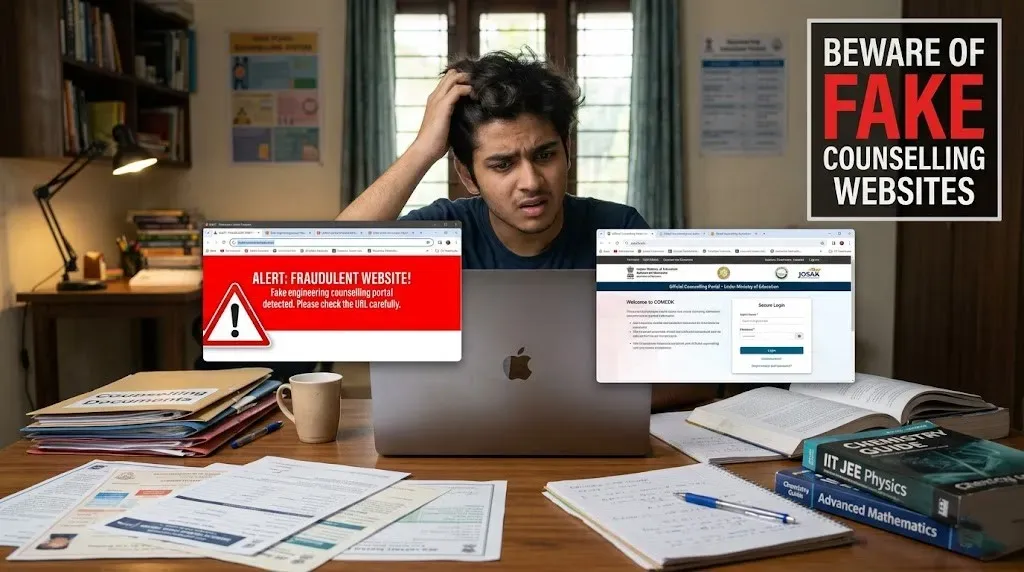
Every year, thousands of engineering aspirants participate in GATE and JEE counselling for admissions to top colleges. During this period, cyber fraudsters often create fake counselling websites that closely resemble official portals to mislead students and parents.
These websites may ask candidates to register again, pay fake counselling fees, or share sensitive personal information. Students should always verify admission updates through official sources.
Common Tricks Used by Fake Websites
| Fraud Method | Purpose |
|---|---|
| Fake Registration Links | Collect personal information |
| Fraud Payment Requests | Steal money from applicants |
| Look-Alike Websites | Imitate official portals |
| Fake Admission Messages | Create panic among students |
How to Identify a Fake Counselling Portal
| Check | What to Do |
|---|---|
| Website Address | Verify the official domain carefully |
| Payment Request | Avoid unofficial payment links |
| Contact Details | Confirm through official authorities |
| Social Media Rumours | Cross-check before taking action |
Safety Tips for Students
- Use only official counselling websites.
- Do not share passwords or OTPs.
- Avoid clicking on unknown admission links.
- Verify every notice before making payments.
- Inform family members about online admission scams.
What to Do If You Suspect Fraud?
If you come across a suspicious website or message, avoid sharing personal details and report the issue to the concerned authorities. Keep screenshots and payment records, if any, for future reference.
Conclusion
Fake GATE and JEE counselling websites are becoming a growing concern during the admission season. Staying alert and relying only on official sources can help students avoid financial loss and protect their personal information.

Written by
Palak PatelEducation writer Palak Patel covers the latest education news, board exam updates, results, and career opportunities.