
Fake AI Interview Apps Collecting Personal Data: What Students Should Know
Fake AI Interview Apps Collecting Personal Data: What Students Should Know
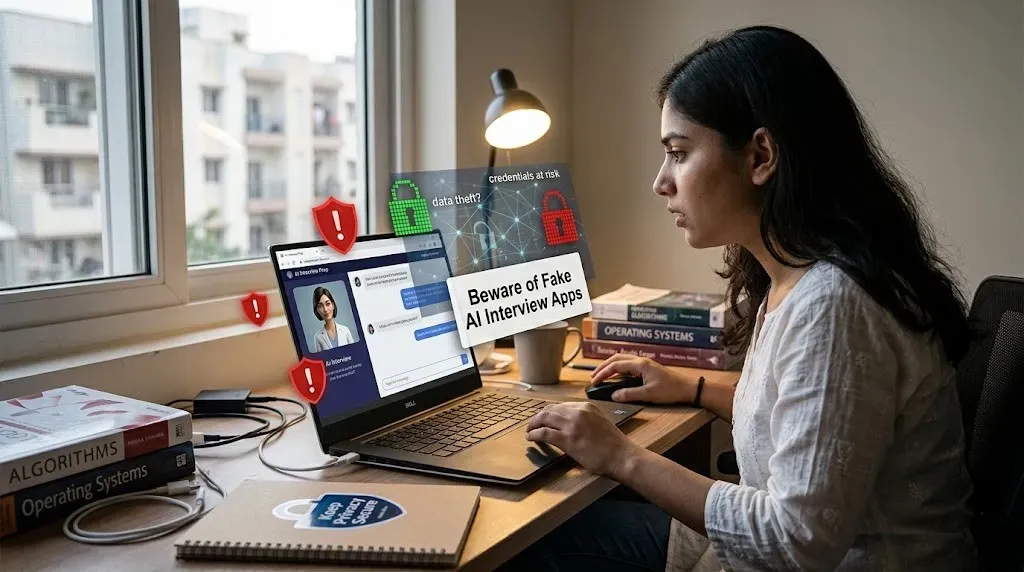
Artificial Intelligence has transformed the way students prepare for placements and job interviews. AI-powered mock interviews, resume analysis tools, and career coaching applications have become increasingly common. While many of these platforms are legitimate, cybersecurity experts warn that some fake or unverified apps may misuse user information.
Students often upload resumes, educational certificates, personal photographs, contact details, and even voice recordings to such platforms. If these apps lack proper security standards, the collected information could be exposed or misused.
What Data Can Fake Apps Collect?
| Data Type | Possible Risk |
|---|---|
| Full Name and Contact Details | Identity misuse and spam |
| Resume and Academic Records | Unauthorized data sharing |
| Photographs and Videos | Privacy concerns |
| Voice Recordings | Potential misuse of biometric data |
| Location Information | Tracking and profiling |
| Email and Login Credentials | Account security risks |
Why Students Are Easy Targets
Many students actively search for internship opportunities, placement preparation tools, and AI-based interview practice platforms. Fraudulent applications often exploit this demand by advertising free premium services or guaranteed job assistance.
In some cases, users may unknowingly grant unnecessary permissions while installing these applications.
Warning Signs of a Fake AI Interview App
| Red Flag | What to Watch For |
|---|---|
| Too Many Permissions | Requests for contacts, microphone, camera, and location without clear need |
| No Privacy Policy | Lack of transparency about data usage |
| Unverified Developer | No credible company information |
| Guaranteed Job Claims | Unrealistic promises |
| Poor Reviews | Frequent complaints from users |
How Students Can Protect Their Data
Before installing any AI interview application, students should verify the developer, read the privacy policy, and check user reviews from trusted sources. Downloading apps only from official app stores and reputable platforms can reduce security risks.
Users should also avoid sharing sensitive information unless it is genuinely required for the service.
Simple Cyber Safety Tips
- Use strong and unique passwords.
- Enable two-factor authentication wherever available.
- Avoid uploading unnecessary personal documents.
- Review app permissions regularly.
- Keep devices and applications updated.
- Delete unused apps that store personal information.
Why Data Privacy Matters
Personal information has become a valuable digital asset. Misuse of academic records, resumes, or identity documents can lead to fraud, impersonation, or unwanted marketing activities.
Building awareness about digital privacy helps students make informed decisions while using online career and education platforms.
Conclusion
AI interview tools can be useful for placement preparation, but students should remain cautious while using unfamiliar applications. Checking credibility, limiting data sharing, and understanding privacy practices are important steps toward protecting personal information.
As digital recruitment continues to grow, cybersecurity awareness will become just as important as technical and interview skills.

Written by
Palak PatelEducation writer Palak Patel covers the latest education news, board exam updates, results, and career opportunities.