
Fake Academic Conferences: How Students Can Identify Them
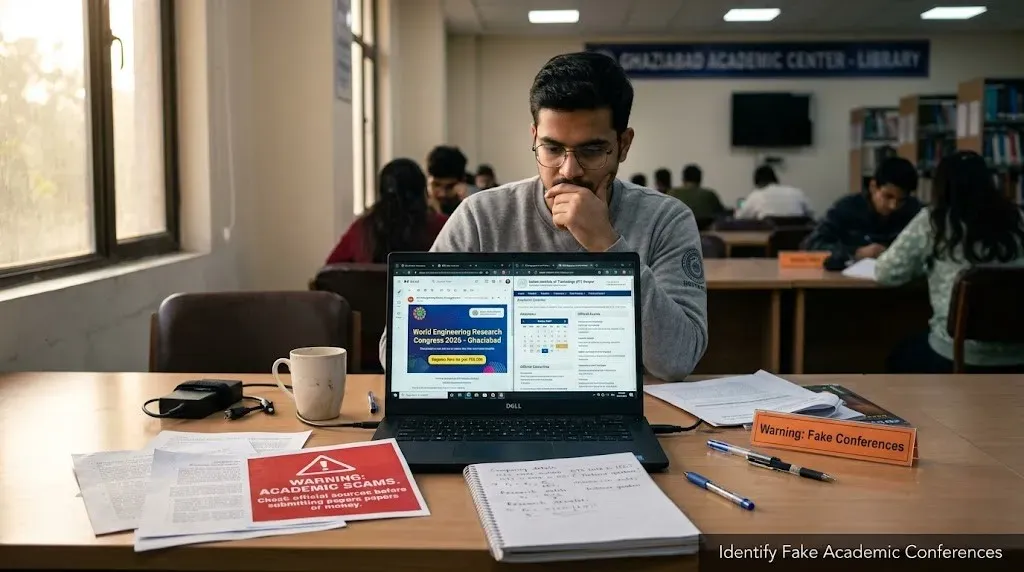
Fake Academic Conferences, How Students Can Identify Them Before Paying Registration Fees
A polished website and an attractive certificate do not always mean a conference is genuine. Fake or predatory academic conferences often target undergraduate students, research scholars and early-career faculty members by promising international exposure, rapid paper acceptance and prestigious awards. Many participants realize the problem only after paying registration fees or attending poorly organized events with little academic value.
| Warning Sign | Why It Deserves Attention |
|---|---|
| Paper accepted within a day. | Serious conferences normally conduct peer review before acceptance. |
| Unrealistic promises of publication. | Guaranteed publication without proper review is a major red flag. |
| Pressure to pay registration immediately. | Legitimate organizers usually provide clear schedules and payment timelines. |
Before registering, students should verify who is organizing the event. If a university or research institution is mentioned, visit its official University Grants Commission (UGC) website or the institution's own website to confirm that the conference is genuinely listed. Organizers should also provide verifiable contact details, committee members and complete venue information.
Another useful check is to search for previous editions of the conference. Genuine academic events usually publish past proceedings, keynote speakers, photographs or participant information. If there is almost no online history, or if the same conference appears under different names every year, students should investigate further before making any payment.
| Verification Step | Benefit |
|---|---|
| Confirm the organizer's identity. | Reduces the risk of paying fraudulent registration fees. |
| Review previous conference records. | Shows whether the event has a genuine academic history. |
| Ask your faculty mentor. | Experienced researchers often recognize unreliable conferences quickly. |
Students should also be cautious of emails that praise their research before reading it or invite submissions from completely unrelated academic fields. Reputable conferences focus on specific disciplines and follow transparent review procedures. Taking a little extra time to verify an event can save money, protect academic credibility and ensure that research is presented before the right audience.

Written by
Palak PatelEducation writer Palak Patel covers the latest education news, board exam updates, results, and career opportunities.